The 8 best AI storyboard tools in 2026

Compare the 8 best AI storyboard tools in 2026 for turning a script or an idea into a sequence of frames before anything is shot. The right pick depends on whether you need consistent characters across panels, tight production tooling, or a path from board straight to generated video. Morphic storyboards a script into frames on one Canvas, holds characters steady with reference sheets, then renders the shots.

AI storyboard tool sekilas

Each tool below leads on something specific: frame generation, character consistency, production management, team review, or price. The table is sorted by what each one delivers best, so you can match the tool to the way you plan a shoot instead of picking by ranking alone.

AlatCocok untukFitur unggulan
1.Morphic
Storyboarding straight into generated shotsScript-to-frames plus video in one workspace
2.LTX Studio
Script-to-storyboard-to-video in one flowEnd-to-end pre-production from a script
3.Katalist
Consistent characters across panelsCharacter consistency across a board
4.Boords
Structured boards with client approvalAnimatics and shareable client review
5.StudioBinder
Boards tied to full production planningStoryboards inside a production suite
6.Milanote
Loose, exploratory visual planningFreeform boards for frames and notes
7.Krock.io
Team review and versioning for animationSequence organization with annotated review
8.Storyboard That
Simple, template-driven boardsLarge drag-and-drop asset library

8 AI storyboard tool terbaik untuk setiap kebutuhan

Morphic

Storyboard a script into frames across GPT Image, Flux, Seedream, and more on one visual Canvas, hold characters steady with reference sheets, then render the shots.

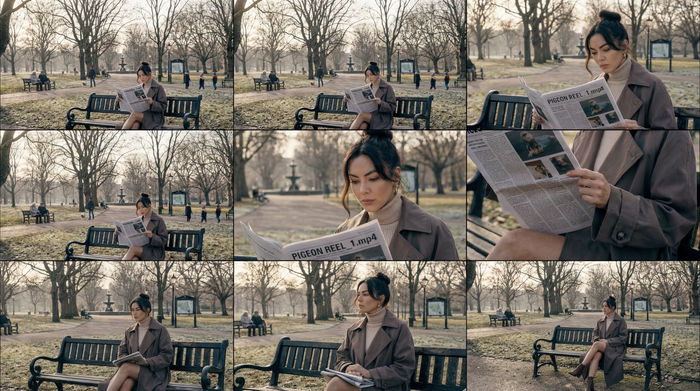
  • Hand Copilot a script and it visualizes it as frames, or break one scene into a grid of framings for coverage, holding subject, environment, and lighting steady across the panels.
  • Build a character sheet for each recurring character and a set reference for each place, then pass them into every frame so the same character stays the same character from panel to panel.
  • The board lives on a free-flowing visual Canvas where you compare framings side by side, reorder them, and iterate on a shot instead of re-drawing it.
  • When the board is approved, generate the shots as video from the same references, so the storyboard and the finished footage share one look and one workspace.
Try nowCocok untuk: Storyboarding straight into generated shots

Coba lebih banyak di Morphic

#2

LTX Studio

An AI filmmaking platform that takes a script to a shot-by-shot storyboard and on to generated video.

LTX Studio is built around the whole pre-production arc: paste or write a script and it breaks it into scenes and shots, generates storyboard frames, and lets you set camera angles, characters, and style before moving to video. For directors who want the board and the animatic in one flow, the end-to-end path is the draw. Character consistency and fine control are still improving, and heavier use runs on paid credits, but the from-script structure is well suited to planning a piece.

Cocok untuk: Script-to-storyboard-to-video in one flow
Kelebihan
  • Breaks a script into scenes and shots automatically
  • Carries a board through to an animatic
Kekurangan
  • Character consistency is still improving
  • Heavier use runs on paid credits
#3

Katalist

A script-to-storyboard tool focused on consistent characters across every panel.

Katalist turns a script into a visual storyboard with an emphasis on keeping the same characters recognizable from shot to shot, a common weak point in AI boards. You define characters and locations, then generate frames that reuse them, adjusting poses, angles, and staging. For advertising and narrative pre-production where a cast has to stay consistent, that focus is valuable. Style range is narrower than a general image model, and the fuller feature set is on paid plans, but the consistency angle is its clear strength.

Cocok untuk: Consistent characters across panels
Kelebihan
  • Reuses defined characters across frames
  • Script import structures the board for you
Kekurangan
  • Narrower style range than a general model
  • Fuller features on paid plans
#4

Boords

A dedicated storyboarding app with AI frame generation, animatics, and client collaboration.

Boords has long been a favorite for structured storyboarding, and it now adds AI image generation alongside its drawing and reference tools. The strength is the surrounding workflow: shot numbering, animatics with timing, comments, and shareable client links that make approvals painless. It treats AI as one input to a proper board rather than the whole process, so teams that live in a storyboard workflow feel at home. The generative frames are lighter than a flagship model, and the full toolset is on paid tiers.

Cocok untuk: Structured boards with client approval
Kelebihan
  • Mature storyboarding and animatic workflow
  • Comments and client-friendly sharing
Kekurangan
  • AI frames lighter than a flagship model
  • Full toolset on paid tiers
#5

StudioBinder

A production management suite with storyboarding alongside scripts, shot lists, and scheduling.

StudioBinder is production software first, with storyboarding as one module inside a suite that also handles scripts, shot lists, call sheets, and scheduling. For a production team that wants the board connected to the rest of the paperwork, having it all in one system is the appeal. Its AI generation is modest compared with a dedicated model, and it is priced as professional production software, but the value is the workflow around the board, not the frames themselves.

Cocok untuk: Boards tied to full production planning
Kelebihan
  • Connects boards to shot lists and scheduling
  • One system for the whole production
Kekurangan
  • AI generation is modest versus a dedicated model
  • Priced as professional production software
#6

Milanote

A visual board tool popular for mood boards and loose storyboards with drag-and-drop flexibility.

Milanote is a flexible visual workspace that creatives use for mood boards, treatments, and loose storyboards. Its freeform boards make it easy to arrange frames, notes, and references together, which suits the early, exploratory stage of planning a piece. It is not an AI frame generator at heart, so images come from elsewhere and get arranged here, and the free plan limits the number of elements. For organizing a board and its context visually, it is hard to beat on flexibility.

Cocok untuk: Loose, exploratory visual planning
Kelebihan
  • Very flexible drag-and-drop arrangement
  • Combines frames, notes, and references
Kekurangan
  • Not an AI frame generator at heart
  • Free plan limits elements
#7

Krock.io

A storyboard and review platform aimed at animation and video production teams.

Krock.io focuses on the collaboration side of storyboarding for animation and video teams: organizing frames into sequences, versioning, and gathering feedback with annotations on a shared board. It suits studios that need a review pipeline more than a solo creator, and it keeps the whole team looking at the same version. AI generation is not its core, so frames are created elsewhere and managed here, and it is priced for teams, but the review-and-versioning workflow is its strength.

Cocok untuk: Team review and versioning for animation
Kelebihan
  • Built for team review and feedback
  • Versioning keeps everyone on one board
Kekurangan
  • AI generation is not its core
  • Priced for teams over solo creators
#8

Storyboard That

A simple drag-and-drop storyboard creator with a large library of characters and scenes.

Storyboard That takes an approachable, template-driven route: drag characters, props, and backgrounds from a big library onto panels to build a board quickly, no drawing needed. It is popular in education and for simple pitch boards where a clean, illustrated look is enough. The style is deliberately cartoon-like rather than photoreal, and AI generation is limited compared with a model-driven tool, but for a fast, easy board without a learning curve it does the job.

Cocok untuk: Simple, template-driven boards
Kelebihan
  • Very easy to build a board quickly
  • No drawing skill required
Kekurangan
  • Cartoon style rather than photoreal
  • Limited AI generation

Apa itu alat storyboard AI?

Alat storyboard AI mengubah skrip atau ide jadi urutan frame. Frame itu memetakan sebuah adegan sebelum ada satu pun yang disyuting atau dirender. Cara kerjanya beda-beda. Sebagian langsung membuat frame dari skrip. Sebagian fokus menjaga karakter tetap konsisten di tiap panel. Sebagian lagi membungkus papan cerita dalam alur produksi lengkap, mulai dari shot list, animatic, sampai tahap review. Intinya sama: Anda melihat rencana sebagai gambar selagi masih murah untuk diubah.

Nilai sebuah papan cerita ada pada satu hal, menangkap arah yang salah sejak dini. Buat kreator UMKM yang menyiapkan video promo, ini menghemat waktu dan biaya syuting. Sama halnya buat kreator TikTok yang merancang satu skit sebelum merekam. Storyboard mengubah deskripsi adegan yang samar jadi framing konkret yang bisa langsung Anda nilai. Alat terbaik melangkah lebih jauh. Karakter dan set dijaga konsisten dari panel ke panel, lalu papan itu dibawa terus sampai jadi video. Karena itu, satu tempat yang menggabungkan generasi frame, konsistensi referensi, dan rendering jauh mengungguli papan cerita yang berhenti di frame statis.

Storyboard AI vs sketsa tangan

Storyboard tradisional berarti seorang illustrator dan setumpuk frame, digambar tangan atau lewat software ilustrasi. Cara ini memberi sutradara kendali penuh dan gaya personal. Ongkosnya waktu, plus orang yang memang bisa menggambar. Storyboard AI memangkas semua itu jadi sebuah deskripsi. Anda tulis shot-nya, buat frame-nya, lalu revisi cukup dengan generate ulang. Tidak perlu gambar ulang dari nol, tidak perlu skill menggambar, dan semuanya bisa dikerjakan dari HP.

Pilihannya antara sentuhan seni dan kecepatan. Papan gambar tangan tetap membawa mata dan maksud sang illustrator. Tapi untuk pitching treatment, merencanakan coverage, atau menguji satu sequence sebelum syuting, frame hasil AI datang dalam hitungan menit dan berubah sesuai permintaan. Banyak produksi memadukan keduanya. Generate frame dulu untuk eksplorasi dan menyamakan visi dengan cepat, baru perhalus bagian yang penting lewat tangan illustrator.

Cara kerja alat storyboard AI

Alat pembuat frame berjalan di atas model diffusion image. Model menghaluskan noise langkah demi langkah, dipandu prompt atau skrip yang Anda impor, sampai jadi satu frame yang utuh. Karakter dan lokasi yang sudah ditentukan dipakai ulang, jadi tiap panel tetap konsisten. Alat berbasis workflow menambahkan lapisannya sendiri, mulai dari penomoran shot, timing animatic, sampai tahap review. Frame-nya sendiri bisa datang dari model atau dari library. Hasil terbaik muncul saat generasi yang kuat dipadukan dengan cara menjaga tampilan tetap stabil sepanjang sequence.

Di Morphic, proses storyboard berjalan di Canvas. Serahkan skrip ke Copilot, dan skrip itu langsung divisualisasikan jadi frame. Atau pecah satu adegan jadi grid framing untuk coverage, dengan subjek, environment, dan cahaya yang dijaga stabil. Reference sheet menjaga tampilan tetap sama, satu character sheet untuk tiap karakter dan satu set reference untuk tiap lokasi. Begitu papan cerita disetujui, shot-nya langsung Anda render jadi video dari referensi yang sama. Papan cerita dan hasil akhir syuting pun berbagi satu ruang kerja.

Apa kata kreator tentang Morphic

Harga sederhana

Mulai gratis hari ini, dengan opsi untuk upgrade atau membatalkan kapan saja.

Basic

$19/ bulan
ditagih sebagai $0 per tahun

2400 bulanan kredit

1 pengguna saja

Semua model

Workflows

Standard

$24/ bulan
ditagih sebagai $0 per tahun

3625 bulanan kredit

1 pengguna saja

Semua model

Workflows

Pro

$45/ bulan
ditagih sebagai $0 per tahun

6350 bersama bulanan kredit

1 pengguna

+ hingga 4 lainnya dengan biaya tambahan

Semua model

Workflows

Max

$170/ bulan
ditagih sebagai $0 per tahun

24650 bersama bulanan kredit

1 pengguna

+ hingga 9 lainnya dengan biaya tambahan

Semua model

Workflows

Enterprise

Untuk batas yang lebih tinggi

Khusus

ketentuan harga dan penagihan

Kredit volume tinggi
Batas kursi khusus
Semua model
Workflows
Pricing Gradient

Free

Untuk bereksperimen

$0

gratis selamanya

Hingga 20 kredit
Hanya 1 pengguna
Model terbatas
Workflows

FAQ

What is the best AI storyboard tool in 2026?
It depends on your goal. LTX Studio and Katalist lead on generating frames from a script, Boords and StudioBinder lead on production workflow, and Krock leads on team review. Morphic stands out when you want the board and the finished shots in one place, storyboarding a script into frames and then rendering them as video from the same references.
Can an AI storyboard tool keep characters consistent?
Consistency is the hardest part of an AI board. Tools like Katalist focus on it directly, and Morphic uses reference sheets, a character sheet per character and a set reference per place, passed into every frame so the same character stays the same from panel to panel.
Can I turn a storyboard into video?
Some tools bridge the gap. LTX Studio carries a board to an animatic, and Morphic renders the boarded shots as video from the same references, so the storyboard and the footage share one look without exporting between apps.
Do I need to draw to use these tools?
No. Generative and template tools build frames without drawing: you describe a shot or drag assets onto a panel. On Morphic you describe the frame or hand Copilot a script, and it visualizes the shots for you.
Are there free AI storyboard tools?
Most tools here offer a free tier or trial, though larger boards, higher-quality frames, and team features usually sit behind paid plans. Morphic has a free tier so you can board a scene and compare models before you commit.
Can a team collaborate on a storyboard?
Yes. Boords and Krock are built around review and comments, and StudioBinder ties the board to production planning. On Morphic the board lives on a shared Canvas, so a team can work on the same frames and compare framings together.