Pink hotel lobby at dusk
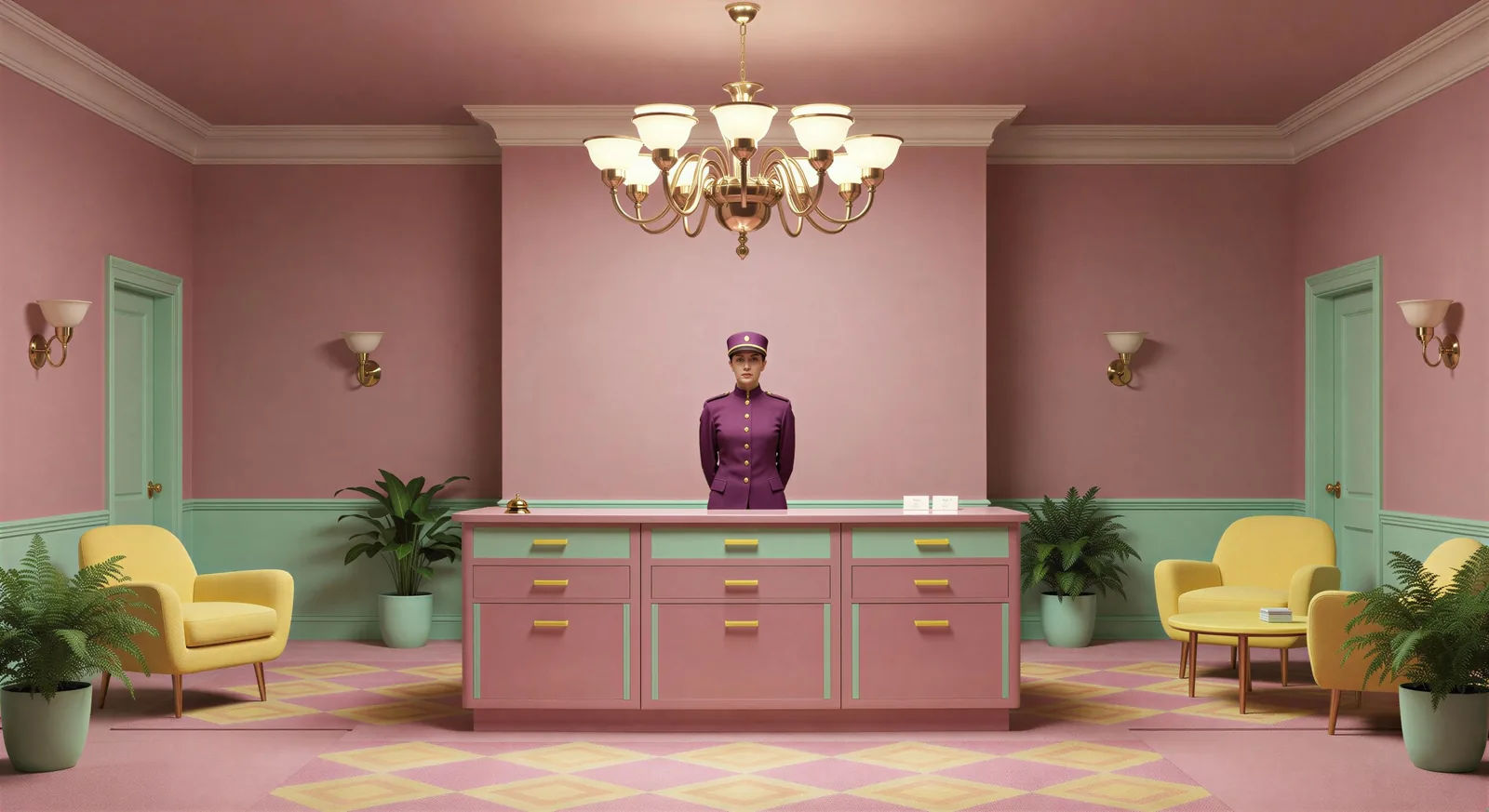
Symmetrical hotel lobby in dusty pink, brass chandelier dead-centre, single bellhop in plum uniform standing at the desk, locked-off frame.
Try this promptThe Wes Anderson style is one of the most identifiable visual signatures in modern cinema. Pastel palettes, dollhouse symmetry, planimetric framing where every subject sits flat to the camera, and a deadpan stillness that lets a single small motion become the joke or the heartbreak.
It is also one of the most attempted styles online and one of the hardest to actually nail. Most attempts get the colour right and the framing wrong. AI video has changed which parts of that you actually need to own.
Wes Anderson films are the most copied aesthetic in modern cinema and the hardest one to actually nail. Symmetry, pastel grading, planimetric framing, and the deadpan tableau where everyone faces the camera. Morphic gives you those tools in your browser. Pick a scene, a character archetype, or a workflow below and start now.
Symmetrical hotel lobby in dusty pink, brass chandelier dead-centre, single bellhop in plum uniform standing at the desk, locked-off frame.
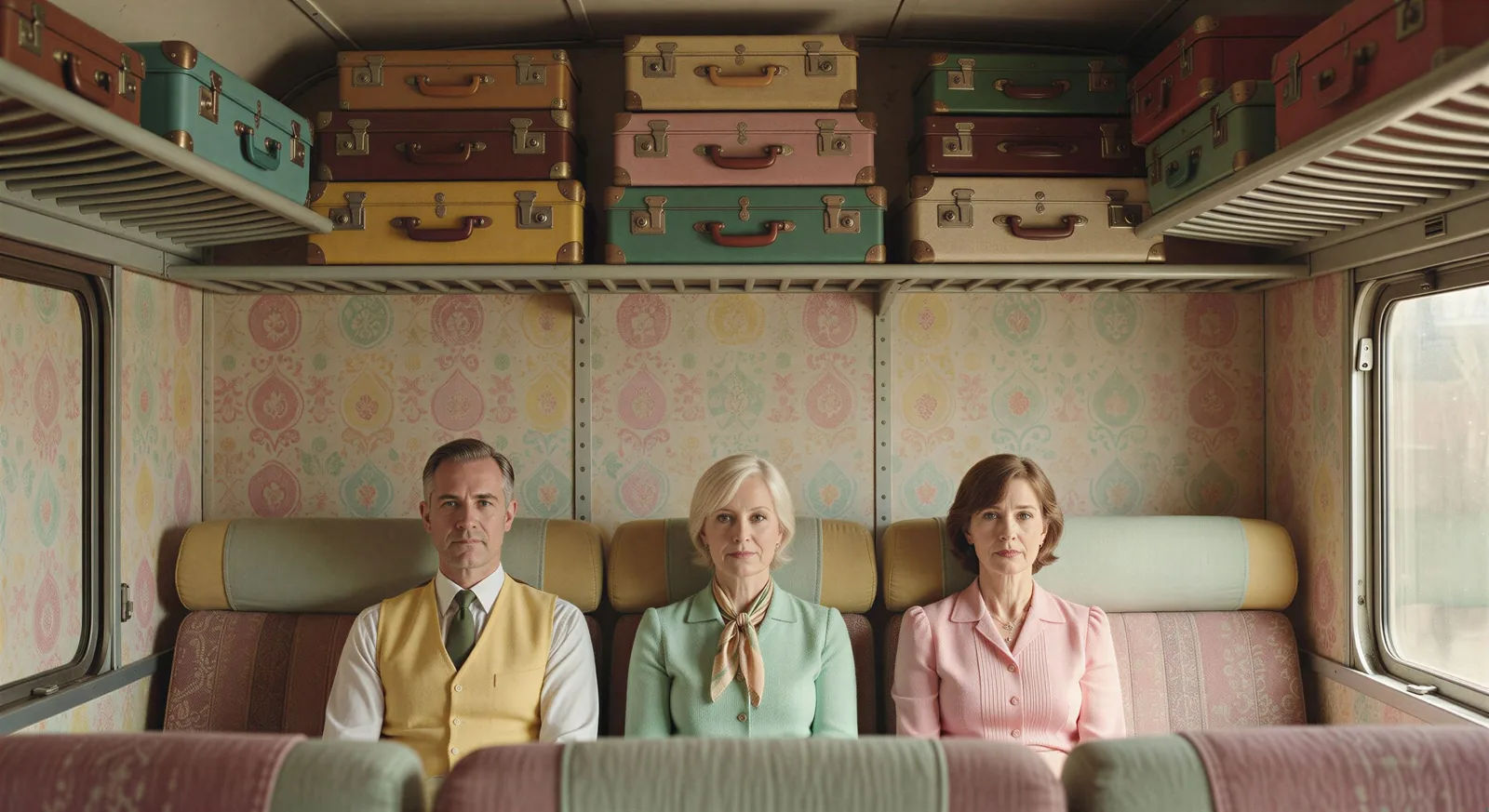
Try this promptPatterned wallpaper, three passengers seated facing camera in a perfect row, suitcases stacked symmetrically above, soft afternoon light.
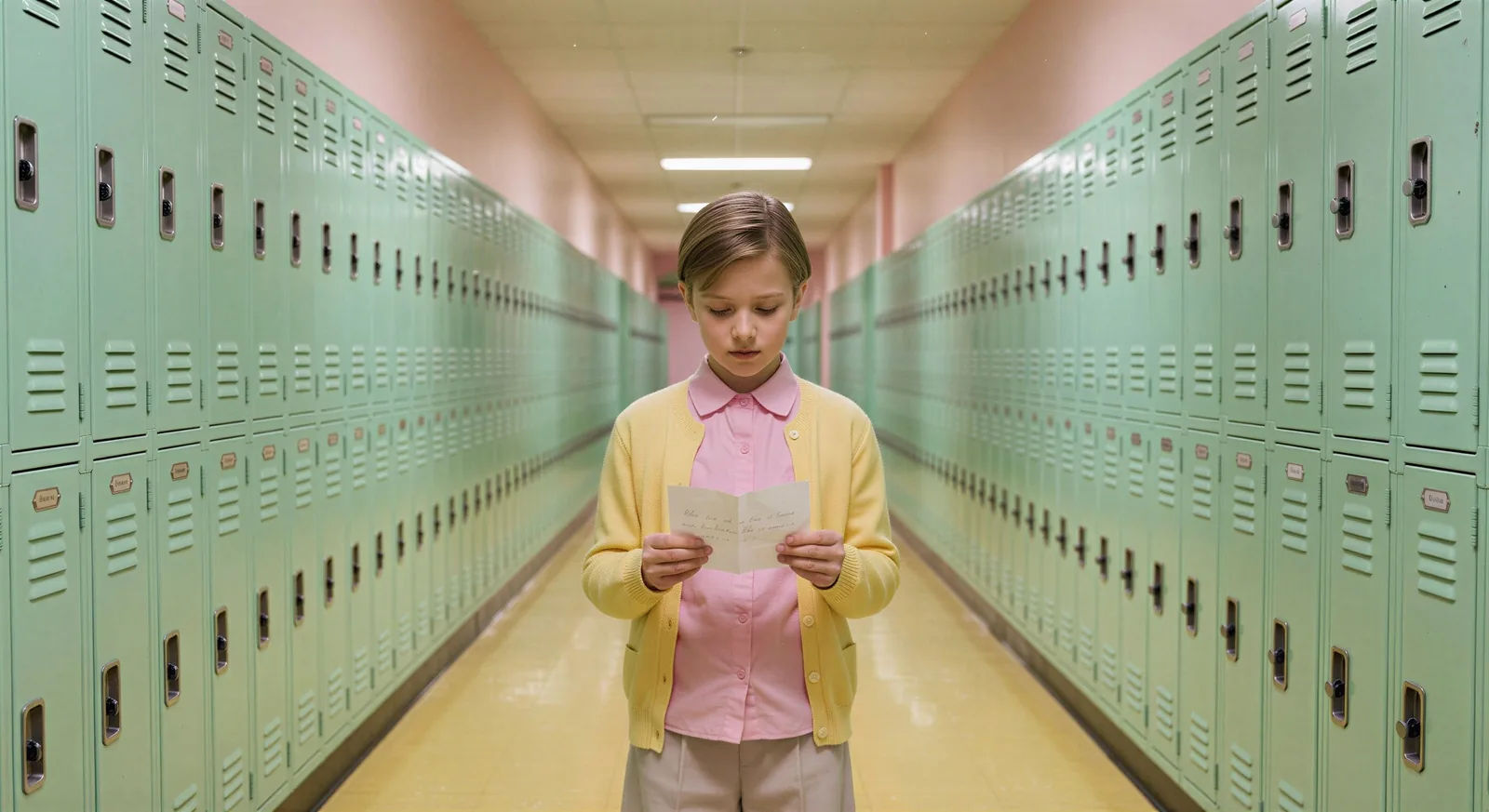
Try this promptCorridor lined with mint-green lockers, single child standing centre frame holding a folded note, vanishing point dead ahead.
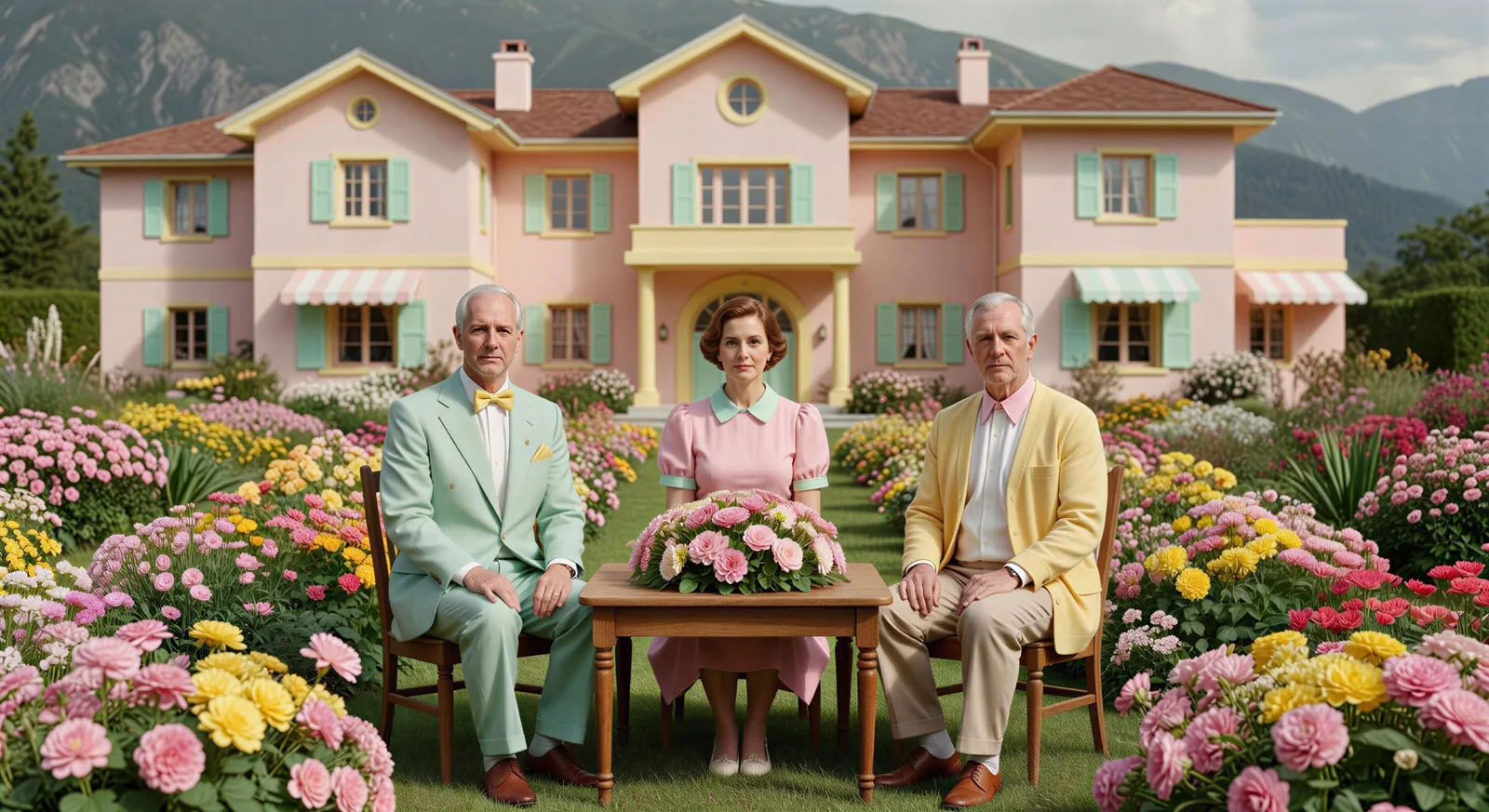
Try this promptThree figures seated around a small table in a garden of pink and yellow blooms, mountain villa in the background, all facing camera.
Try this promptA small pastry shop window with cakes in a perfect row, two customers in pastel coats waiting outside, brass door handle catching dawn.
Try this promptLong reading-room table with a single reader at the centre, brass lamps lined down each side, vaulted ceiling, soft morning haze.
Try this promptSign in to Morphic in your browser and head to the Text to Video tool. No installs, no setup, and any device with a connection picks up where you left off.
Open Text to VideoWrite the Wes Anderson style scene you want to see in your own words. Be specific about the symmetry, the pastel colour, the room type, the camera language (locked-off, whip pan, slow dolly), and what every figure in frame is wearing. Naming the framing rule is what separates a Wes Anderson prompt from a generic pastel prompt.
Symmetrical pink hotel lobby at dusk, brass chandelier dead-centre, single bellhop in plum uniform standing behind the desk, locked-off frame, slow horizontal dolly forward.
Morphic returns a clip to your canvas. Refine the prompt for variations, regenerate to fix what missed, or remix into a longer sequence. Download or share when the shot lands.
Apply a unified painterly or cinematic look across every clip in your Wes Anderson series.
Try this workflowCompose dramatic single-shot Wes Anderson scenes with depth of field, lighting, and camera direction baked in.
Try this workflowPause time mid-action in your Wes Anderson for a sweeping camera reveal around a frozen moment.
Try this workflowBuild surreal, mind-bending compositions for Wes Anderson story with looping geometry and recursion.
Try this workflowBuild playable-feeling Wes Anderson environments with camera moves and lighting tuned for game cinematics.
Try this workflowPlan a multi-scene Wes Anderson episode shot-by-shot, then generate each frame and stitch the sequence together.
Try this workflowThe Wes Anderson style is built on four locked-in choices. Symmetry: subjects are dead-centre, vertical lines align, and the horizon sits exactly on a third. Planimetric framing: bodies are flat to the camera as if the scene were a doll-house cross-section, with no oblique perspective and very few lens-axis tilts. Pastel palette: dusty pinks, mint greens, butter yellows, soft corals, with the rare deep-saturation accent (a red sweater, a yellow tent) reserved for narrative weight. And tableau staging: ensembles arrange themselves in a row facing camera, holding eye contact with the lens like a class photo that refuses to break. Naming all four in your prompt is what separates a Wes Anderson video from a generic pastel video.
Camera language is the second half of the signature. Anderson uses locked-off frames more than any major director working today, and when the camera does move it is in straight orthogonal lines: ninety-degree whip pans across a hallway, slow horizontal dollies along a train carriage, vertical dolly drops between floors of a hotel cross-section. The camera almost never tilts on a diagonal. Cuts are matched on geometry rather than on action: an empty centre frame in shot A becomes an entered centre frame in shot B. For prompts, name "locked-off frame", "ninety-degree whip pan", or "slow horizontal dolly" so Morphic knows the camera grammar matters.
Production design carries the rest. Anderson’s films live inside specific kinds of rooms: pink hotel lobbies under brass chandeliers, train compartments with patterned wallpaper, school corridors lined with painted lockers, mountain villas in pastel bloom, the cross-section interior of a boat or a tent. Type matters more than time period, but everything skews mid-century, hand-made, and slightly unfashionable. Costuming repeats: scout uniforms, cabin attendant jackets, formal evening wear with one wrong colour. When you prompt a Wes Anderson scene, name the room type, the dominant pastel, the period detail, and what every figure is wearing.
How to make Fincher style videos with AI
Desaturated palettes, geometric framing, and Fincher-grade composition.
How to make Wong Kar Wai style videos with AI
Step-printed motion, neon Hong Kong nights, and saturated colour with AI video.
How to make anime fight scenes with AI
Sword duels, magic battles, and mecha clashes generated from prompts.
How to make Mahabharata videos with AI
Generate Mahabharata battle scenes, character portraits, and full episodes.