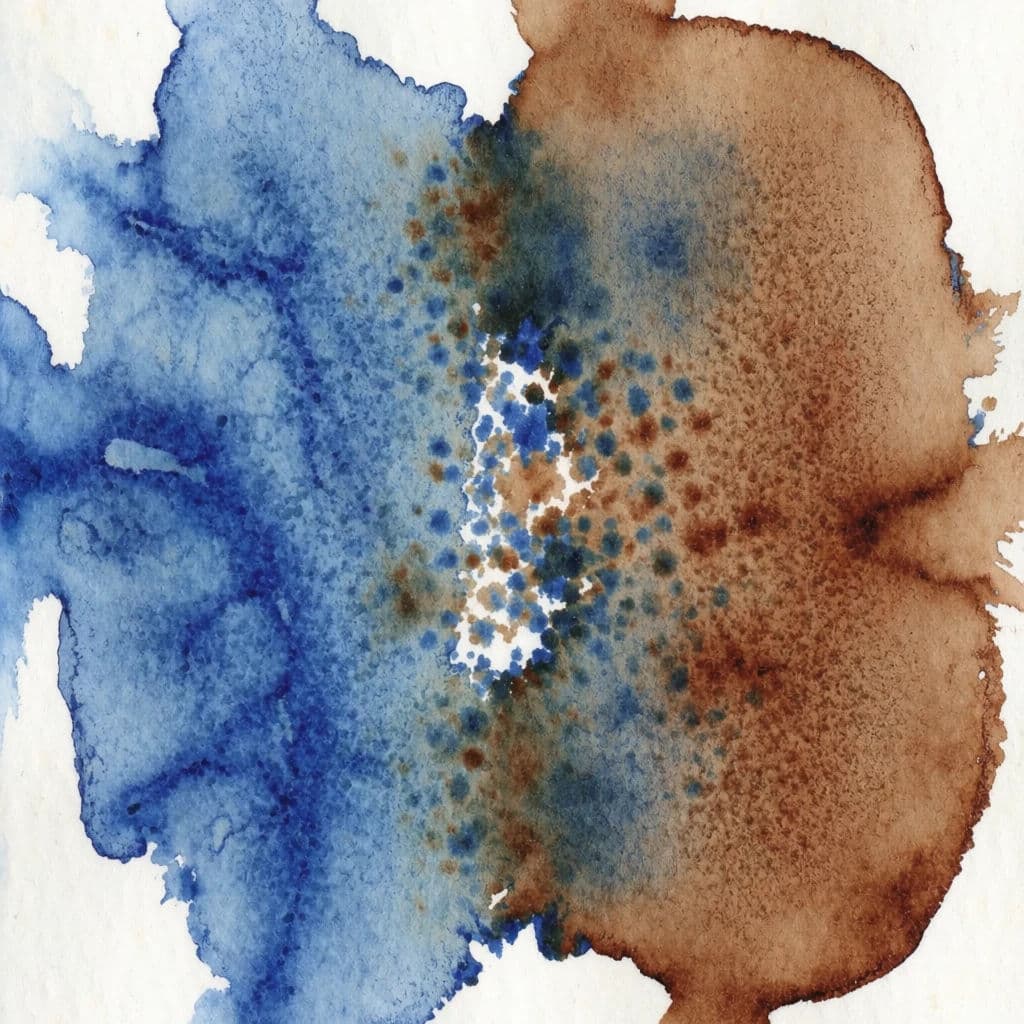
Two granulating pigments meeting
Watercolour on cold pressed cotton rag paper, transparent washes only, no white paint anywhere. An abstract study of two heavily granulating pigments meeting in the middle of a wet sheet, ultramarine from the left and burnt umber from the right, each settling separately into the tooth of the paper so that instead of blending into a clean mix they mottle and speckle where they meet, the heavier particles collecting visibly in the hollows. No subject at all, just the two colours and the seam between them. The wash left ragged at all four edges, bare paper around it. 1:1.
Edit prompt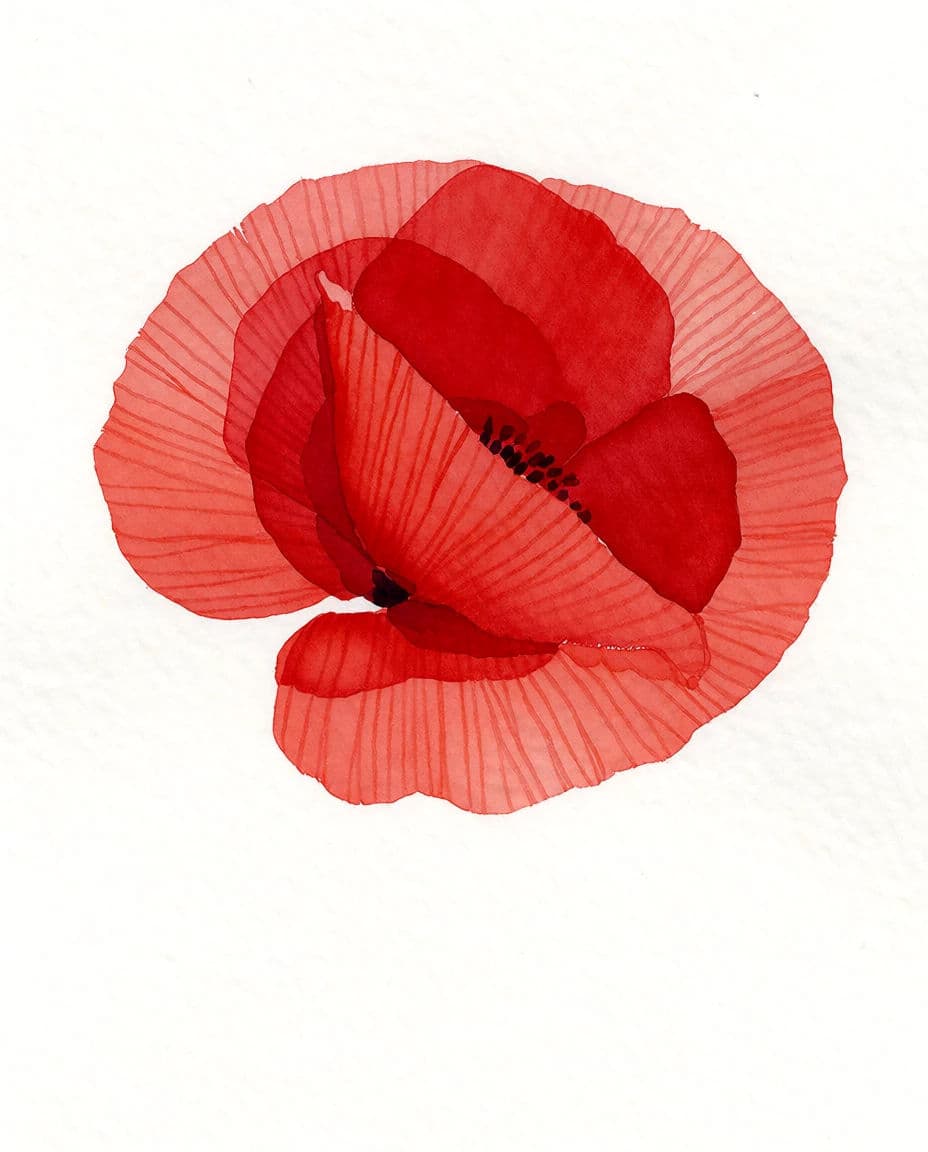
Poppy study painted dry over dry
Watercolour on cold pressed cotton rag paper, transparent washes only, no white paint anywhere. A single field poppy painted as a tight botanical study, each wash laid onto completely dry paper so every layer keeps a clean crisp edge over the one beneath and nothing bleeds. Three successive glazes building the petal from pale scarlet to deep crimson, the veins left as fine lines of untouched paper. The stem and one bud included, the rest of the sheet left blank white. Controlled and deliberate rather than loose. Fine sable detail. 4:5.
Edit prompt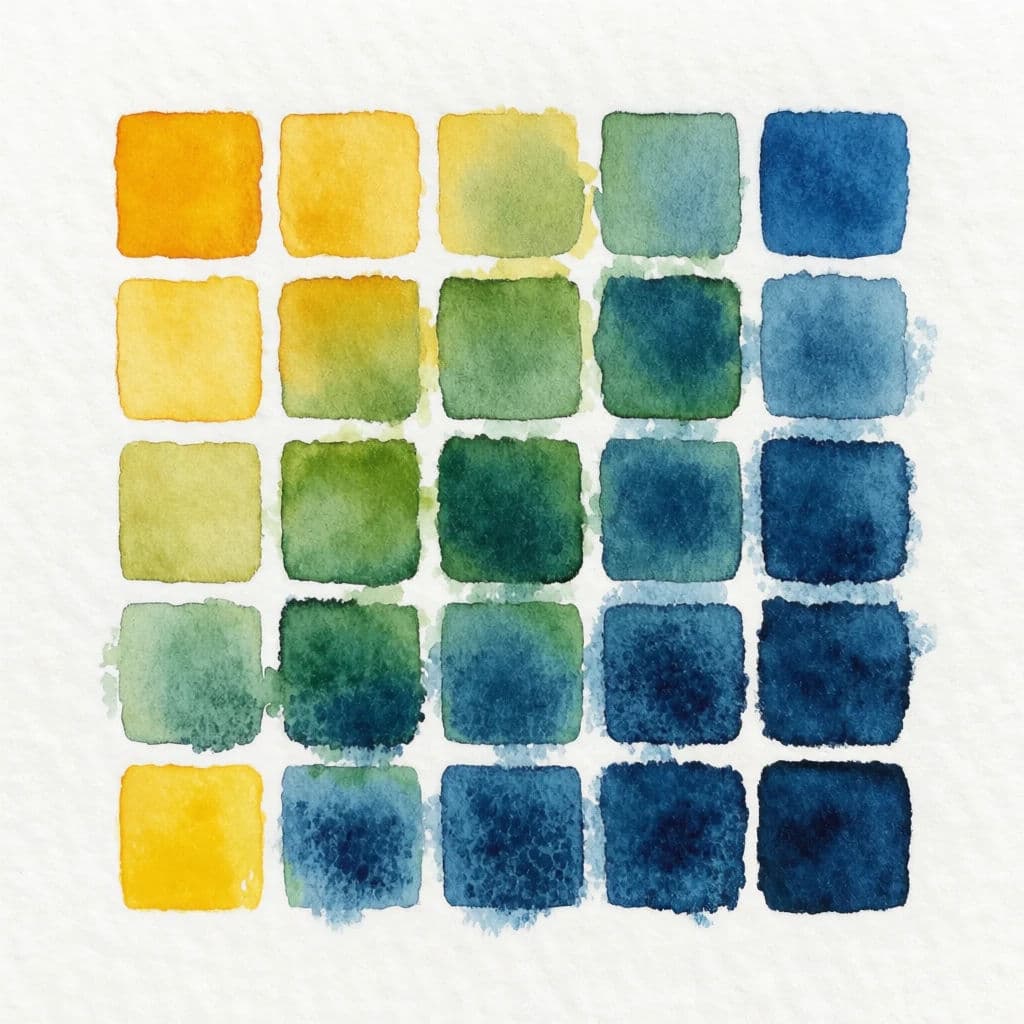
Mixing chart of two colours crossed
Watercolour on cold pressed cotton rag paper, transparent washes only, no white paint anywhere. A two colour mixing chart, a grid of five by five hand painted squares in which a warm yellow increases in proportion from left to right across the grid while a phthalo blue increases from top to bottom, so the corners are the two pure colours and the diagonal runs through the greens between them. The squares are hand painted with slightly uneven edges and small gaps of bare paper between them. No labels. Plain white surround. 1:1.
Edit prompt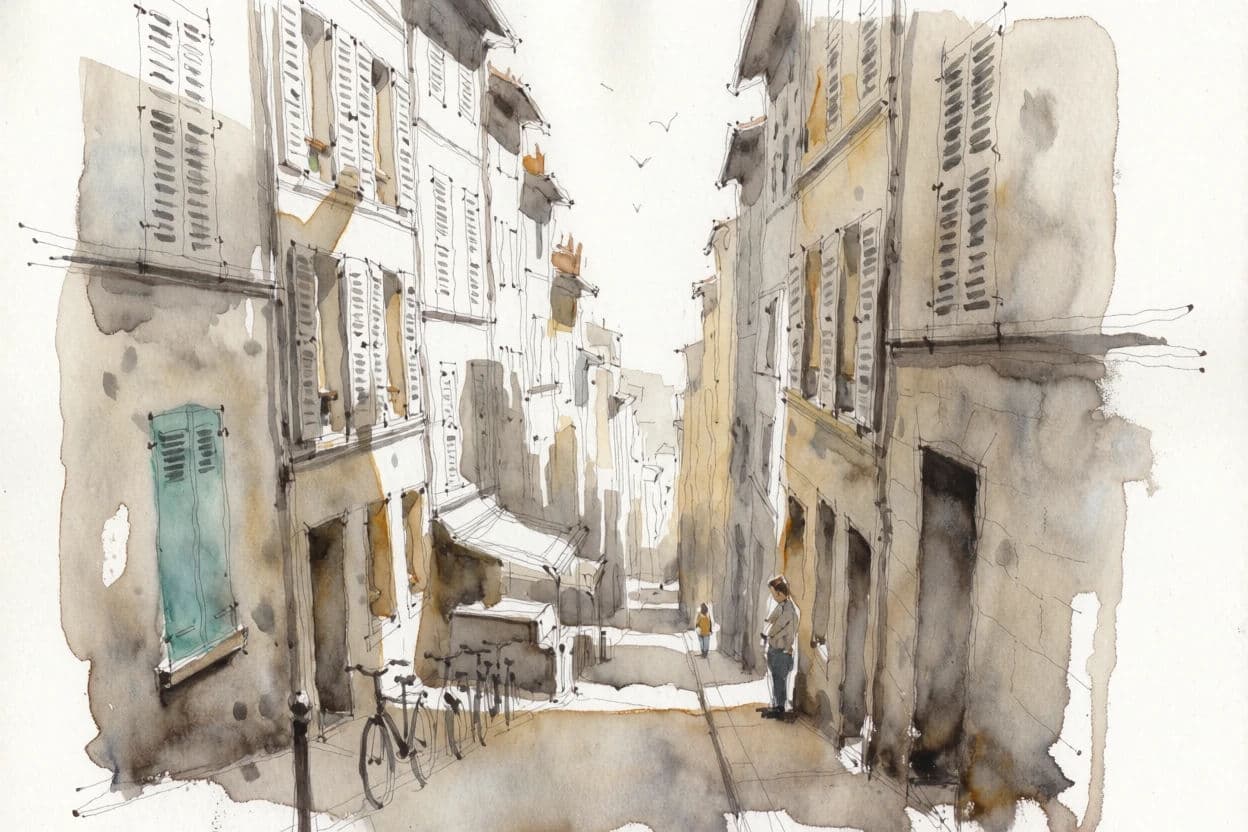
Side street in pen and wash
Watercolour on cold pressed cotton rag paper, transparent washes only, no white paint anywhere. A narrow side street of tall shuttered buildings, drawn first in loose scratchy waterproof ink line with the perspective slightly wobbly, then washed over quickly with colour that runs past the drawn lines in several places and stops short of them in others. Some areas left as line only with no colour at all. A figure suggested in two strokes. Palette of warm grey, ochre and one dull turquoise shutter. Wash left open at both ends of the street. 3:2.
Edit prompt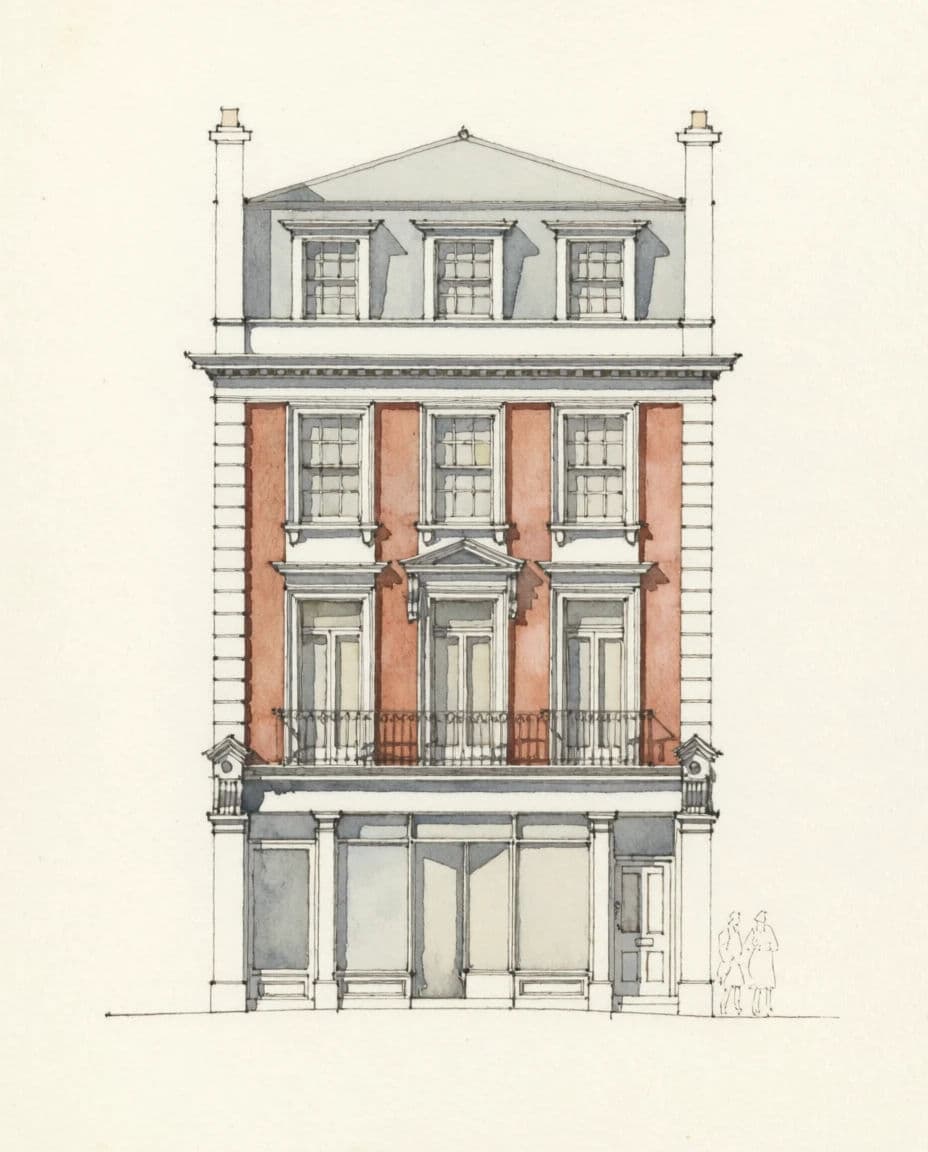
Elevation rendered in wash
Watercolour on cold pressed cotton rag paper, transparent washes only, no white paint anywhere. An architectural elevation of a three storey townhouse, drawn first in fine ruled ink line with a straight edge so every opening and course is accurate, then rendered with flat even washes laid inside the lines to indicate materials, a warm brick red for the walls, a cool grey for the slate and a pale wash for the glass. The washes are flat and even rather than expressive. Small figures drawn loosely at the base for scale. Plain bare paper surround, no background at all. 4:5.
Edit prompt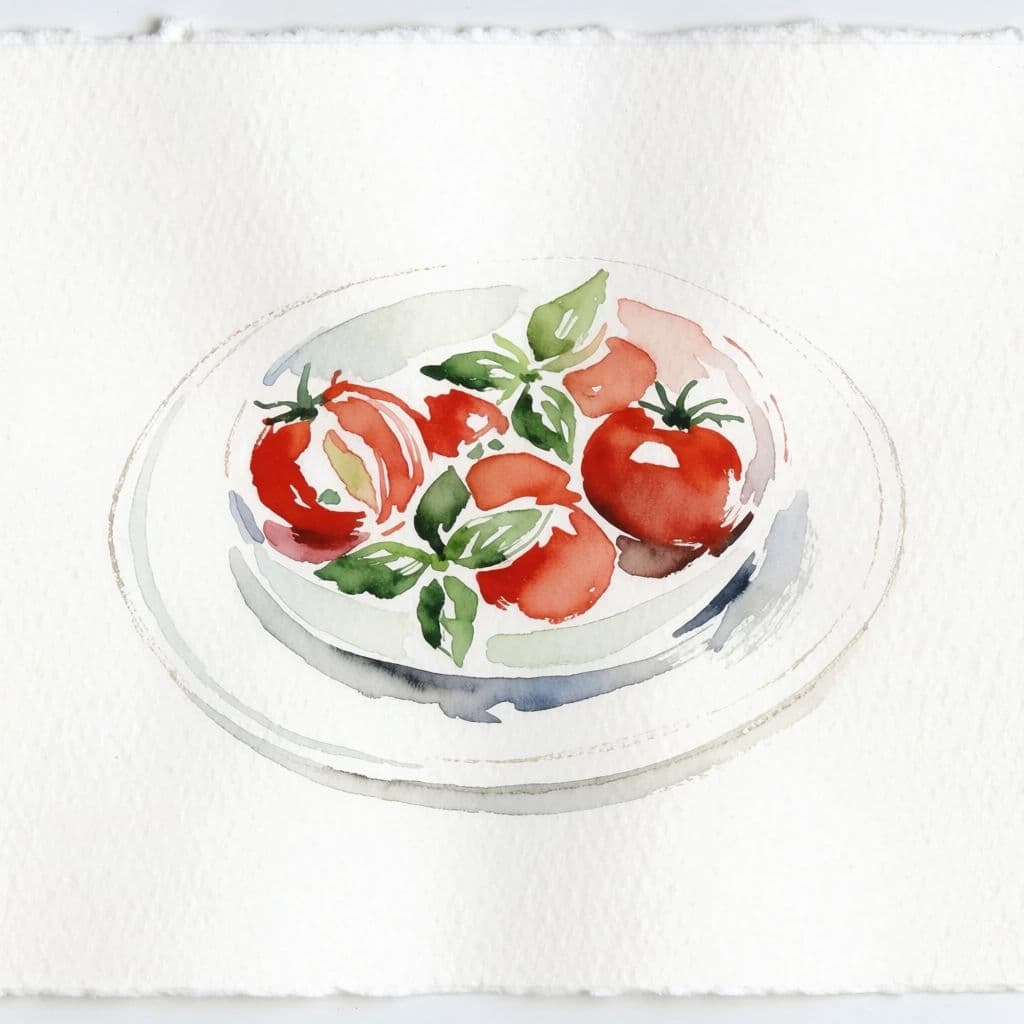
Menu illustration of a single dish
Watercolour on cold pressed cotton rag paper, transparent washes only, no white paint anywhere. A single plated dish painted as a menu illustration, floating on bare white paper with no table, background or shadow beyond a faint grey one directly beneath the plate. A bowl of ripe tomatoes and torn basil, painted in a few confident saturated strokes rather than carefully rendered, the brightest faces of the tomatoes left as unpainted paper. No more than about twenty brush marks in the whole picture. Palette of scarlet, deep green and a warm cream. 1:1.
Edit prompt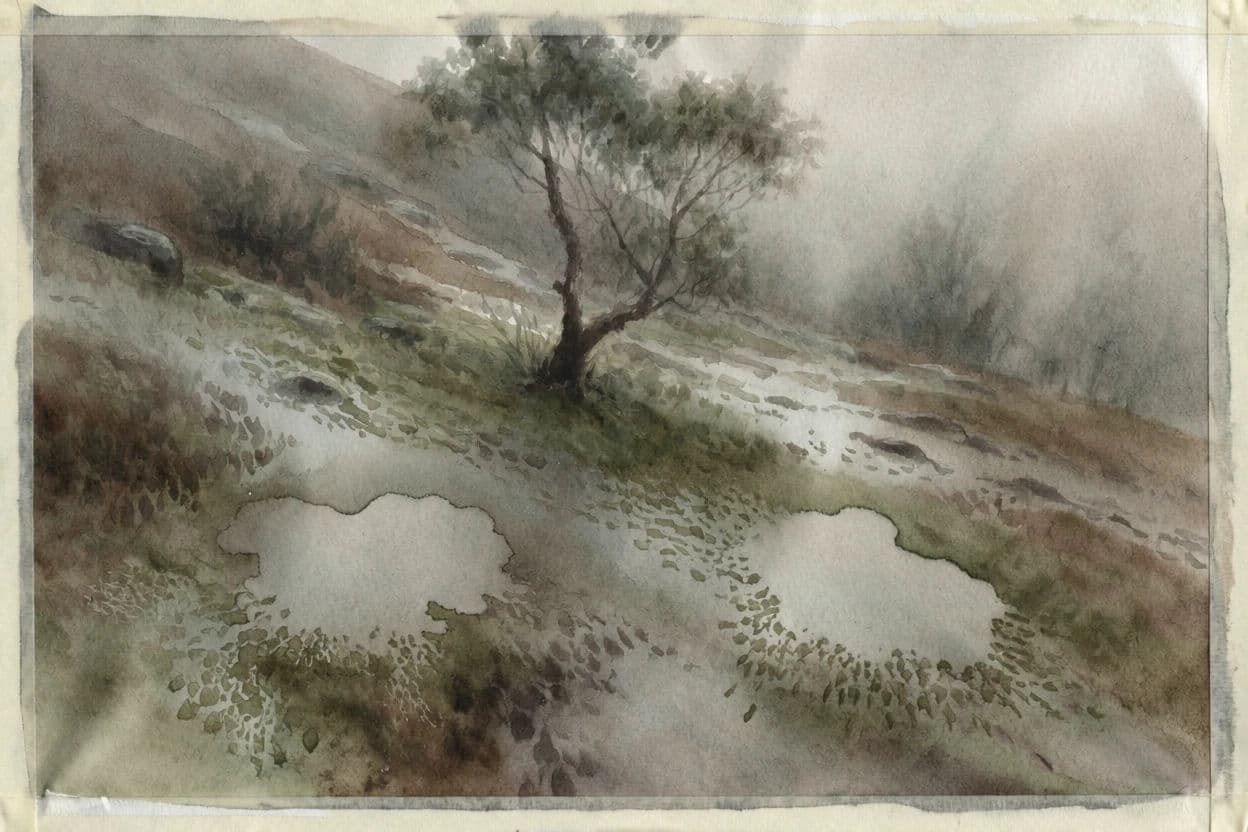
Sheet with the tape edge still on it
Watercolour on cold pressed cotton rag paper, transparent washes only, no white paint anywhere. A finished watercolour photographed as a physical sheet still taped to its board, with a clean straight border of unpainted paper on all four sides where the gummed tape has held it and the surface gently cockled where heavy washes dried. Inside, a loose study of a rain washed hillside with two soft backruns left in the foreground. The tape edge slightly discoloured. Soft even light across the buckled paper showing the texture in raking shadow. 3:2.
Edit prompt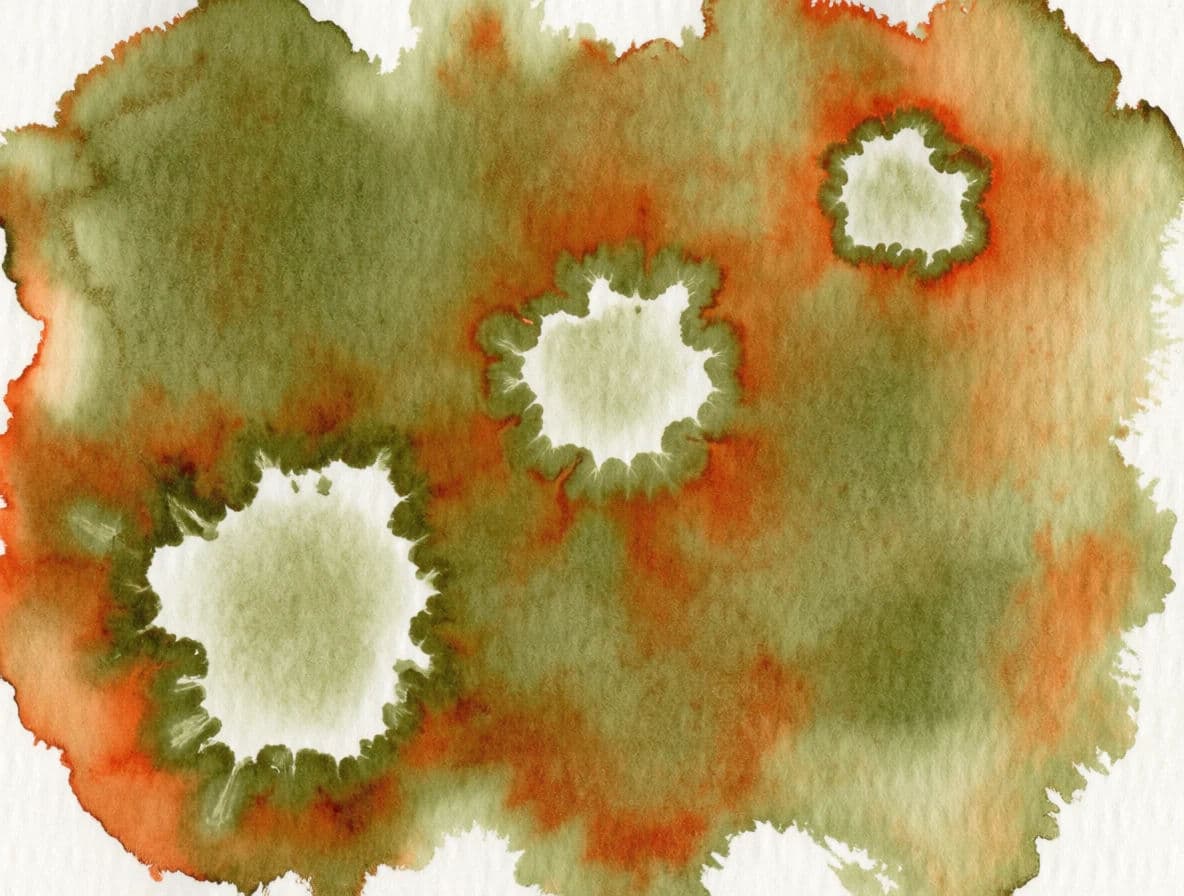
Deliberate backruns in a drying wash
Watercolour on cold pressed cotton rag paper, transparent washes only, no white paint anywhere. A study in which clean water and wetter colour have been dropped deliberately into a wash that was already beginning to dry, producing three distinct cauliflower backruns, each with a pale centre and a hard scalloped darker rim where the pigment was pushed outward. The ground is a broad wash of olive and burnt orange across the sheet. Suggests a lichen covered rock without being a picture of one. No subject drawn. Ragged wash edges on all sides. 4:3.
Edit prompt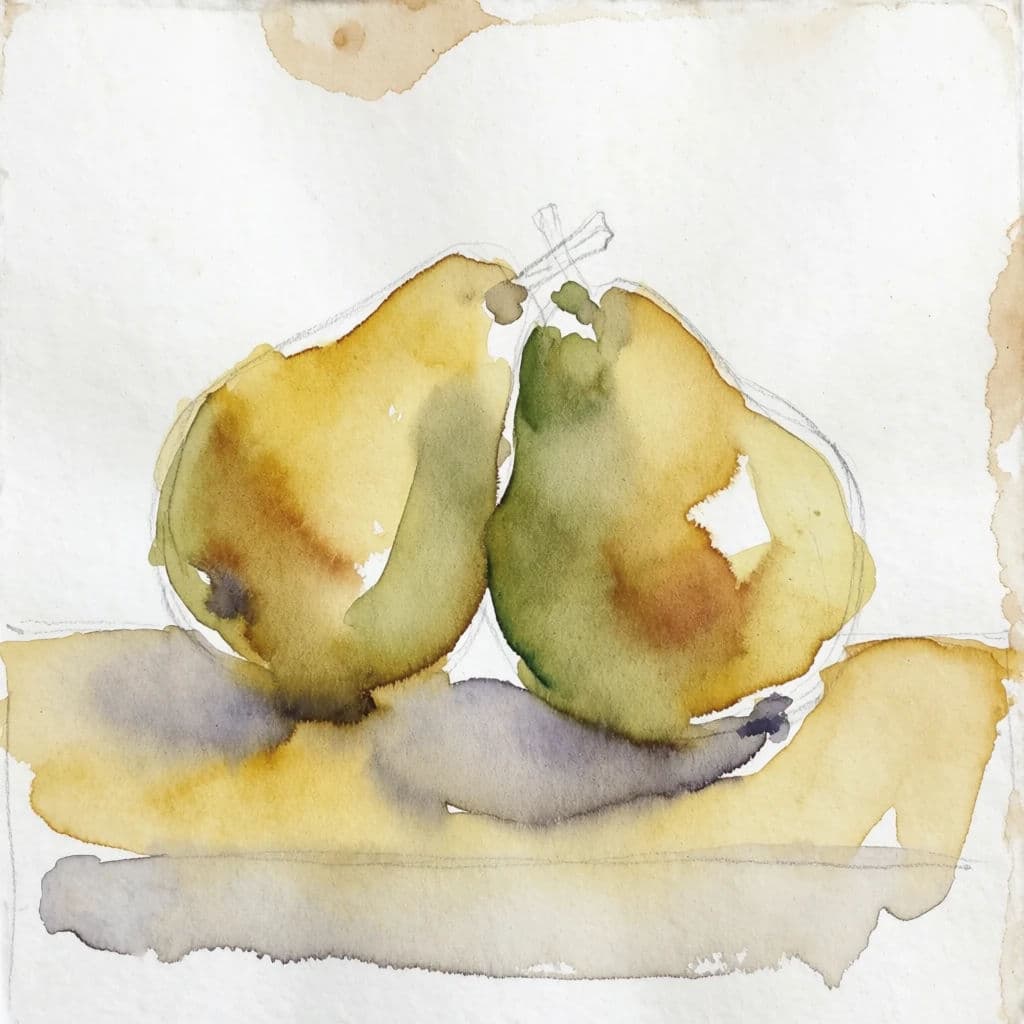
Two pears with the light side left bare
Watercolour on cold pressed cotton rag paper, transparent washes only, no white paint anywhere. Two pears on a table. The shadow side of each painted wet in wet so the colour bleeds softly into the damp paper, while the lit side is bare unpainted paper left completely untouched rather than painted pale. A soft cast shadow beneath them laid in one grey wash. Pencil underdrawing visible through the colour in places. Loose and quick, the wash edge left ragged and open around the table. Palette of yellow ochre, olive green and a violet grey shadow. 1:1.
Edit prompt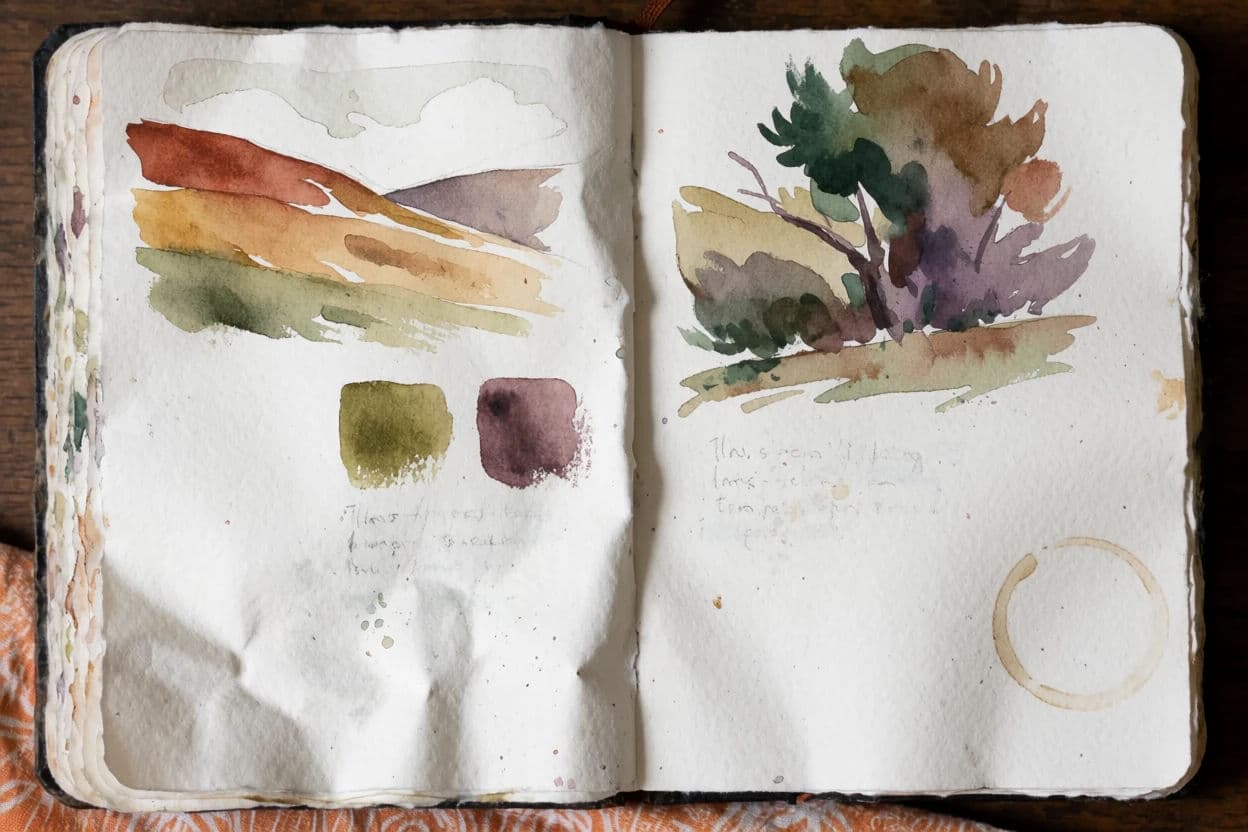
Sketchbook opened at two studies
Watercolour on cold pressed cotton rag paper, transparent washes only, no white paint anywhere. An open watercolour sketchbook photographed flat, the paper buckled and cockled where the washes dried and the centre gutter throwing a soft shadow. On the left page a small quick study of a hillside in three washes, on the right page two colour swatches and a half finished study of a tree. Short handwritten pencil notes between them, too small to read as words. Both studies stop well short of the page edges. A ring of a coffee cup on the lower corner. 3:2.
Edit prompt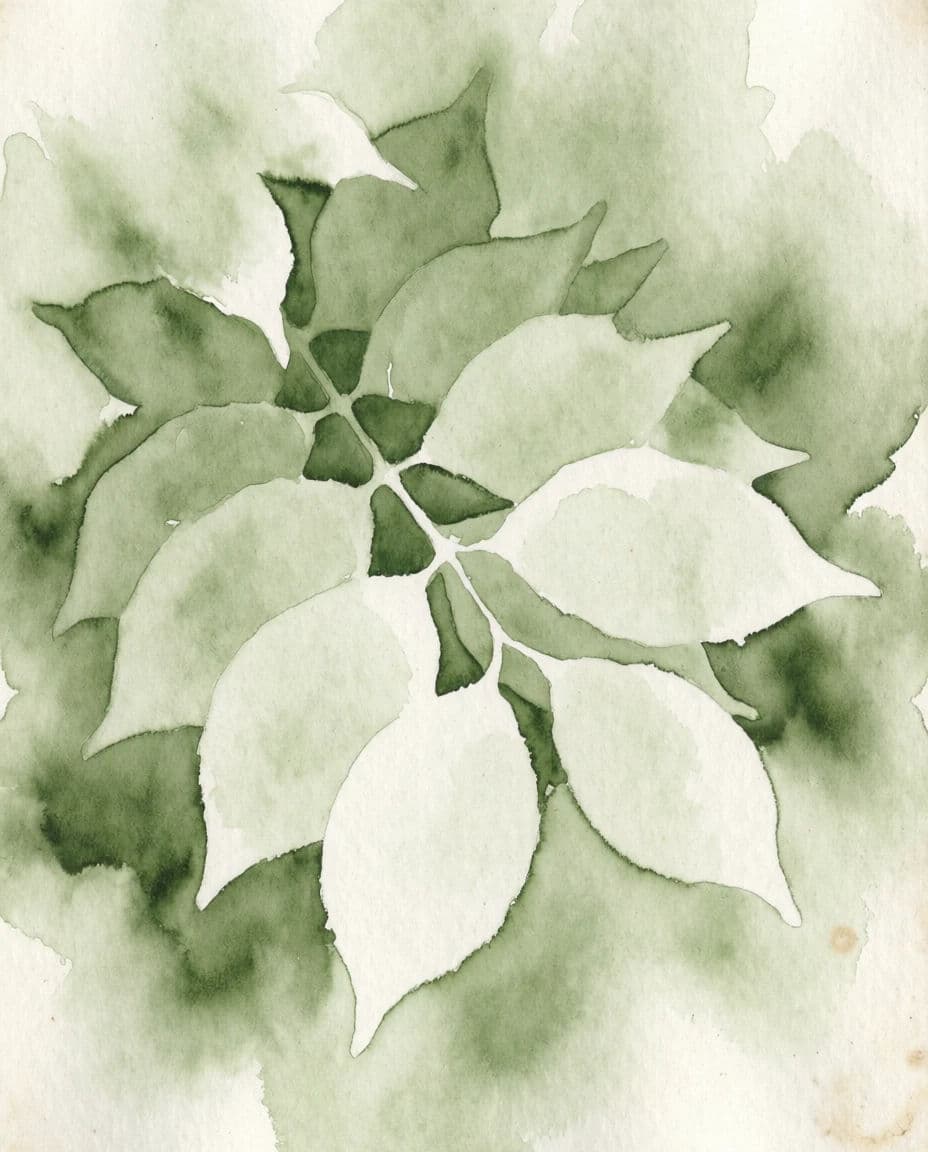
Leaves painted by painting the gaps
Watercolour on cold pressed cotton rag paper, transparent washes only, no white paint anywhere. A cluster of pale leaves created entirely by negative painting, where the leaves themselves are never touched by the brush and their shapes emerge only because successive darker washes have been laid in the gaps around and behind them. Three receding layers, each darker than the last, so the leaves nearest the viewer are bare white paper and those behind are progressively deeper green. No outlines drawn anywhere. The darkest wash fades out at the corners. 4:5.
Edit prompt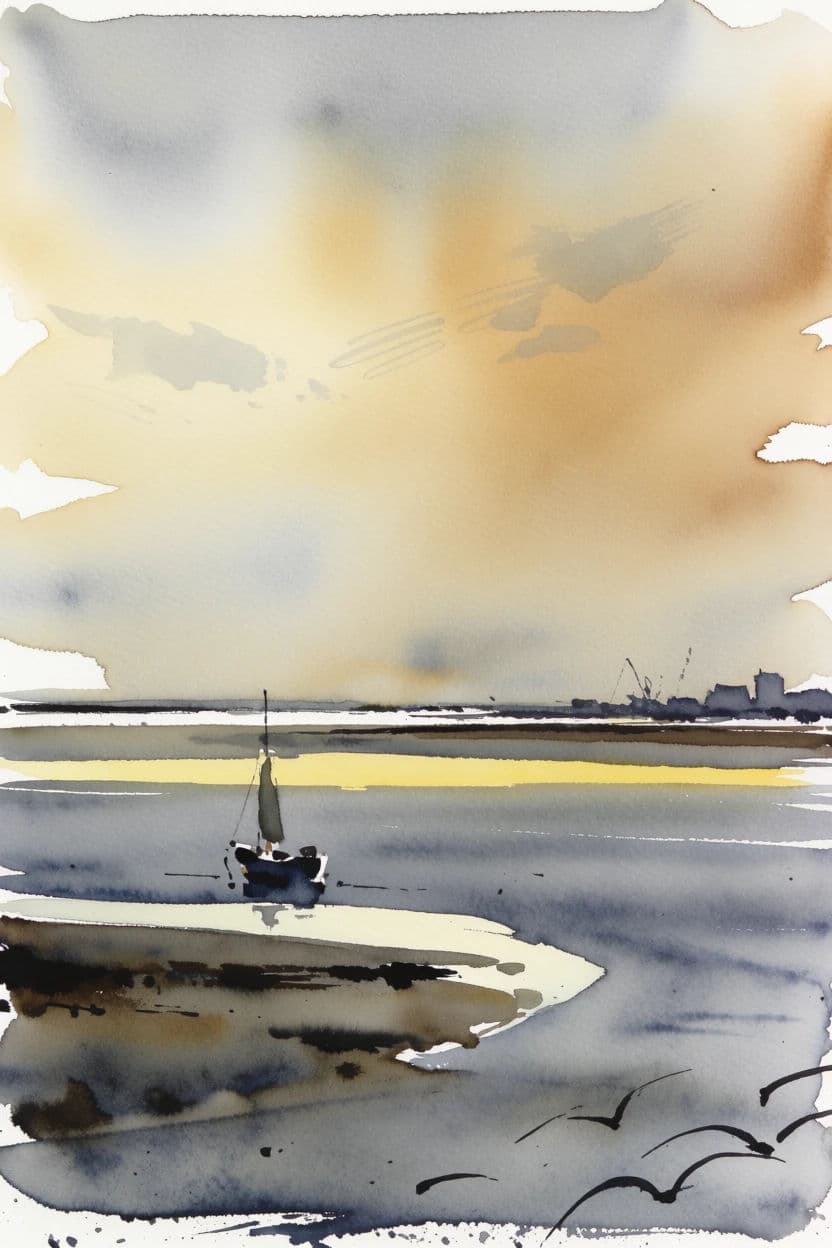
Estuary under a wet sky
Watercolour on cold pressed cotton rag paper, transparent washes only, no white paint anywhere. A wide estuary at low tide. The sky painted wet in wet so the grey and warm ochre run into one another with no hard edges anywhere in it, and the shoreline below painted onto dry paper so the mudbanks and the distant buildings keep crisp edges. A pale strip of unpainted paper left along the waterline as light on the water. Loose and quick, the wash left open at the bottom edge rather than filled to the border. Palette of payne grey, raw sienna and a little indigo. 2:3.
Edit prompt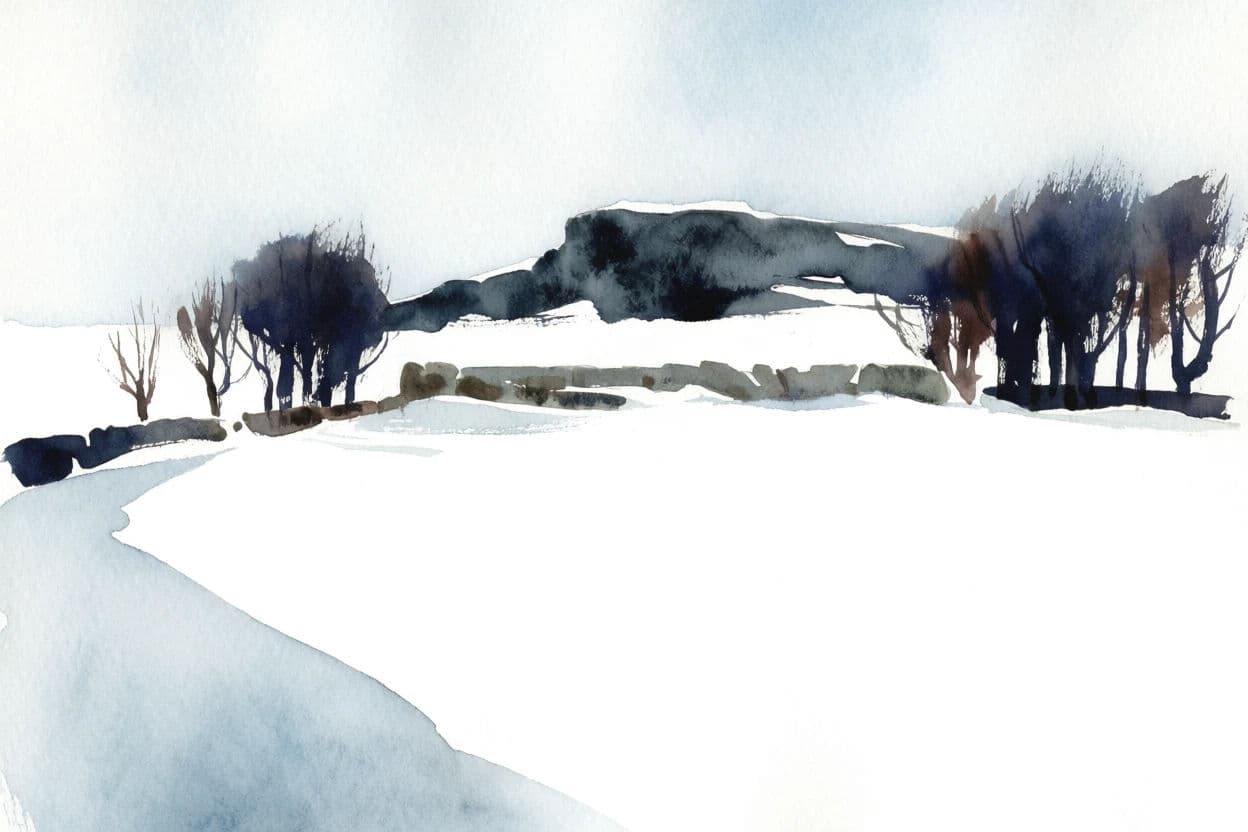
Snow scene made of bare paper
Watercolour on cold pressed cotton rag paper, transparent washes only, no white paint anywhere. A winter landscape in which every snow covered surface is completely unpainted paper, with not a single stroke of white or pale paint anywhere. Only the things that are not snow are painted, a line of dark bare trees, a grey stone wall, a soft blue grey wash for the shadows lying across the drifts, and a cold pale sky. The snow reads as the brightest thing in the picture purely because nothing has been laid over it. Very few strokes overall. Palette of indigo, umber and cold grey. 3:2.
Edit prompt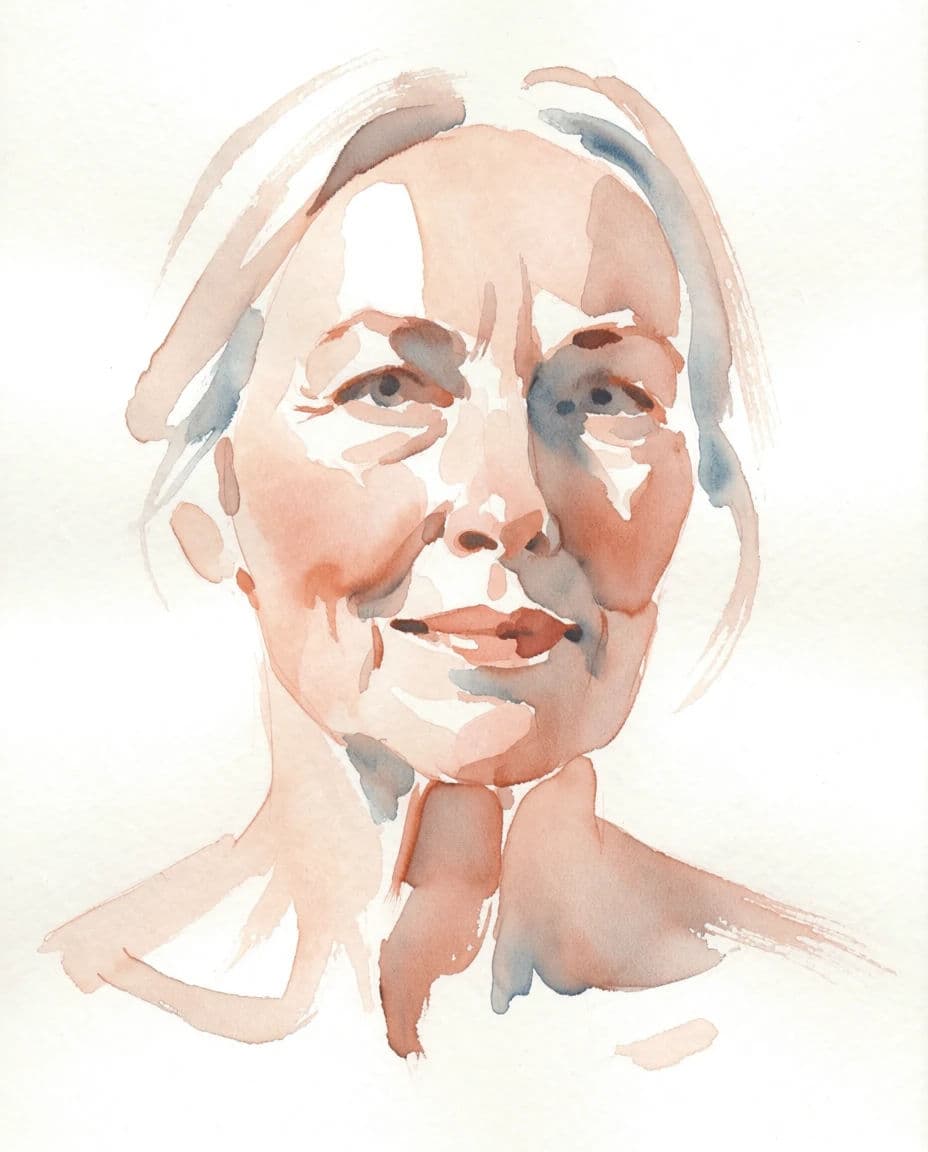
Head study built in three glazes
Watercolour on cold pressed cotton rag paper, transparent washes only, no white paint anywhere. A head and shoulders study of an older woman built from exactly three transparent glazes, a pale raw sienna over the whole face, then a rose madder in the cheeks and lips, then a cool blue grey in the shadow under the jaw and beside the nose, each one letting the layer beneath show through. The forehead, the bridge of the nose and one cheekbone left as completely unpainted paper. Hair suggested with two loose strokes. Edges left open at the shoulders. 4:5.
Edit prompt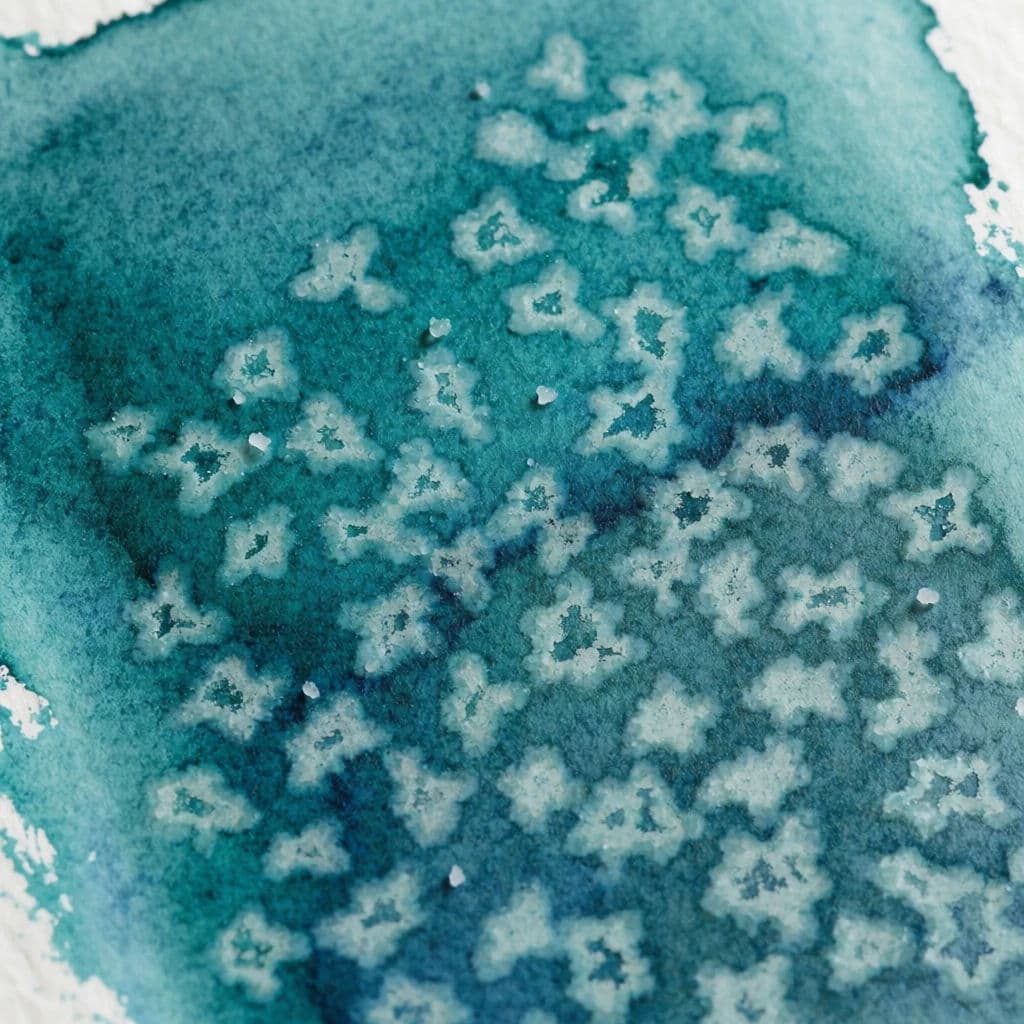
Salt dropped into a damp wash
Watercolour on cold pressed cotton rag paper, transparent washes only, no white paint anywhere. A texture study in which coarse salt has been scattered into a damp wash at the moment the wet sheen had just gone, pushing the pigment aside as it dissolved and leaving a scatter of pale irregular starburst shapes across a deep turquoise ground, each with a slightly darker rim where the colour was displaced. A few undissolved grains still sitting on the surface. No subject, purely the texture. Ragged wash edge with bare paper beyond it. 1:1.
Edit prompt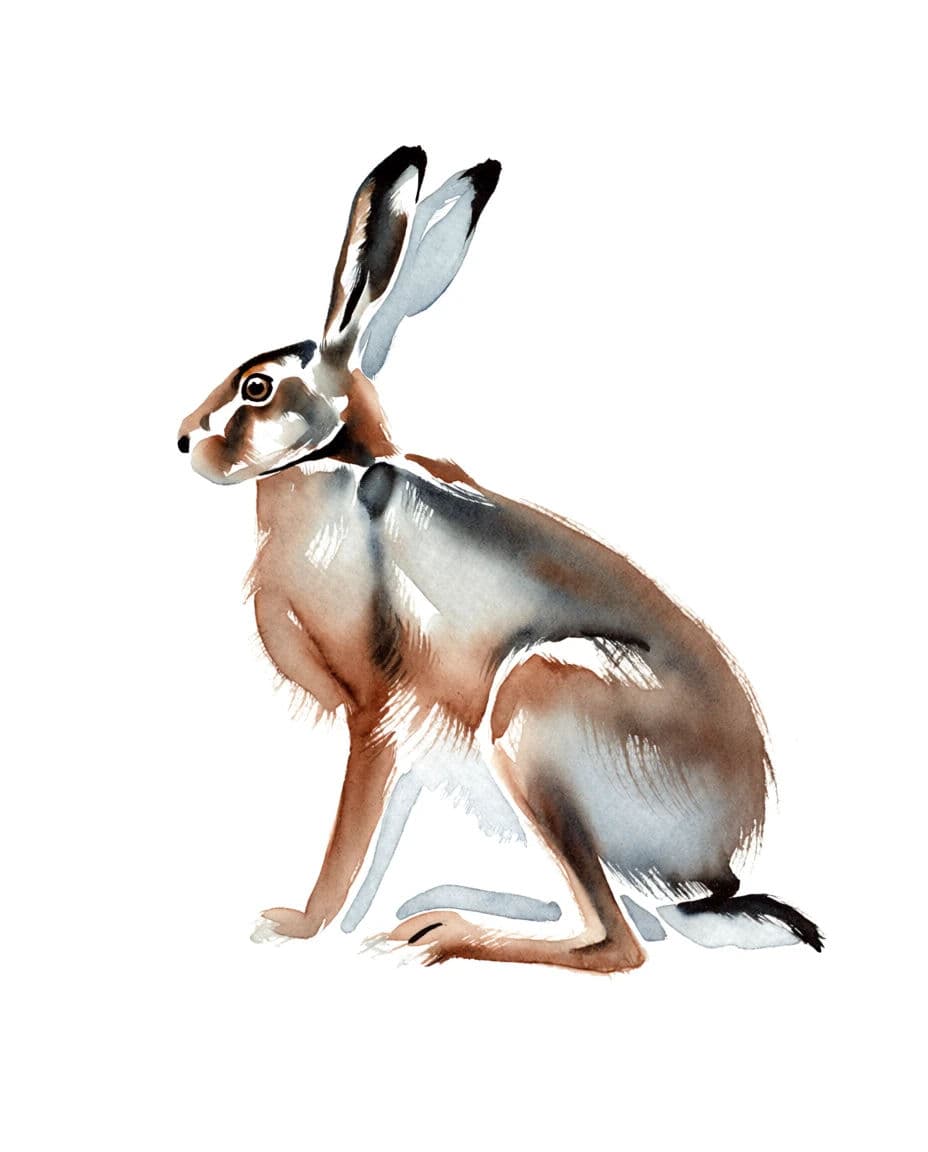
Hare in dry brush fur
Watercolour on cold pressed cotton rag paper, transparent washes only, no white paint anywhere. A study of a hare sitting alert, its coat built entirely from broken dry brush strokes dragged along the direction the fur actually grows, splaying at the flanks and following the curve of the back, with white paper showing between the strokes throughout. The ears and the eye painted with a fine brush in two clean washes for contrast. No background of any kind, the animal floating on bare paper with the strokes fading out at the base. Palette of raw umber, warm grey and one black eye. 4:5.
Edit prompt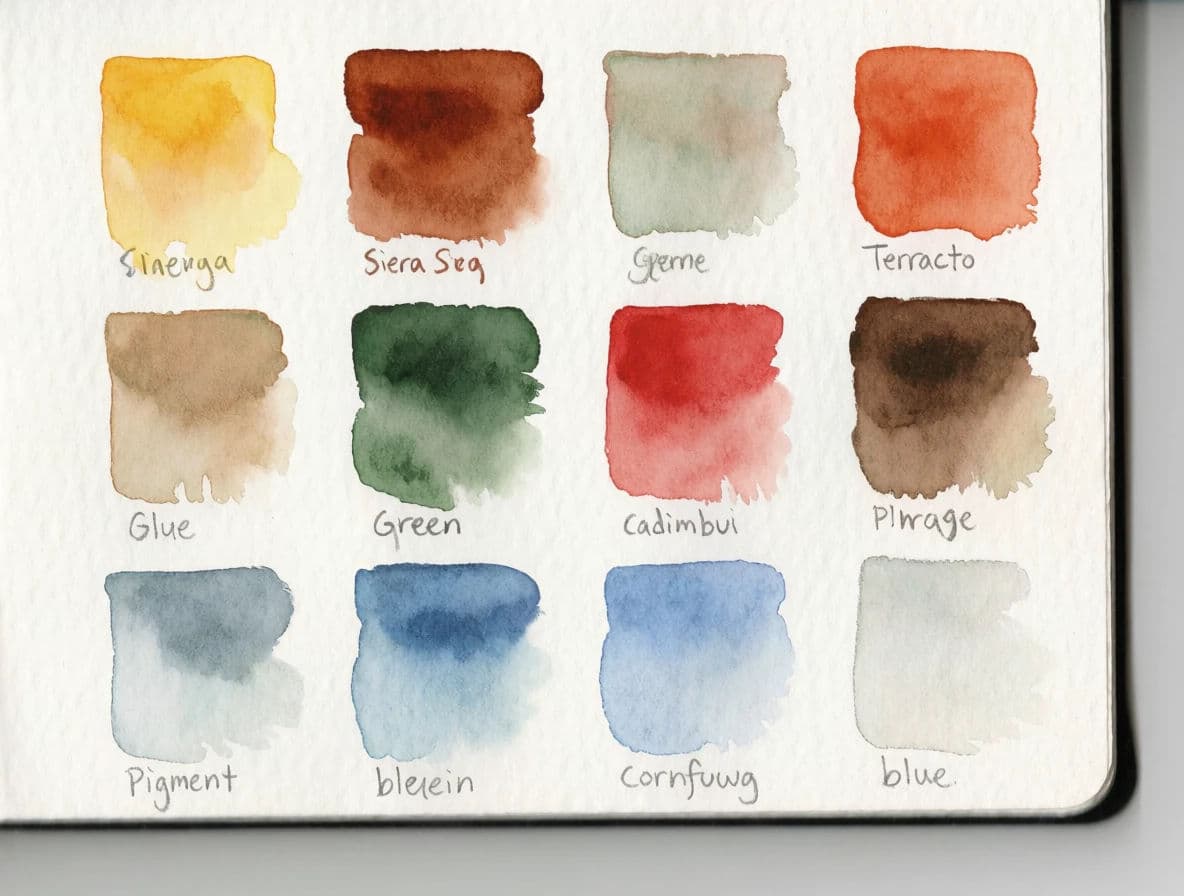
Swatch grid of twelve pigments
Watercolour on cold pressed cotton rag paper, transparent washes only, no white paint anywhere. A pigment test chart, twelve squares laid out in a grid of four by three, each one painted as a graded wash running from full strength colour at the top to almost clear water at the bottom so the dilution behaviour of each is visible. The squares are hand painted with slightly uneven edges and do not line up perfectly. A short handwritten pencil label beneath each square, too small to read as words. Plain white paper surround. Palette running through earths, blues and one bright red. 4:3.
Edit prompt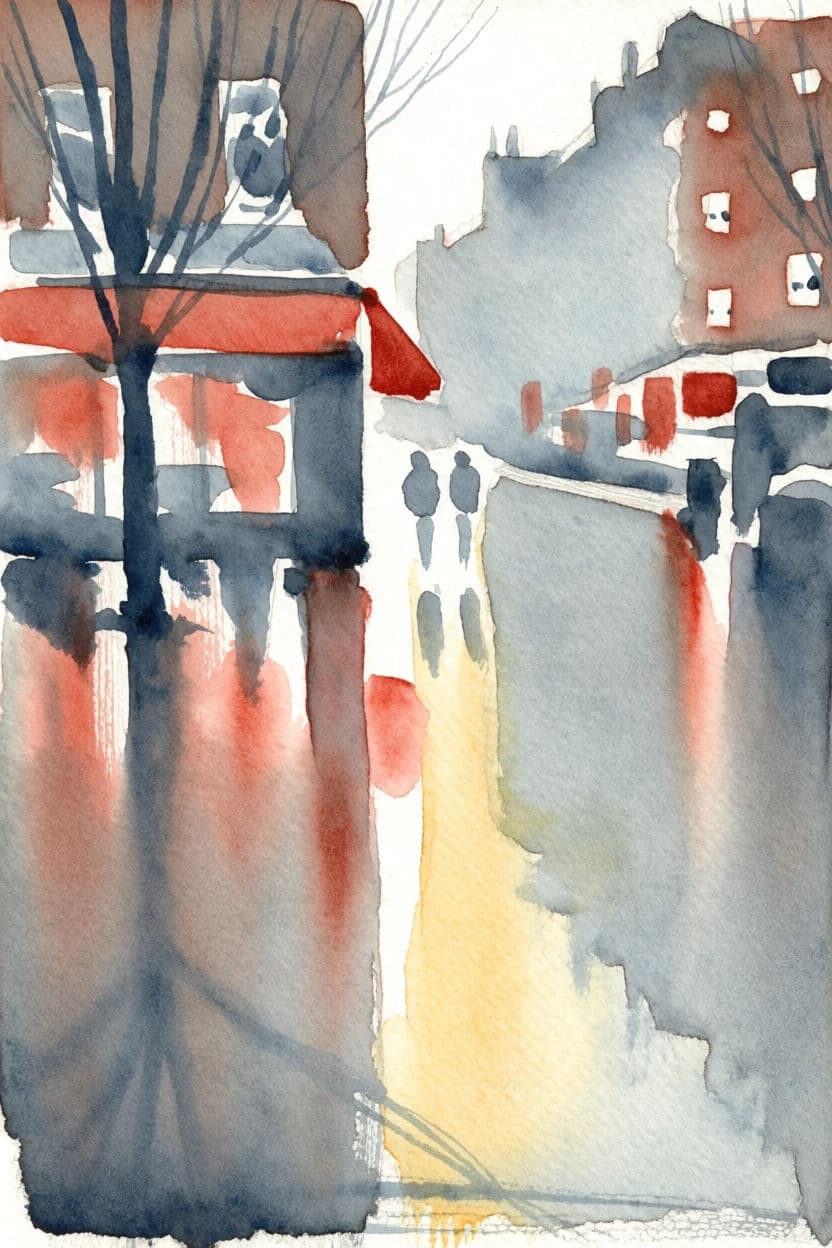
Wet pavement after rain
Watercolour on cold pressed cotton rag paper, transparent washes only, no white paint anywhere. A wet city street after rain, where the reflections in the pavement are made by pulling colour downward in soft vertical strokes into a still damp wash rather than by mirroring the scene above. A shop front and a red awning above, their colours dragged down into the road as blurred vertical bands. Narrow lines of bare unpainted paper left along the kerb edge as the brightest reflections. Figures suggested with two strokes each. Palette of payne grey, red ochre and one warm yellow. 2:3.
Edit prompt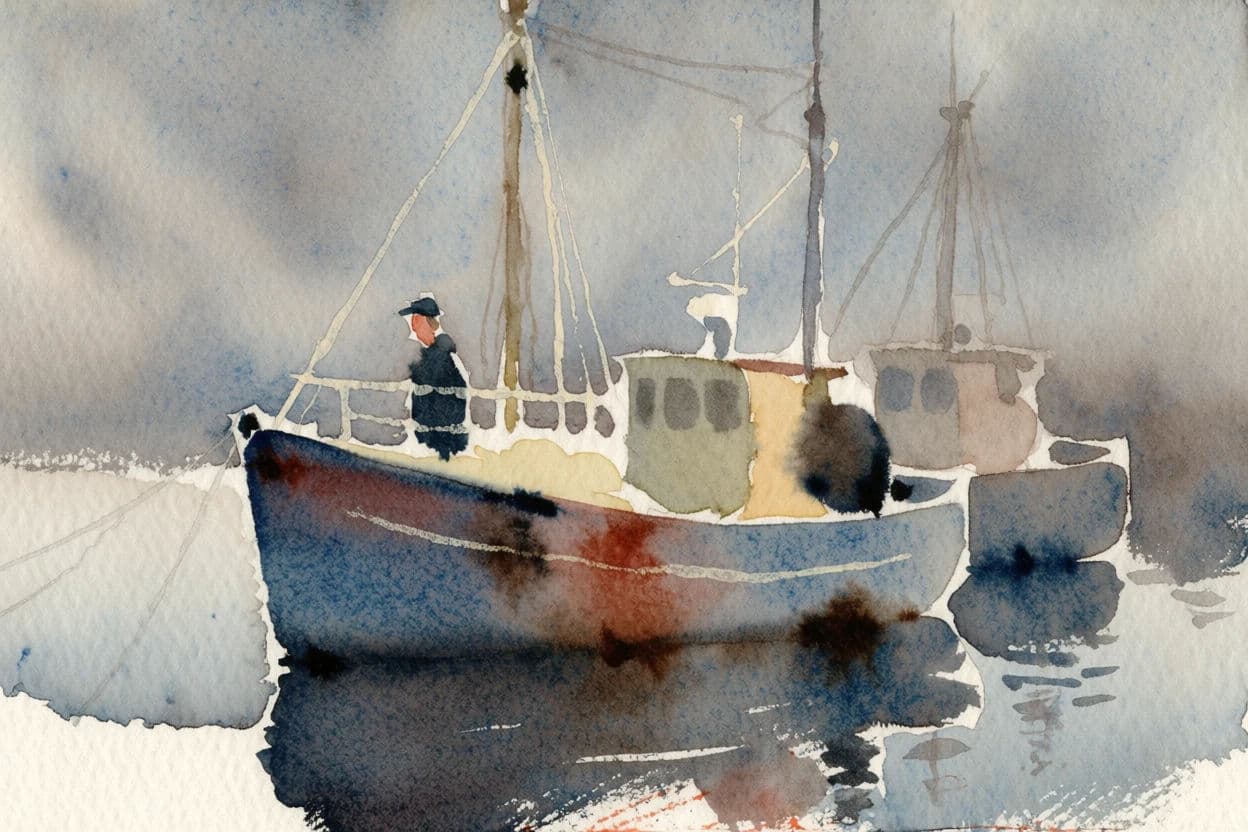
Harbour with the rigging masked out
Watercolour on cold pressed cotton rag paper, transparent washes only, no white paint anywhere. A small harbour with two moored fishing boats, where the rigging and the mooring ropes are fine pale lines of completely untouched paper revealed after masking fluid was removed, far thinner and crisper than any brush could paint. The sky behind them is a single loose wet wash laid straight over the masking. The hulls painted in dry brush over rough paper so the tooth breaks the colour. Palette of indigo, rust and pale ochre. Wash open at the lower edge. 3:2.
Edit prompt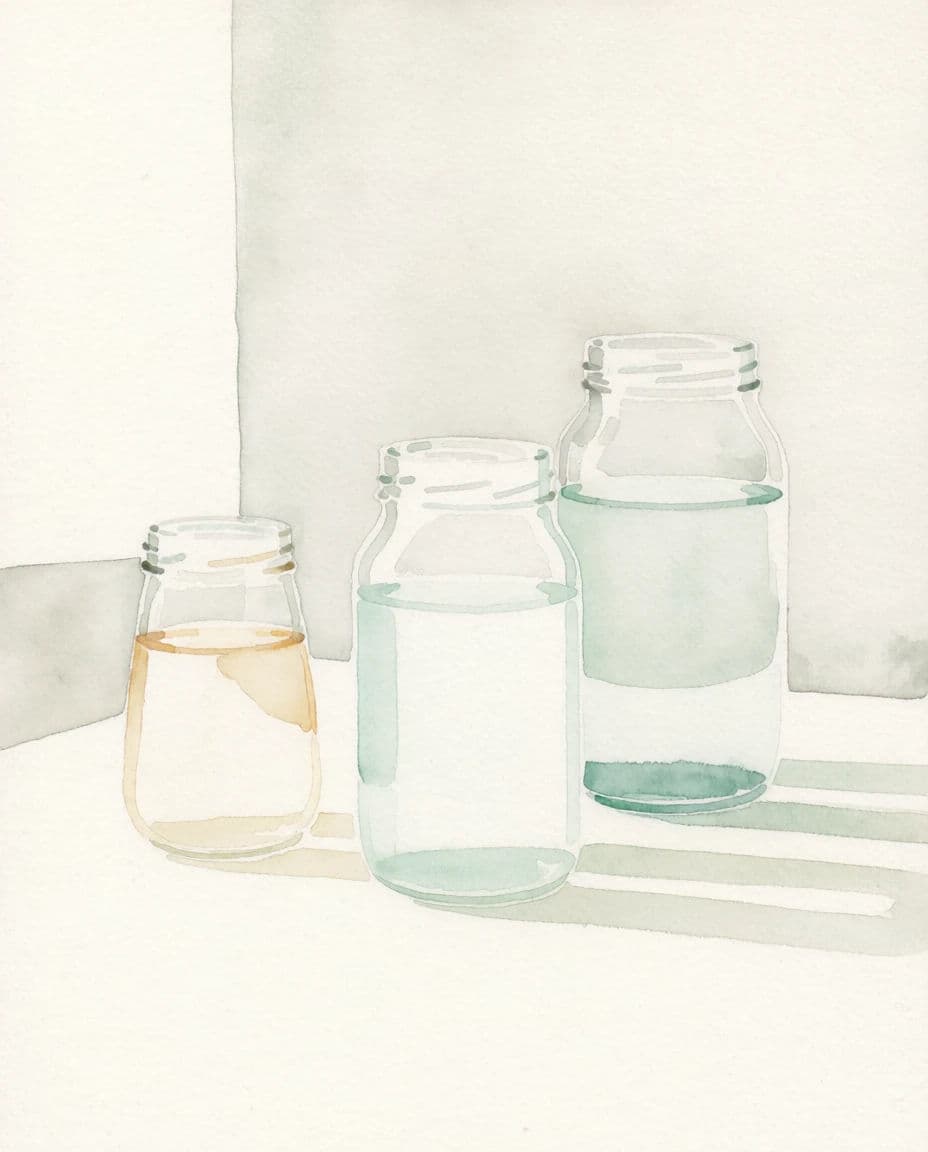
Glass jars against the light
Watercolour on cold pressed cotton rag paper, transparent washes only, no white paint anywhere. Three glass jars on a windowsill against the light, their transparency built almost entirely from what has been left unpainted, with long vertical strips of bare white paper down the side of each jar and only a few thin pale washes for the shoulders, the rims and the contents. A single soft grey wash behind them for the window recess. The shadows on the sill cast as pale bands of colour rather than grey. Very few strokes. Palette of pale sea green, grey and one amber. 4:5.
Edit prompt