Angle study sheet
One ear drawn four times in technical pen, straight side, three quarter front, from behind and tilted back, with hand-ruled margins and blank labels.
프롬프트 편집
Describe the ear drawing you want in Morphic's Image tool, from a clean structural outline to a fully modelled graphite study, and get a finished drawing back. Set the angle, the age, the medium, the line weight and the paper, refine it on the Canvas, then download it in HD.
One ear drawn four times in technical pen, straight side, three quarter front, from behind and tilted back, with hand-ruled margins and blank labels.
프롬프트 편집The same ear in three stages across one sheet, the simple oval block, the folds added in line, then the finished tonal version at the right.
프롬프트 편집
Three ears in fine ink line at the same scale, an infant, an adult and an older subject, the lobe and rim thickness changing across the row.
프롬프트 편집
A profile head in even ink line with a flat grey wash under the jaw, the ear left fully drawn while the rest stays as open contour.
프롬프트 편집
원하는 Ear drawing의 모습을 쉬운 말로 설명하세요.
Morphic이 캔버스 위에 바로 게시할 이미지를 몇 초 만에 생성합니다.
프롬프트를 조정해 다시 생성한 뒤, 원하는 이미지를 저장하거나 공유하세요.
참조 이미지를 선택하고 자신의 사진이나 아트워크에 시각적 스타일을 적용하세요.
모든 이미지를 새 종횡비로 변환합니다. 스마트 자르기 또는 가장자리를 늘려 맞춥니다.
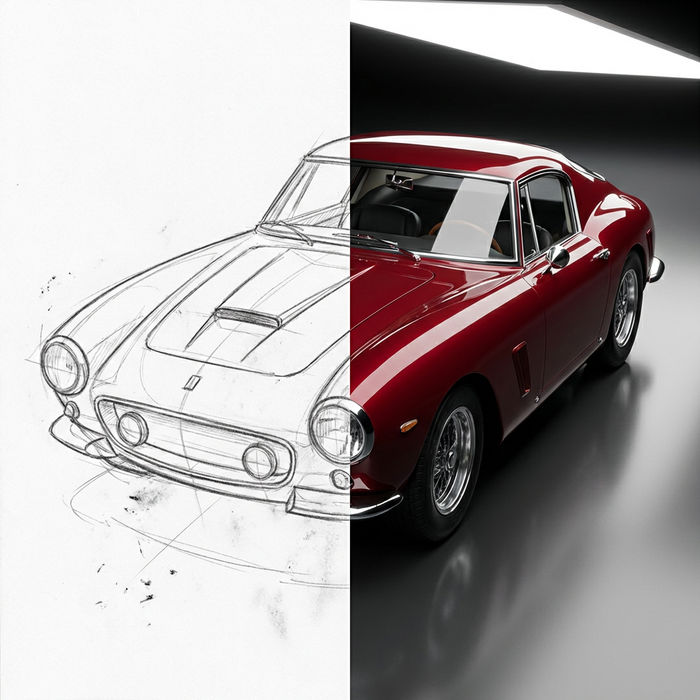
스케치나 그림을 완성된 렌더링으로 바꾸세요.
모든 프레임이 변형되고 모든 움직임은 그대로 유지됩니다. 모든 동영상을 완전히 새로운 시각적 스타일로 재스타일링하세요.
모든 애니메이션 캐릭터를 사실적인 하이패션 실사 초상화로 재해석하세요.
셀카 한 장으로 전문적인 프로필 사진 세트를 완성하세요. 스튜디오 품질, 다양한 스타일.
Eye AI Drawings
Create AI eye drawings in your browser with Morphic's eye drawing generator. Make realistic eyes, expressive gazes, anime studies, and shaded pencil references in any style, perfect for practice or character design, and download in seconds.
Nose drawing generator
Turn a nose drawing idea into a finished image in Morphic. Describe the line work and style, generate variations, then refine it on the canvas.
AI 얼굴 드로잉
인물 데생과 얼굴 스케치를 AI로 빠르게 만들어 보세요. 연필, 목탄, 잉크 스타일까지 다양하게 시도할 수 있습니다.
Lord Krishna drawing generator
Turn a lord Krishna drawing idea into a finished image in Morphic. Describe the line work and style, generate variations, then refine it on the canvas.
오늘 무료로 시작하고 언제든지 업그레이드하거나 취소할 수 있습니다.
Basic
2400 월간 크레딧
1 명 전용
모든 모델
워크플로
Standard
3625 월간 크레딧
1 명 전용
모든 모델
워크플로
Pro
6350 공유 월간 크레딧
1 사용자
모든 모델
워크플로
Max
24650 공유 월간 크레딧
1 사용자
모든 모델
워크플로
Enterprise
더 높은 제한
사용자 정의
가격 및 청구 조건

Free
가볍게 사용해보기
$0
영구 무료