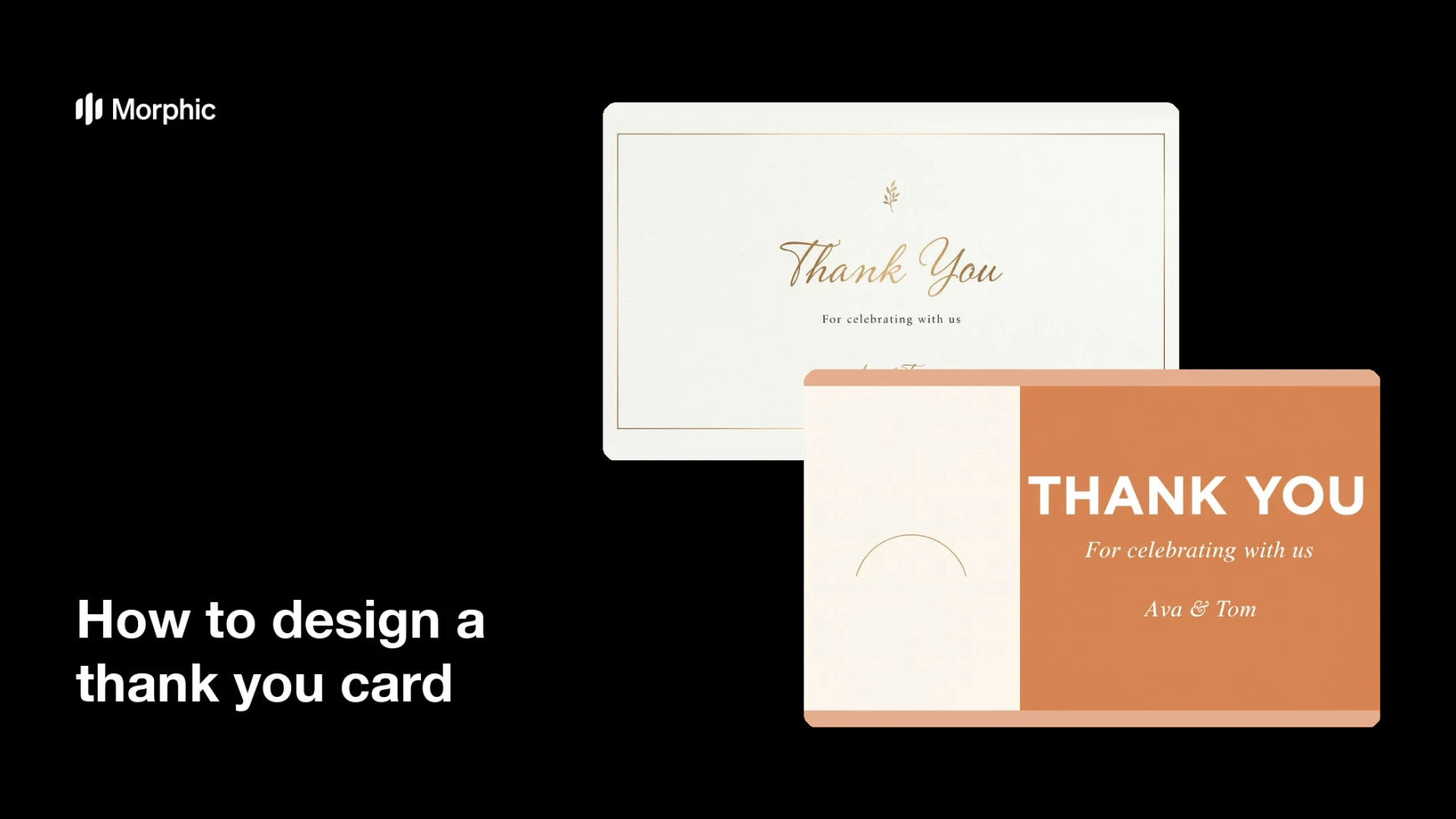
What is a thank you card?
A thank you card is the short printed note sent after a wedding, a party, a client project, or an order. It carries a brief message and a name, and its job is warmth rather than information, which is why the styling matters as much as the words. Couples, small businesses, and event hosts send them in batches, often weeks after the occasion itself.
With Morphic you design that card from a text prompt in your browser. Describe the message, the lettering style, and the palette, then compare a couple of treatments and download in HD. You get a print-ready card without a stationery order or design software.
Decide the message and the signature
Write the exact wording, usually a short headline and one or two lines beneath, plus how you want to sign off. Keeping the copy short leaves the design room to breathe.
Describe the card in Morphic
Open Morphic and describe the format, a folded card or a flat note with the thank you headline leading. Ask for a couple of layouts so you can compare a centred treatment against an off-centre one.
Pick the lettering and palette
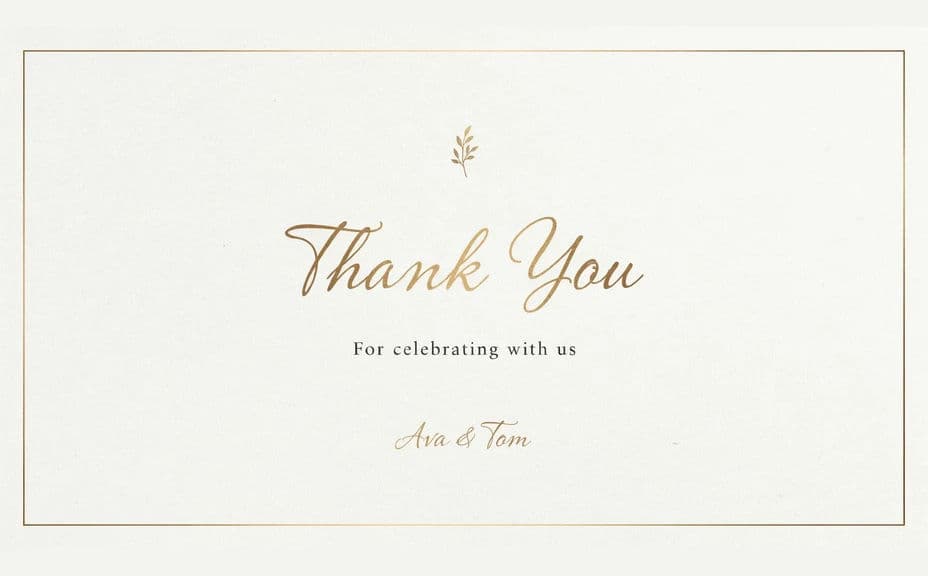
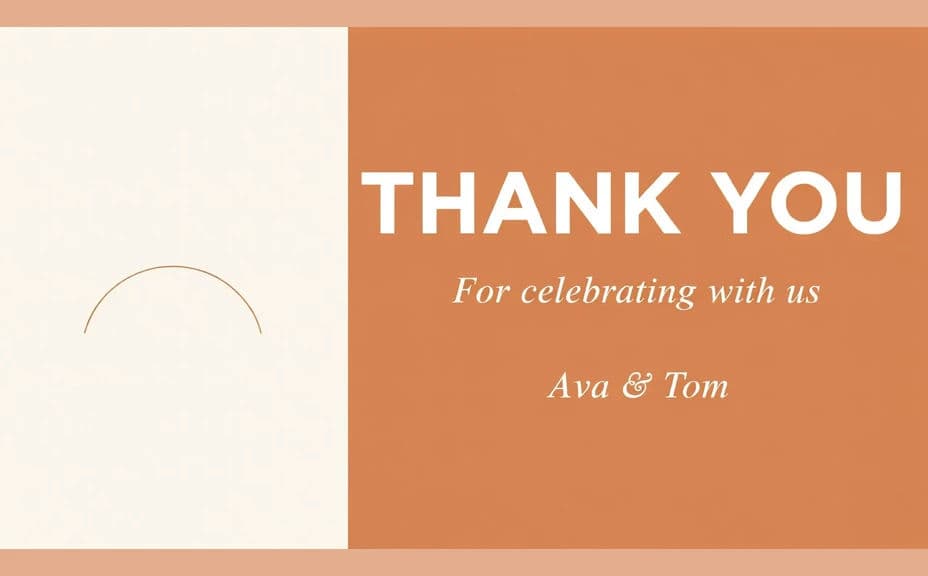
Name the type style you want, flowing script, clean modern sans, or a classic serif, along with your paper tone and accent colour. The lettering carries most of the warmth on a card this simple.
Proof the wording
Read the headline and every line of the message straight off the card, including the signature. Regenerate any version where a letterform is malformed or the message spacing looks uneven.
Download and print or send
Preview at actual size so you can check the type weight holds up on paper. Download in HD, then print the batch or attach the file to an email.
Two design options for the same thank you card, each carrying the same message and sign-off.
What makes a good thank you card
| Quality | What it means | Why it matters |
|---|---|---|
| A short, warm message | A headline and one or two lines | The note reads as personal rather than formal |
| Confident lettering | Type is well-formed and evenly spaced | The card feels crafted rather than assembled |
| Generous white space | The design is not crowded | The message is the thing the eye lands on |
| Print-safe margins | Text sits away from the trim edge | Nothing is clipped when the batch is cut |
Morphic vs the traditional way
| Morphic | Stationery designer or card template tool | |
|---|---|---|
| Cost | Available on Morphic | Designer fee or per-card stationery order |
| Time | A finished card design in minutes | Days of proofs and revision emails |
| Skill needed | Describe it in plain language | Layout and lettering skills |
| Consistency | Regenerate a matching set for every occasion | Manual rework for each new card |
FAQs
Yes. Give the exact wording in your prompt, then proof the rendered text and regenerate if a line reads wrong.
Yes. Describe your brand palette, type style, and company name so the card matches the rest of your customer communication.
A flat card around 4x6 inches or a folded A6 both work well. Describe the proportions you want and check the type at actual print dimensions.
Yes. Ask for a clear panel or a blank interior so you can add a personal line by hand after printing.
Yes. Download in HD and attach the file to an email or message rather than running a print batch.
Yes. Images you generate with Morphic are cleared for commercial use, including cards you send to customers or include with orders.