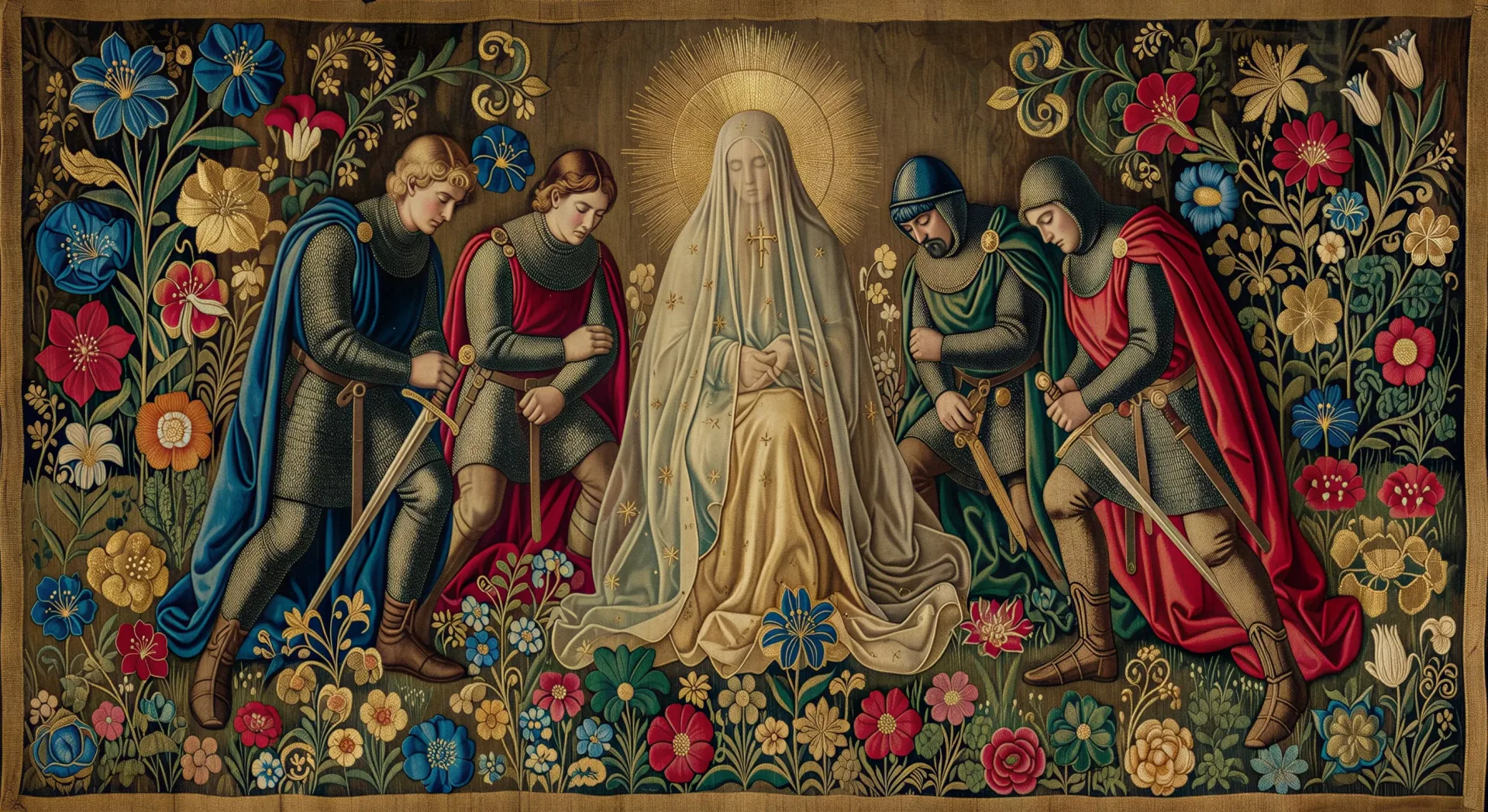
Arthurian manuscript illumination splits into three productive phases. The 13th–14th-century French Vulgate Cycle (the Lancelot-Grail prose romance, also called the Pseudo-Map cycle) is the densest: the Estoire del Saint Graal, the Estoire de Merlin, the Lancelot proper, the Queste del Saint Graal, and the Mort Artu, all heavily illuminated in BnF manuscripts (especially the Add. and Royal manuscripts in the British Library, and the BnF f.fr. series). Standard medium: gold leaf and vermillion-and-ultramarine miniatures with figured initials at chapter heads, marginalia of grotesques, drolleries, hounds, and stylised plant scrolls in the margins. The 14th–15th-century English Arthurian tradition is more reserved: the Brut chronicles, Malory’s Morte d’Arthur (Caxton printed it in 1485 with woodcut illustrations rather than illumination), Lydgate’s Fall of Princes. The 19th-century Pre-Raphaelite revival is the third phase: Burne-Jones (The Last Sleep of Arthur in Avalon, the Holy Grail tapestries with William Morris), Waterhouse (The Lady of Shalott, multiple Tristan paintings), Rossetti, the Kelmscott Press editions of Malory.
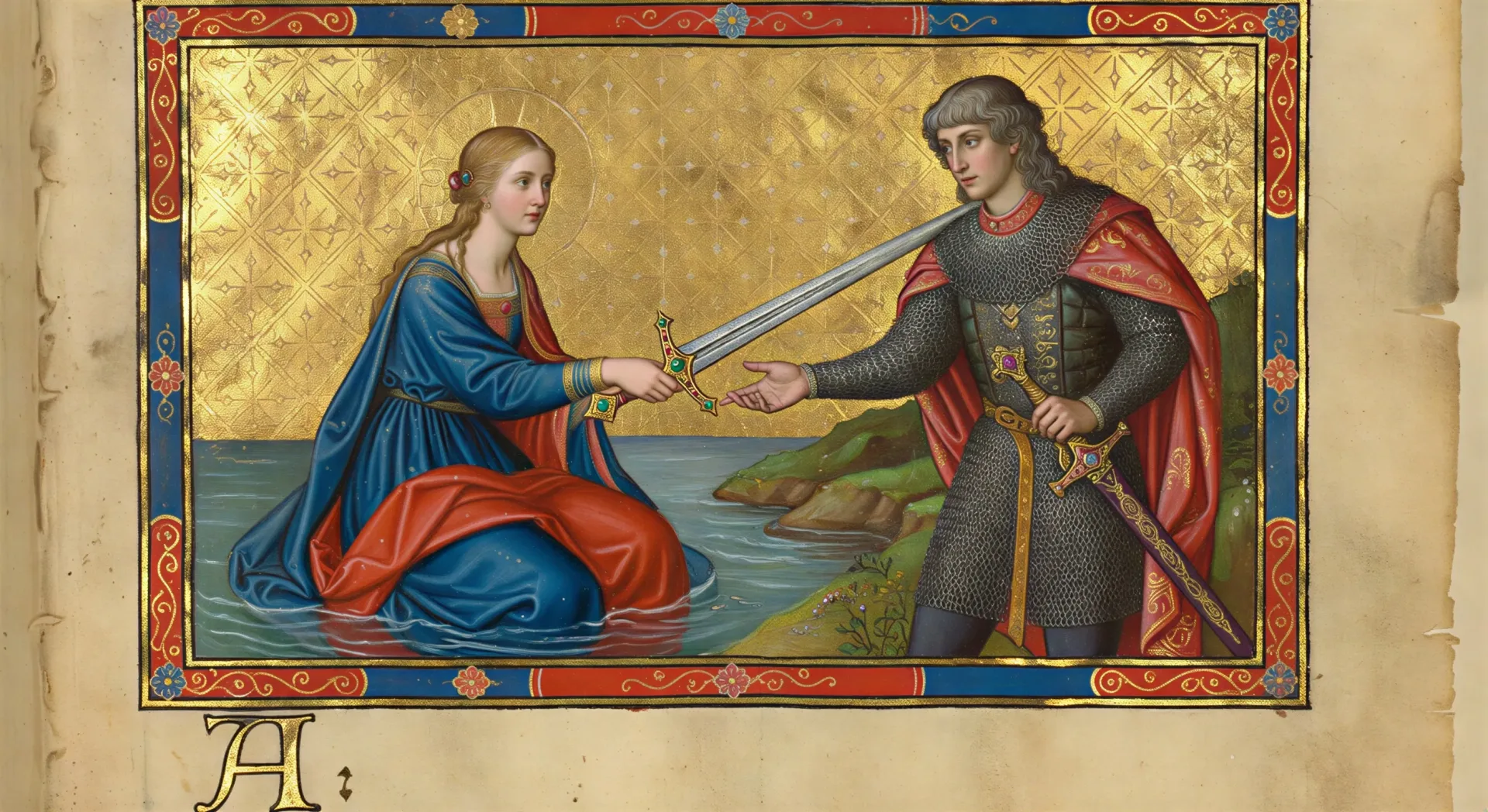
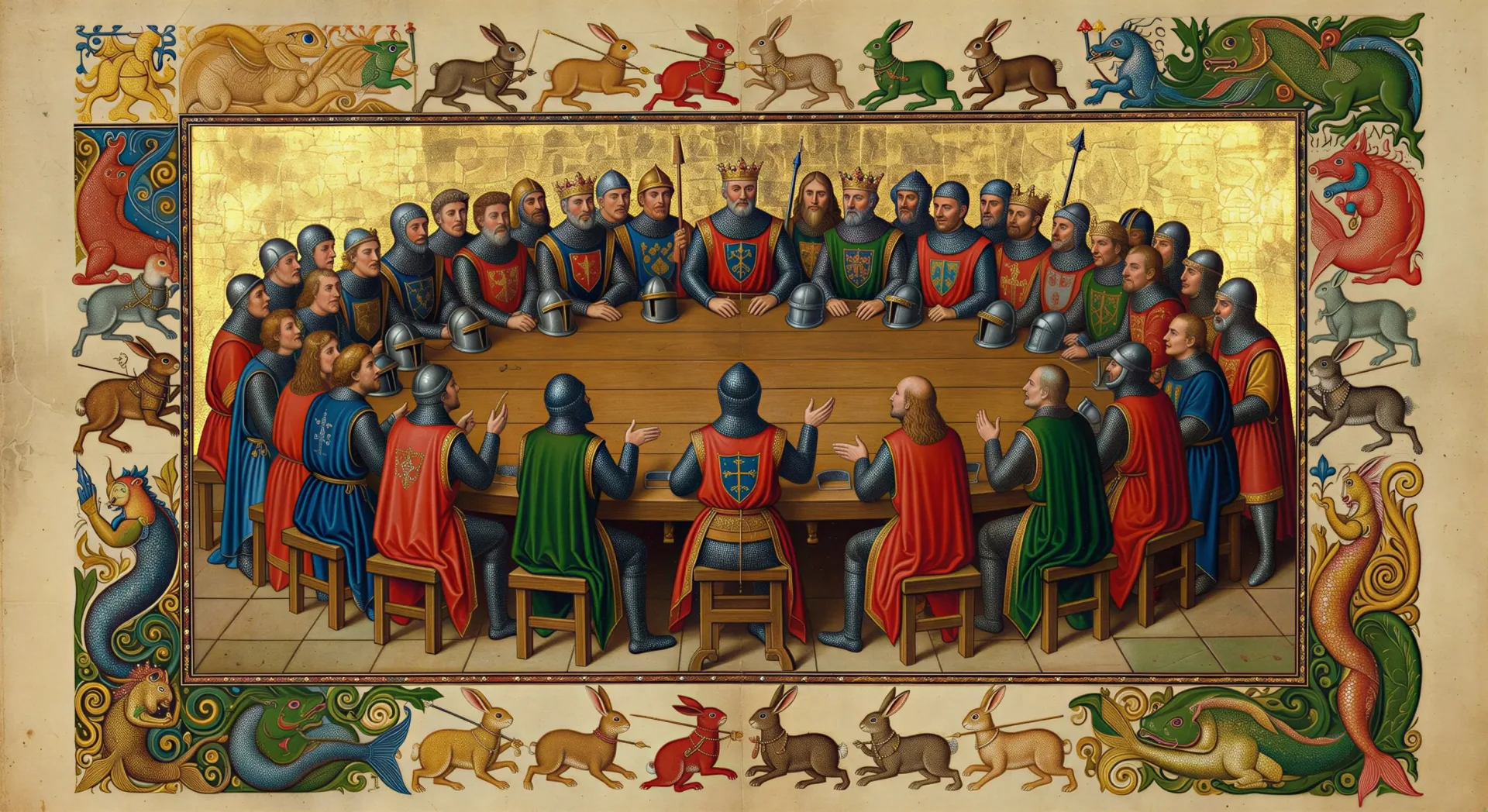
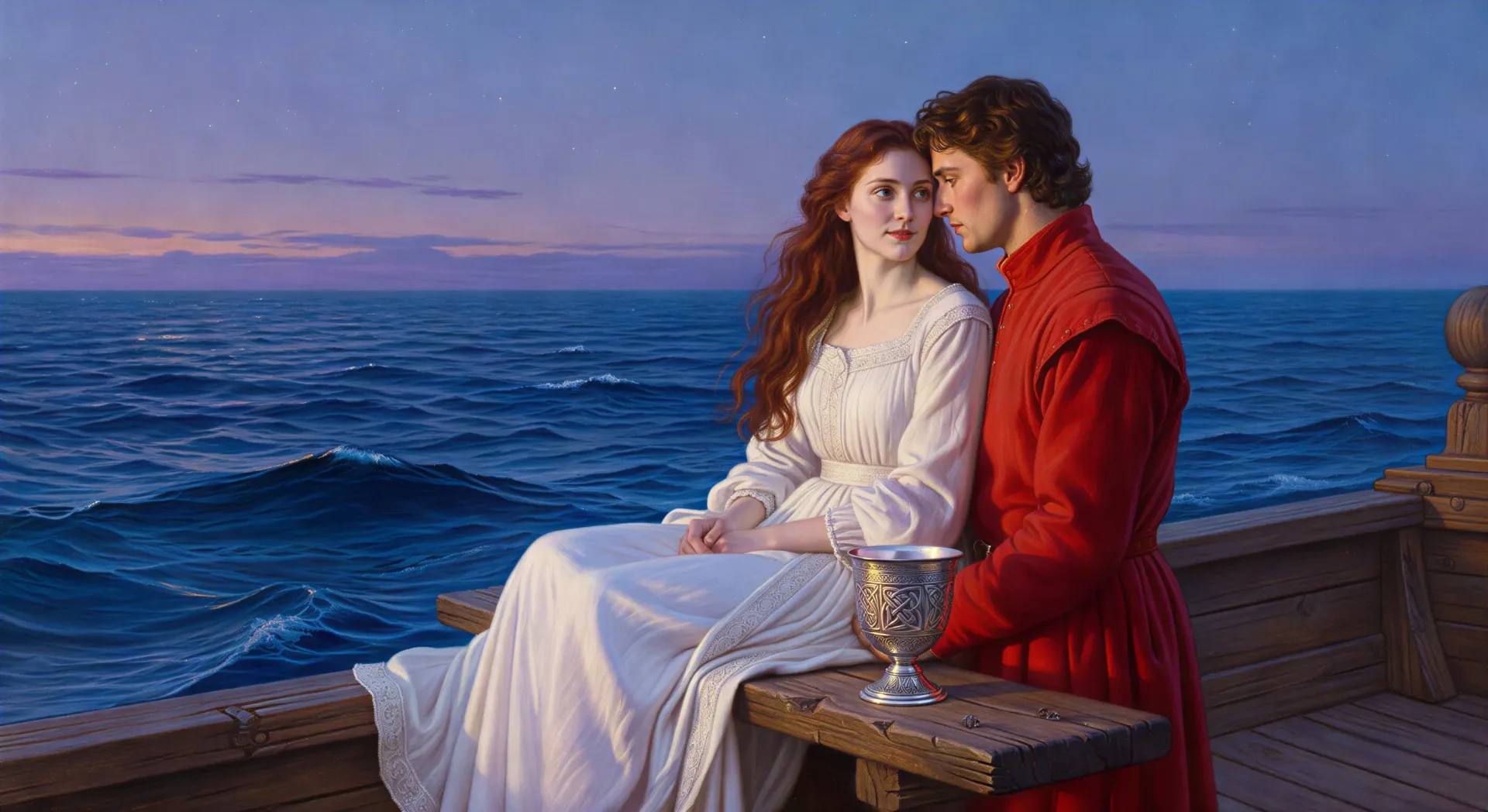
The standard miniature has a tight grammar. A square or rectangular framed image at the top of a chapter, gold-leaf ground tooled with diaper or repeating-leaf patterns, foreground figures in jewel-tone surcoats (Arthur in crimson Pendragon, Lancelot in blue with three silver bends, Gawain in green pentangle, Galahad in white with a red cross), heraldic shields hanging from castle towers in the background, scribal lettering of Lombardic capitals introducing the chapter below the miniature. Scenes most often depicted: the sword in the stone, the gift of Excalibur, the Round Table at full session, the wedding feast at Camelot, the appearance of the Sangreal, Galahad’s ascent, Tristan and Iseult on the ship, the duel of Arthur and Mordred at Camlann, the barge to Avalon. Marginalia carry hounds, hares, grotesque hybrids, knights jousting hares, fish-tailed mermen.
For image generation, anchor each manuscript prompt to a specific phase, a specific moment from the cycle, and a specific manuscript convention (gold-leaf ground, figured initial, marginalia border, full-page miniature). For the Pre-Raphaelite revival, anchor to a specific painter and his palette: Burne-Jones rich russets and green-golds, Waterhouse pale water-and-flowers, Rossetti dense crimson and gold. Lean on the medieval palette: vermillion, ultramarine, gold leaf, white-of-vellum, ivory black, malachite green. Mention the page furniture (initial, marginalia, Lombardic capital below) directly in the prompt. The closer you describe what kind of object you are imagining, the closer the result lands to a real codex or a real painting.