How to make ancient Greek art with AI

Ancient Greek art is the visual language built across roughly a thousand years from the Geometric period through the Archaic, Classical, and Hellenistic eras. White marble sculpture from Pentelic and Parian quarries, fresco on lime plaster, tessera mosaic, low-relief frieze on temple architrave, the painted vase. The grammar is unusually clean and unusually durable.

It is also barely touched by AI image generation as a craft. The tool product pages exist; the toolkit-as-process page does not.

Ancient Greek art is the visual language that built Western iconography: white marble sculpture, ochre and lapis fresco, tessera mosaic, the long horizontal frieze. Morphic lets you produce any of it in your browser. Pick a figure, a composition, or a workflow below and start now.

Ancient Greek art figures you can create

Ancient Greek art compositions you can produce

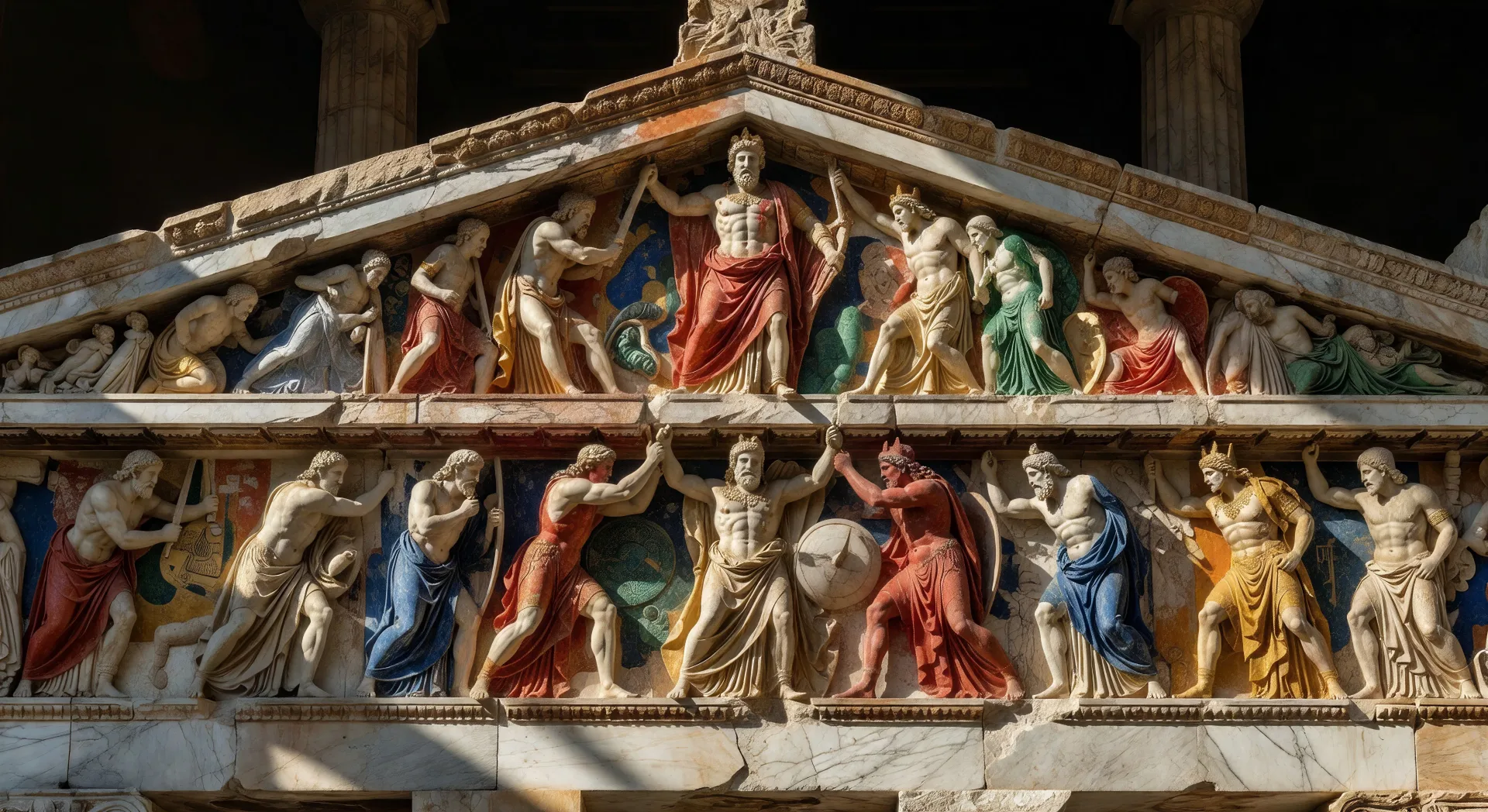
Pediment battle in painted marble

A temple pediment crowded with battling figures in low relief, painted in archaic-bright vermillion, lapis, ochre, the central composition pinned to a god in the apex triangle.

Try this prompt
Pediment battle in painted marble

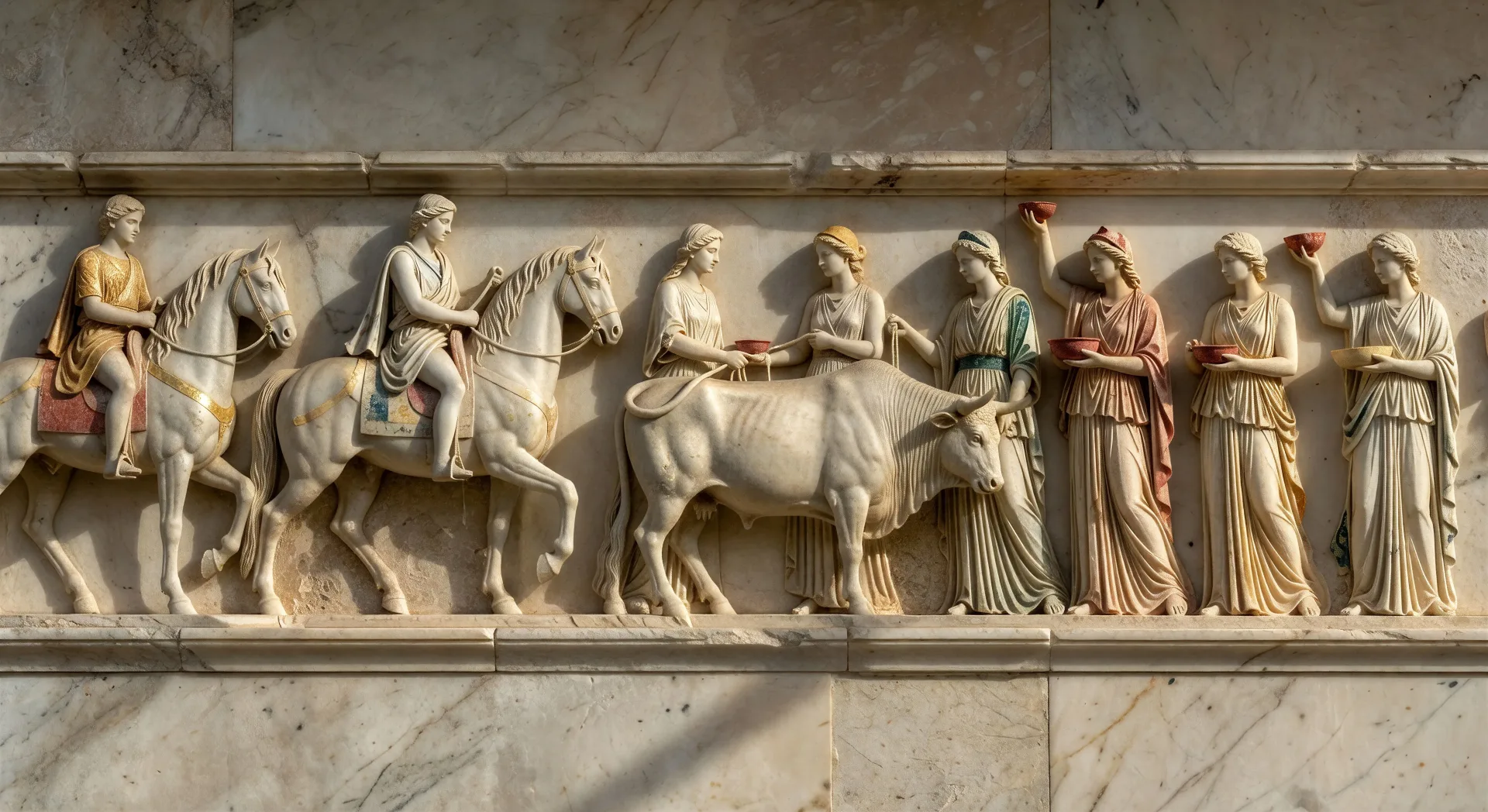
Procession frieze on temple architrave

A long horizontal procession frieze in low relief, riders, sacrificial bulls, maidens with libation bowls walking left across the architrave, sunlight raking the carved surface.

Try this prompt
Procession frieze on temple architrave

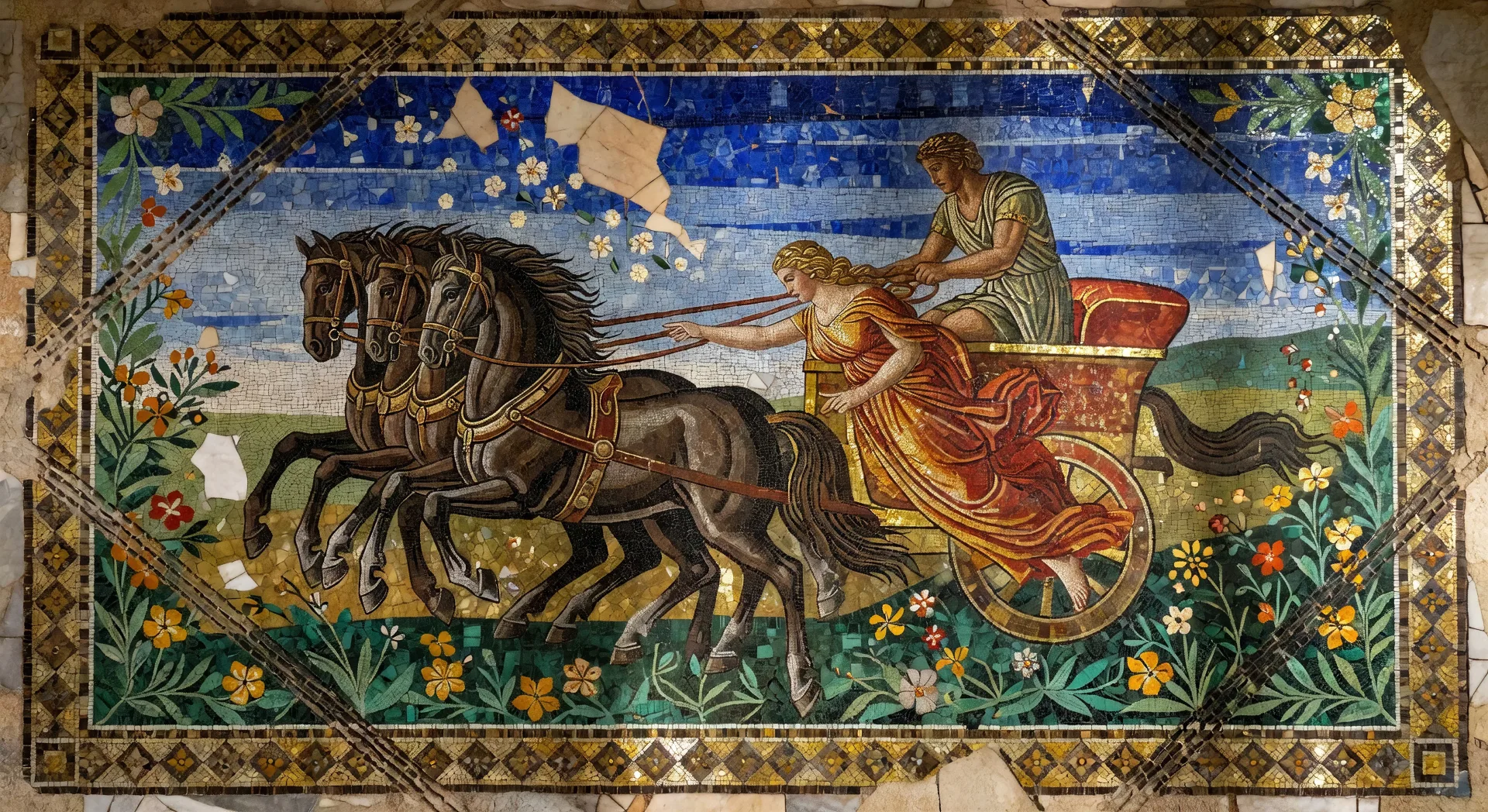
Floor mosaic of a mythological scene

A floor mosaic of the abduction of Persephone laid in marble and glass tesserae, the chariot wheel-tracks crossing the meadow border, grout lines visible in raking light.

Try this prompt
Floor mosaic of a mythological scene

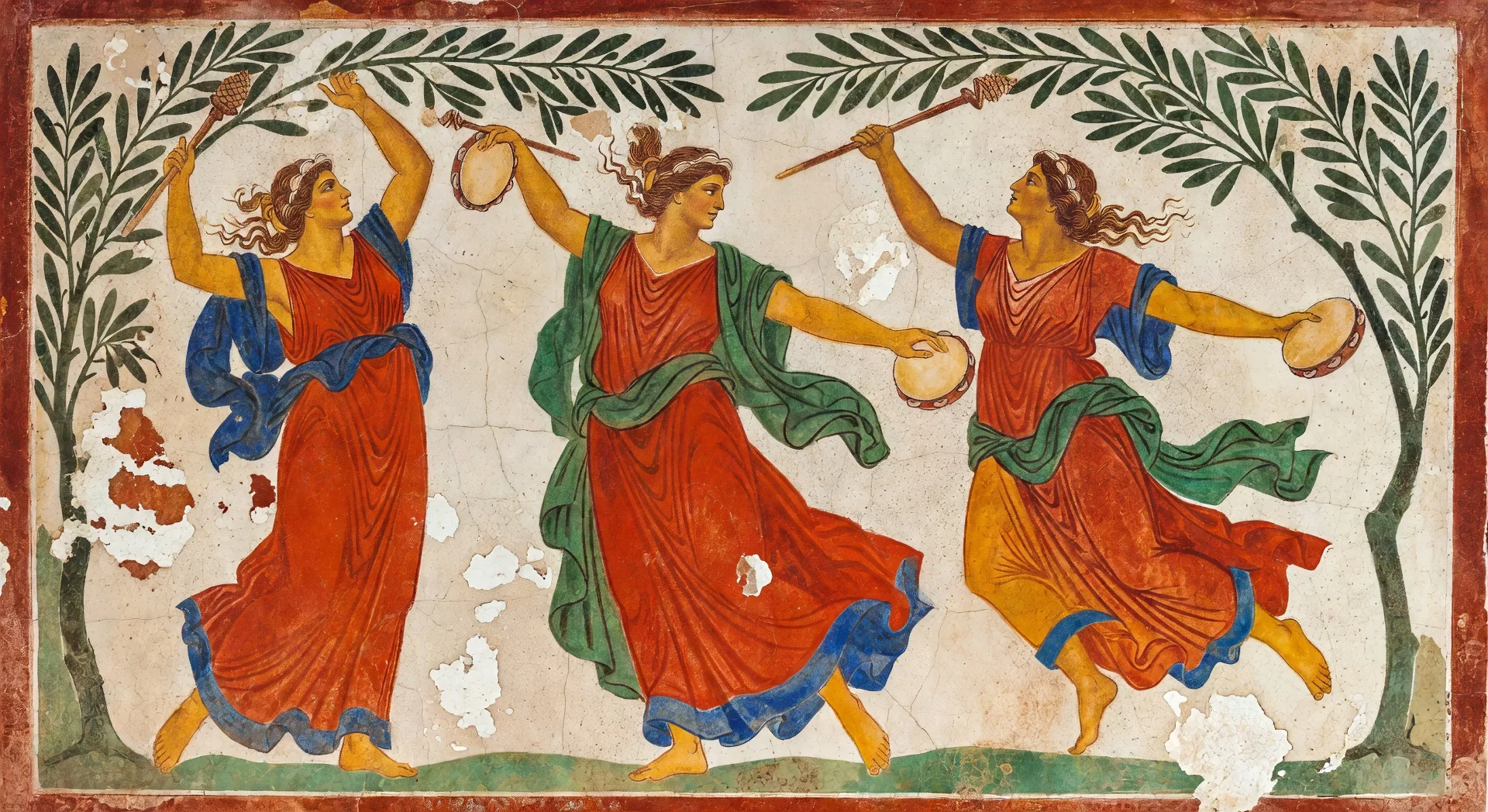
Fresco of dancing Maenads

A lime-plaster fresco of three Maenads dancing under olive branches, robes flying in saturated mineral pigment, the wall ground showing chalk-white at the edges where color has lost.

Try this prompt
Fresco of dancing Maenads

Sculpture of a horse on the Parthenon

A horseʼs head emerging from the Parthenon east pediment in Pentelic marble, mouth open, mane flowing, the eye carved from the stoneʼs full depth, dawn light pooling in the cavity.

Try this prompt
Sculpture of a horse on the Parthenon

Archaic kouros in the quarry yard

A finished Archaic kouros standing against a Pentelic quarry wall in raking afternoon light, marble dust drifting at his feet, the chiselled smile catching the warm Greek sun.

Try this prompt
Archaic kouros in the quarry yard

How to make it on Morphic

  1. 01

    Open the Image tool on Morphic

    Sign in to Morphic in your browser and head straight to the entry point below. No installs, no setup, and any device with a connection picks up where you left off.

    Open Image
  2. 02

    Describe what you want to see

    Write the ancient Greek art piece you want to see in your own words. Name the medium (marble sculpture, fresco, mosaic, relief), the period (Archaic, Classical, Hellenistic), the figure or composition, and the lighting. The more specific your description, the closer the result lands to a genuine artifact look.

    A finished Archaic kouros standing against a Pentelic quarry wall in raking afternoon light, marble dust drifting at his feet, the chiselled Archaic smile catching the warm Greek sun. Tight three-quarter framing.
  3. 03

    Generate, refine, and publish

    Morphic returns an image to your canvas. Refine the prompt for variations, regenerate to fix what missed, or iterate into a series. Download or share when the frame lands.

Related workflows

A short guide to ancient Greek art for image creators

Ancient Greek art splits into four canonical media. Marble sculpture covers the kouros and kore figures of the Archaic period (rigid frontal stance, Egyptian-influenced, the famous Archaic smile), the Severe and Classical idealizations (Polykleitosʼ Doryphoros and the Parthenon pediments), the dramatic Hellenistic styles (the Laocoön, the Nike of Samothrace). Bronze sculpture mirrored marble through the same evolution but rarely survived. Fresco was painted on lime plaster while still wet, the pigment binding chemically with the wall, palette tightly limited to mineral colors: ochre, vermillion, malachite green, lapis blue, carbon black, lime white. Mosaic worked through tesserae of marble, glass, and stone laid into a leveling bed; the floor mosaics of the Macedonian palaces and later the Pompeian villas show the technique at its peak. Architectural relief panels (metopes, friezes, pediments) carried narrative across temples in low and high relief, painted in their day in saturated colors that have weathered to the white we now associate with classical purity.

For image generation, anchor each ancient Greek art prompt to one medium and one period. The visual library is precise: the Archaic kouros stiff against a quarry wall, the Severe Style athlete in the moment of motion, the Hellenistic warrior writhing in dramatic chiaroscuro, the lime-bound fresco of dancing Maenads, the tesserae of a Pompeian floor mosaic depicting Alexander at Issus, the metope of a Lapith battling a Centaur. Use a palette of marble white, ochre, vermillion, malachite, lapis, gold leaf where appropriate. Name the medium directly. The closer you describe what kind of object you are imagining, the closer the result lands to the look of the genuine artifact.

Lean into the medium-native styles. Marble photoreal: Pentelic-marble texture, the warm ivory of weathered stone, dust shaft lighting. Fresco painterly: lime-plaster grain visible under the pigment, the chalk-white ground showing through, faded edges where the wall has lost its color. Mosaic photoreal: tesserae catching the light at slight angles, grout lines visible, the slight unevenness of a floor laid by hand. Name the style directly in the prompt.

You might also like

Frequently asked questions

Where can I make ancient Greek art with AI?
You can create ancient Greek art directly in your browser on Morphic. Open the Image tool, describe the figure or composition with the medium and period spelled out, and Morphic produces the artwork. No installs and no specialist software needed.
What media of ancient Greek art can I generate?
All four canonical media: marble sculpture (Archaic kouros and kore, Classical Doryphoros, Hellenistic dramatic figures), fresco on lime plaster, tessera mosaic, and architectural relief (pediment, frieze, metope). Name the medium upfront in your prompt so Morphic picks the right palette and surface texture.
How do I get the right period look?
Name the period directly: Archaic for the rigid frontal stance and the Archaic smile, Severe Style for early Classical, Classical for Polykleitan contrapposto and the Parthenon canon, Hellenistic for the dramatic chiaroscuro and emotional figures. Each period has a distinct grammar that Morphic can hold once you specify it.
How do I write a good prompt for ancient Greek art?
Name the medium, the period, the figure or composition, and the lighting. For example: "Archaic kouros in Pentelic marble against a quarry wall in raking afternoon light, the chiselled Archaic smile catching the warm Greek sun." Specifying the medium and period is what separates an ancient Greek art prompt from a generic neoclassical illustration prompt.
Can I get the painted-marble look or the white-marble look?
Both. The white-marble aesthetic we associate with classical purity is the result of two thousand years of weathering; the originals were painted in bright mineral pigments. Specify "painted-marble in archaic-bright vermillion, lapis, and ochre" for the original look, or "weathered Pentelic white marble" for the post-classical look.
Do I need any prior art-history knowledge to make ancient Greek art?
No. Morphic runs in your browser and you direct it with plain-language prompts. Anyone who can describe a figure and a medium can produce one. A short reading on the four canonical media (sculpture, fresco, mosaic, relief) helps you write more specific prompts but is not required.