How to make Celtic knot art with AI

Celtic knot art is the decorative tradition that runs from Iron Age La Tène spirals through Insular Christian interlace on the Book of Kells and the Lindisfarne Gospels, into 9th–10th century Irish high-cross stonework, and on into the 19th-century Arts and Crafts revival of John Duncan, Mary Watts, and Archibald Knox. The grammar is unusually durable.

Most online generators flatten it to a single decorative motif. The actual tradition has four distinct phases. That part has changed.

Celtic knot art is one of the longest-lived decorative traditions in Europe: La Tène spirals on Iron Age torcs, Insular interlace on the Book of Kells, high-cross stonework in 9th-century Ireland, modern Arts and Crafts revival. Morphic lets you produce any of it in your browser. Pick a tradition or a use and start now.

Celtic knot art motifs you can produce

Celtic knot art compositions you can generate

Book of Kells incipit page

A full Insular incipit page in Book of Kells style: a great decorated capital filling most of the page, surrounded by zoomorphic interlace borders, in vermillion, ultramarine, ochre and gold on vellum. Candlelight on the gold leaf.

Edit prompt
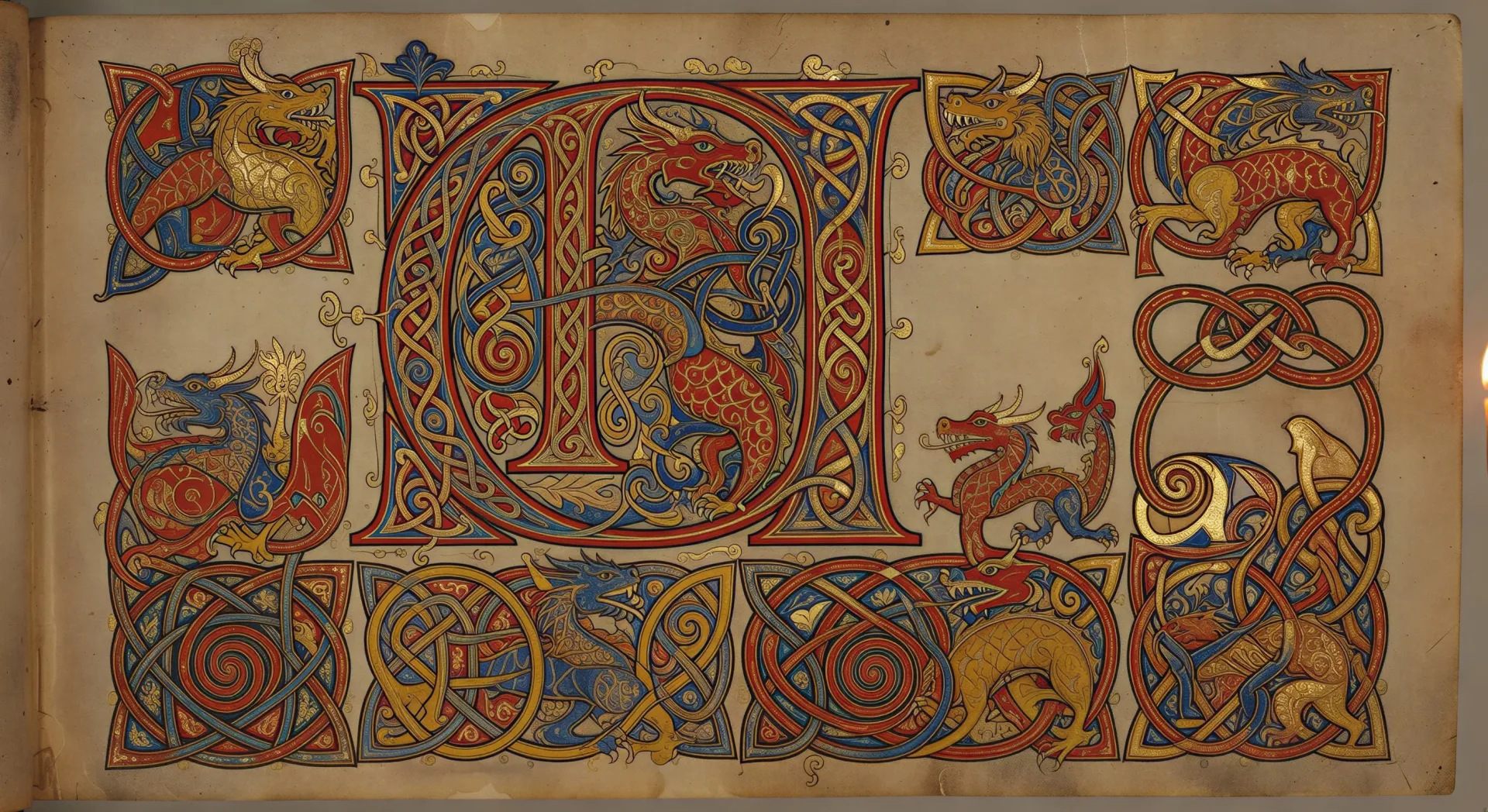
Book of Kells incipit page

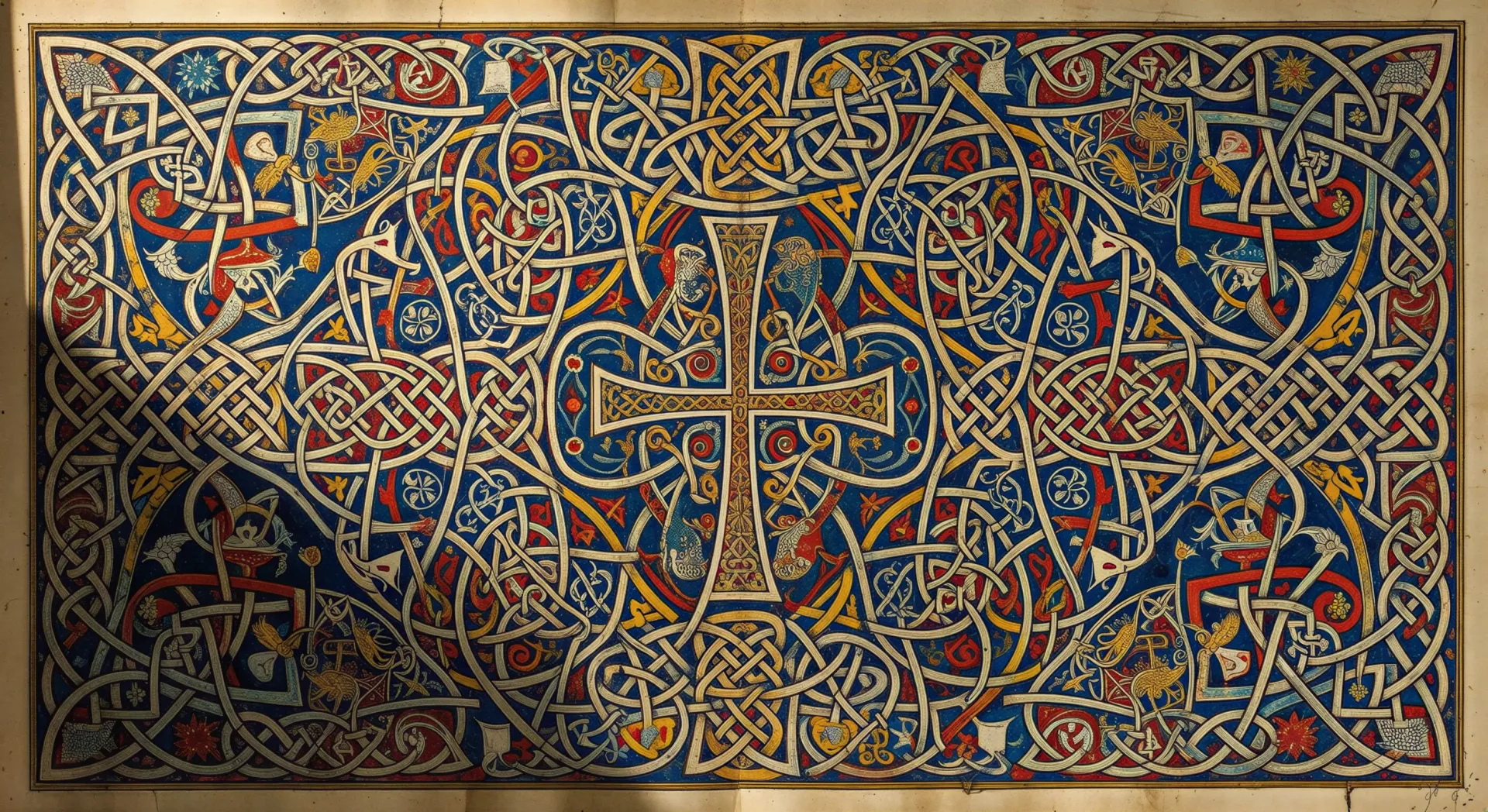
Lindisfarne carpet page

A full Lindisfarne-style carpet page: the entire vellum surface filled with interlace, a single cross-shape emerging from the pattern, palette of deep blue, red, yellow, white. Raking light from the side.

Edit prompt
Lindisfarne carpet page

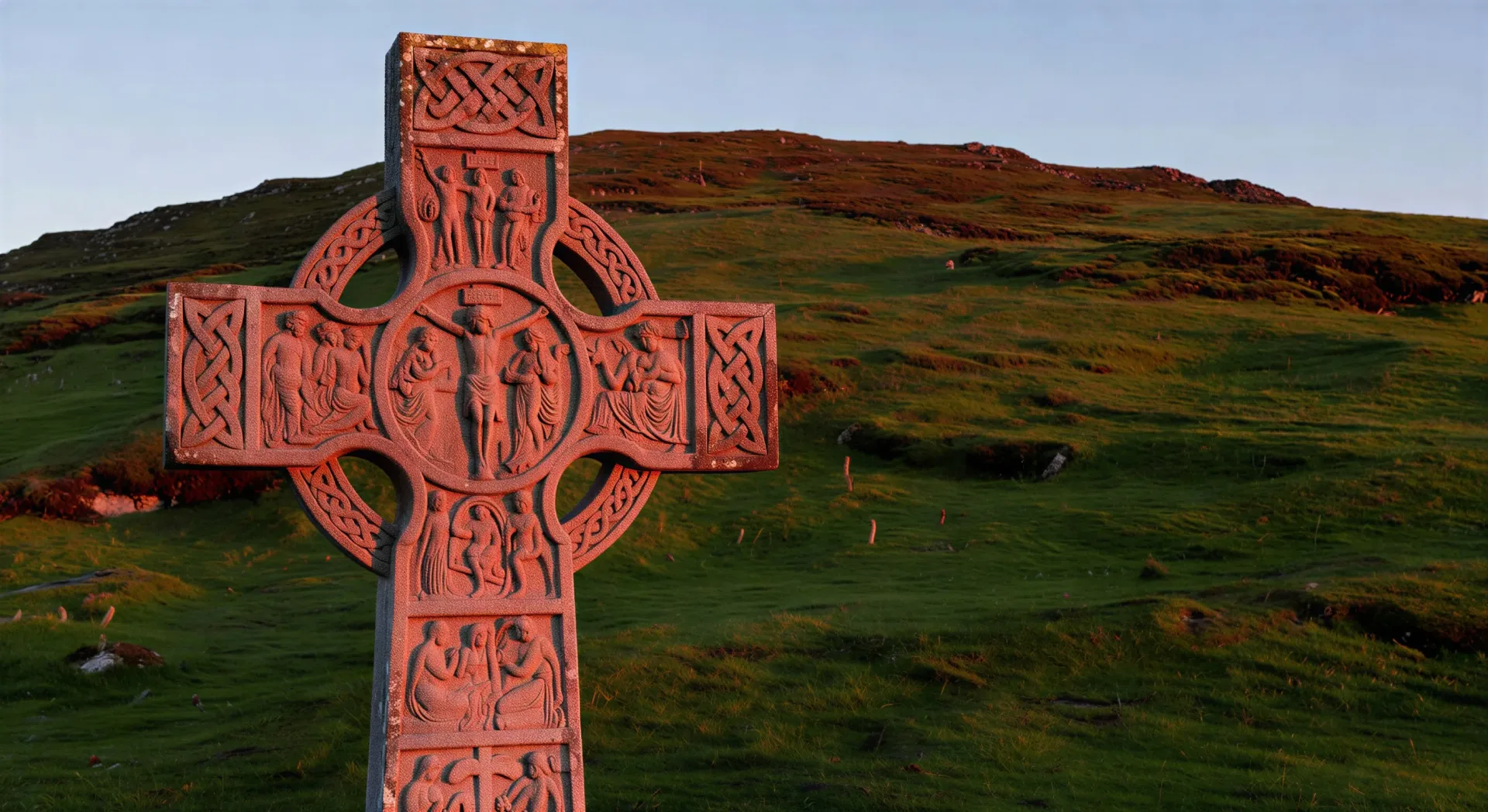
Irish high cross at sunset

Muiredach’s Cross at Monasterboice in the Irish landscape at sunset, monumental scale, the ring with interlace catching the warm red light, the figural panels glowing, peat-green hill behind.

Edit prompt
Irish high cross at sunset

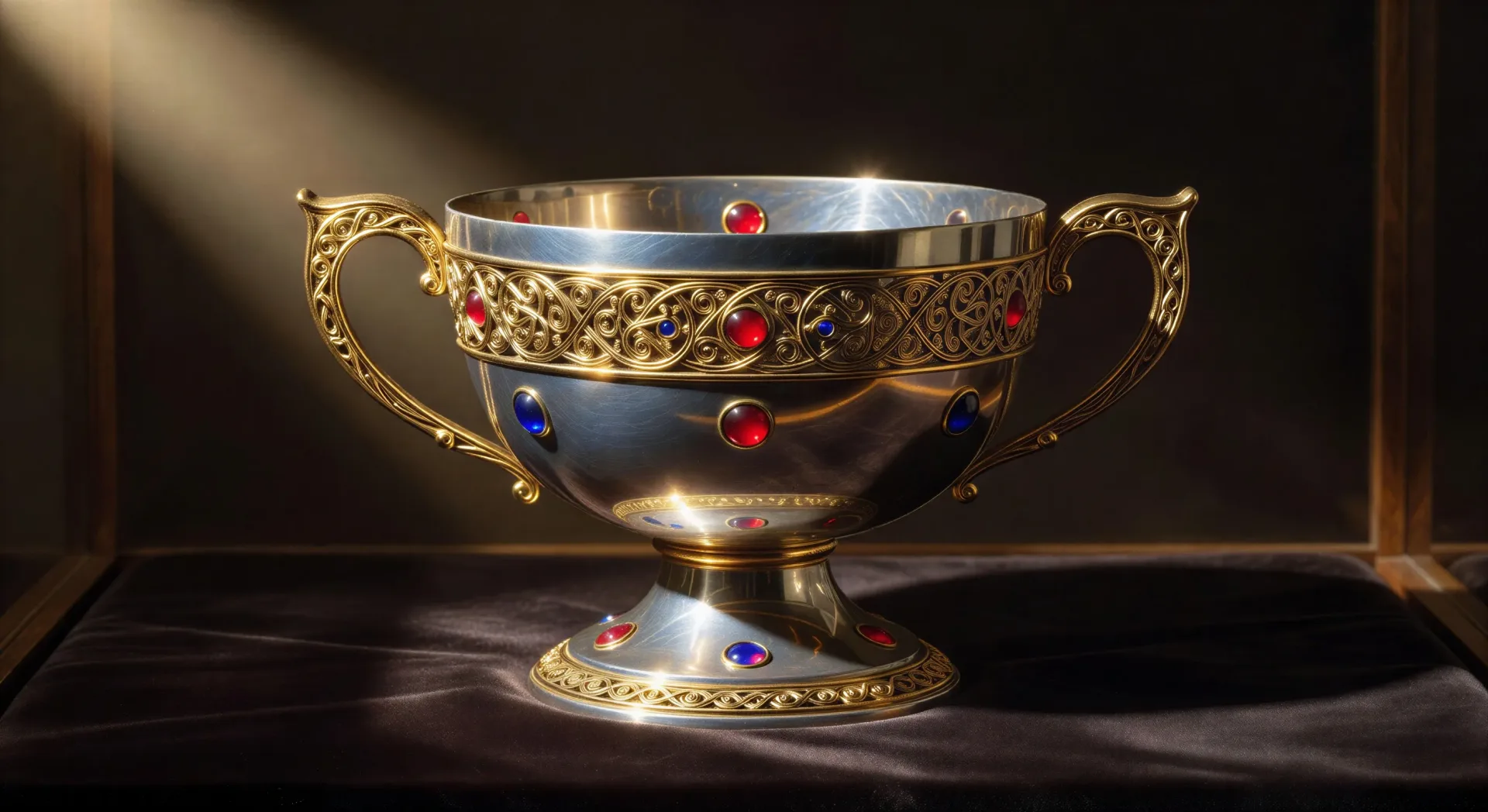
Ardagh chalice on display

The Ardagh chalice in a museum case under directional spotlight, gold filigree interlace catching the light around the rim, enamel studs glowing red and blue. Polished silver body and dark velvet ground.

Edit prompt
Ardagh chalice on display

La Tène torc hoard layout

The Snettisham hoard laid out on a dark velvet conservator’s tray: a dozen Iron Age gold torcs in graduated sizes, each terminal a unique La Tène scrollwork, museum overhead light catching the gold.

Edit prompt
La Tène torc hoard layout

Arts and Crafts revival shopfront

A 1900 Arts and Crafts revival shopfront for a Liberty-of-London-style jeweller, hand-painted Celtic interlace lettering above the door, muted sage and rose colour scheme, hammered-silver display in the window.

Edit prompt
Arts and Crafts revival shopfront

Make Celtic knot art in three steps

  1. 01

    Describe your Celtic knot art

    Write the Celtic knot art piece you want to see in your own words. Name the period (La Tène, Insular, high-cross, revival), the medium (vellum, gold, limestone, silver), the use (Gospel page, torc, monumental cross, book cover), and the lighting. The more specific your description, the closer the result lands to a real artefact look.

  2. 02

    Generate the image

    Morphic produces an image on your canvas in seconds.

  3. 03

    Refine your Celtic knot art

    Tweak the prompt, regenerate, or iterate into a series. Download or share when the frame lands.

Related workflows

A short guide to Celtic knot art for image creators

Celtic knot art splits into four canonical phases. La Tène (c. 500 BC – AD 50) is the Iron Age phase: curvilinear vegetal scrolls, stylised palmette and lotus shapes adapted from Greek Mediterranean prototypes, applied to bronze torcs, mirror-backs, scabbards, the Battersea shield, the Snettisham Hoard, and the Petrie Crown. Insular (c. AD 600 – 900) is the early-Christian Irish and British phase: the great manuscripts (Book of Kells, Lindisfarne Gospels, Book of Durrow), the metalwork of the Ardagh chalice and the Tara brooch, the Pictish symbol stones. Insular is where the true unbroken interlace knot patterns appear, often combined with zoomorphic borders (interlaced birds, hounds, serpents). High-cross stonework (c. AD 750 – 1000) is the open-air phase: Muiredach’s Cross at Monasterboice, the Cross of the Scriptures at Clonmacnoise, the Iona crosses. Stone interlace becomes monumental, paired with figural panels of biblical scenes. Revival (c. 1880 – 1930) is the Arts and Crafts return: John Duncan, Mary Watts at Watts Mortuary Chapel, Archibald Knox’s Cymric and Tudric ranges for Liberty of London, used in book design, jewellery, gravestones, and architectural ornament.

For image generation, anchor each Celtic knot prompt to a specific phase, a specific medium, and a specific use. La Tène: bronze torc, Iron Age rider mirror-back, Snettisham hoard, curvilinear scrollwork, no humans. Insular: vellum manuscript page, gold leaf, lapis blue, vermillion, zoomorphic border, capital letter at the top of a Gospel page. High-cross: weathered grey limestone, Irish landscape behind, monumental scale, rope-and-stepped frame around the figural panel. Revival: Arts and Crafts book cover, Liberty silver, gravestone, Mary Watts terracotta plaque. Mention the period, the medium, and the use directly in the prompt.

Lean into the medium-native palettes. La Tène: bronze patina green, gold underneath the verdigris, dark soil on excavated finds. Insular: deep ultramarine, vermillion, ochre, white-of-vellum ground, gold leaf catching light, the four canonical scribal pigments. High-cross: weathered limestone grey, lichen yellow-green, peat brown of an Irish hill, evening sun raking the carved surface. Revival: muted Arts and Crafts greens, dusty pinks, hammered silver, ivory cream paper. Name the palette in the prompt. The closer you describe what kind of object you are imagining, the closer the result lands to a real artefact.

You might also like

Frequently asked questions

Where can I make Celtic knot art with AI?
You can create Celtic knot art directly in your browser on Morphic. Open the Image tool, describe the panel or page with the period and medium spelled out, and Morphic produces the artwork. No installs and no specialist software needed.
What kinds of Celtic knot art can I generate?
All four canonical phases: La Tène Iron Age curvilinear scrollwork on bronze and gold, Insular Christian interlace on vellum and metalwork (Book of Kells, Lindisfarne, Ardagh chalice, Tara brooch), Irish high-cross monumental stonework, and Arts and Crafts revival book covers and silver. Name the phase and the medium upfront in your prompt so Morphic picks the right palette and surface texture.
How do I get the right period look in my Celtic knot art?
Name the period directly: "La Tène" for Iron Age curvilinear scrollwork, "Insular" or "Book of Kells style" for early Christian manuscript interlace, "Irish high-cross" for monumental stone, "Arts and Crafts revival" or "Mary Watts style" for the 1900 revival. Each phase has a distinct grammar that Morphic can hold once you specify it.
How do I write a good prompt for Celtic knot art?
Name the period, the medium, the use, and the lighting. For example: "a full Lindisfarne-style carpet page in deep blue, red, yellow, and white interlace, single cross emerging from the pattern, raking light from the side." Specifying period and medium is what separates a Celtic knot prompt from a generic decorative-knot prompt.
Can I get the gold-leaf-on-vellum look or the weathered-stone look?
Both. For the manuscript look, specify "vermillion, ultramarine, ochre and gold leaf on white-of-vellum ground, candlelight on the gold." For the high-cross look, specify "weathered grey limestone, lichen yellow-green in the deeper grooves, evening sun raking the carved surface." Morphic holds each look once you name the materials in the prompt.
Do I need any prior art-history knowledge to make Celtic knot art?
No. Morphic runs in your browser and you direct it with plain-language prompts. Anyone who can name a period and a medium can produce one. A short reading on the four canonical phases (La Tène, Insular, high-cross, revival) helps you write more specific prompts but is not required.