How to make Dashavatara videos with AI

The Dashavatara is the set of ten principal avatars of Vishnu in Hindu mythology. The list is set out in the Bhagavata Purana and the Garuda Purana, with each avatar descending in a different yuga to confront a specific cosmic threat.

Until recently, putting the full Dashavatara cycle on screen meant a studio. That part has changed.

The Dashavatara is the canonical list of the ten avatars of Vishnu, descending across the four yugas to restore cosmic balance. Matsya the fish, Kurma the tortoise, all the way to Kalki on his white horse. Morphic lets you direct the entire set in your browser. Pick an avatar, a scene, or a workflow below and start now.

Dashavatara avatars you can direct

Dashavatara scenes you can stage

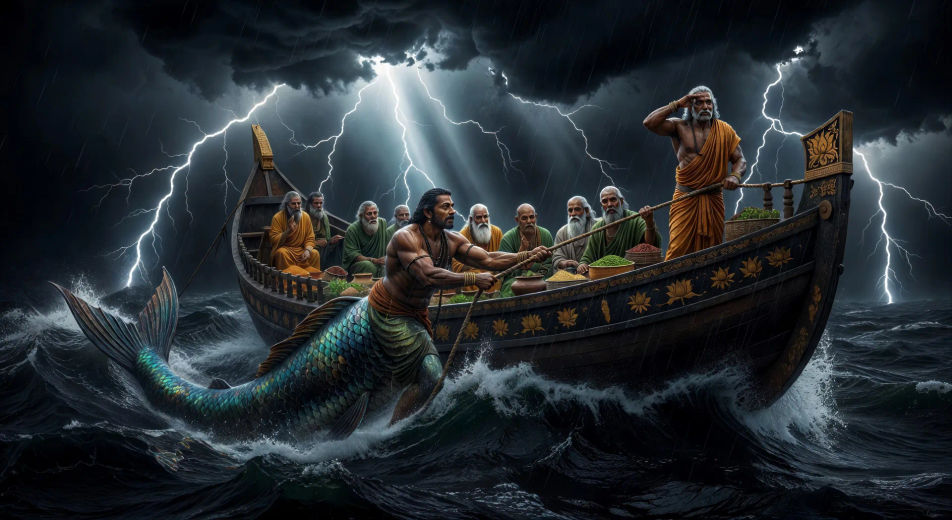
Matsya tows the boat of Manu through the flood

The cosmic deluge. Matsya, half-fish half-man, drags Manu’s boat through black storm-lit seas, the seven sages and the seeds of life sheltered onboard, lightning above.

Edit prompt
Matsya tows the boat of Manu through the flood

Kurma supports Mount Mandara

The samudra manthan. Devas and asuras pull the serpent Vasuki around Mount Mandara, the mountain spinning on the back of Kurma the tortoise in the milk ocean below.

Edit prompt
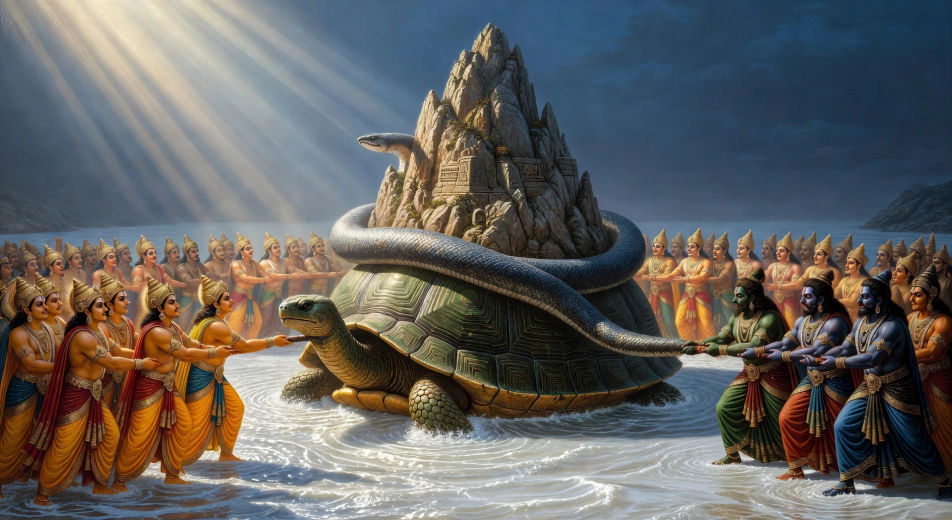
Kurma supports Mount Mandara

Narasimha bursts from the pillar

Twilight in Hiranyakashipu’s court. The great pillar splits open. Narasimha emerges mid-roar, mane lit gold, claws raised, the asura king staggering back toward his throne.

Edit prompt
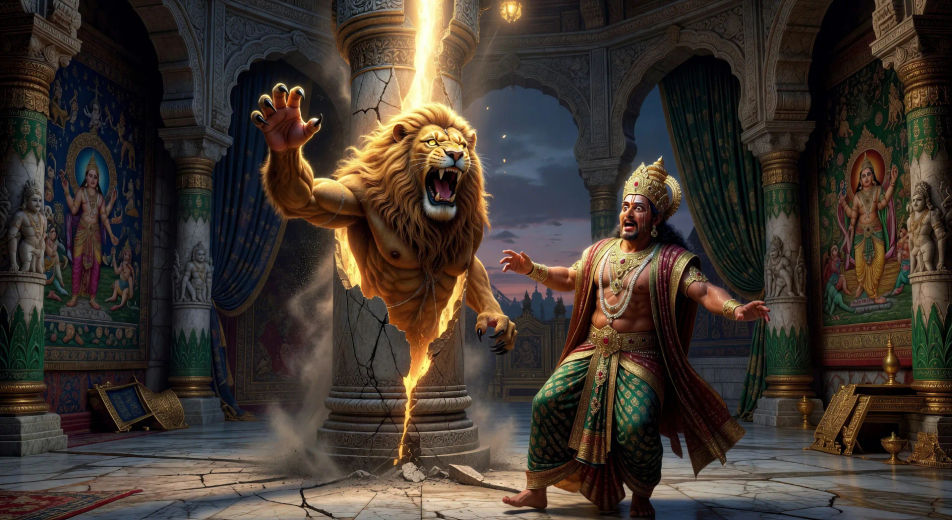
Narasimha bursts from the pillar

Vamana becomes Trivikrama

Vamana grows from a dwarf into a cosmic figure mid-stride. One foot crosses the earth, the other lifts toward the sky, Bali kneeling at the base, the assembled court in awe.

Edit prompt
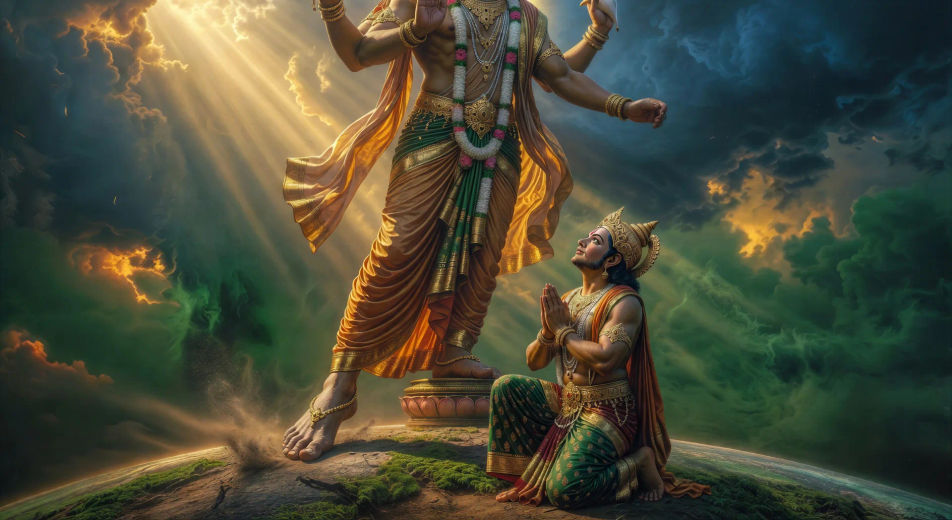
Vamana becomes Trivikrama

Buddha under the Bodhi tree

Dawn at Bodh Gaya. Buddha sits in meditation beneath the Bodhi tree, the leaves catching the first light, the ground around him scattered with fallen flowers.

Edit prompt
Buddha under the Bodhi tree

Kalki rides at the end of Kali Yuga

The future. Kalki on the white horse Devadatta gallops across a darkened landscape, flaming sword raised, the sky split by lightning, ruins of the old age behind him.

Edit prompt
Kalki rides at the end of Kali Yuga

Make Dashavatara videos in three steps

  1. 01

    Describe your Dashavatara scene

    Write the Dashavatara scene you want to see in your own words. Be specific about the avatar, the moment, the lighting, and the camera direction. The more concrete the description, the closer the result lands to what you pictured.

  2. 02

    Generate the video

    Morphic produces a clip on your canvas in seconds.

  3. 03

    Refine your Dashavatara video

    Tweak the prompt, regenerate, or remix into a longer sequence. Download or share when the shot lands.

Related workflows

A short guide to the Dashavatara for video creators

The canonical Dashavatara order moves through the yugas. Matsya, the fish, saves Manu and the Vedas from the great deluge. Kurma, the tortoise, supports Mount Mandara during the samudra manthan. Varaha, the boar, lifts the earth from the cosmic ocean on his tusks. Narasimha, the man-lion, emerges from a pillar at twilight to slay Hiranyakashipu. Vamana, the dwarf brahmin, becomes Trivikrama and steps across the cosmos in three strides. Parashurama, the axe-wielding warrior, ends the cycle of corrupt kshatriyas. Rama is the prince of Ayodhya. Krishna is the cow-herd philosopher of Vrindavan and the charioteer at Kurukshetra. The ninth slot holds Buddha in many traditions, Balarama in others. Kalki, the future avatar, will ride a white horse with a flaming sword to end Kali Yuga.

Each avatar has its own iconography, its own colour palette, and its own moment of revelation. The set as a whole is one of the most reproduced compositions in Indian devotional art, from temple wall panels to Pichvai paintings to the chitrakathi scrolls of Maharashtra. The visual through-line is Vishnu’s blue presence across forms that are sometimes animal, sometimes human, sometimes cosmic.

For video, the Dashavatara is built for episodic treatment: ten short films, one per avatar, each with its own location, time of day, and signature moment. Anchor each Dashavatara scene to a specific avatar, location, and revelation beat. Name the iconography you want, the lighting, and the camera direction. The more concrete the prompt, the closer the result lands to what readers of the puranas already see in their heads.

You might also like

Frequently asked questions

Where can I make Dashavatara videos with AI?
You can create the ten avatars of Vishnu directly in your browser on Morphic. Open the Text to Video tool, describe the avatar and scene you want, and Morphic produces the clip. No installs and no specialist software needed.
What kinds of Dashavatara scenes work best with AI video?
Single-shot revelation moments tend to work best: Matsya towing Manu’s boat through the flood, Kurma under Mount Mandara, Narasimha bursting from the pillar, Vamana becoming Trivikrama, or Kalki riding at the end of Kali Yuga. Anchor each Dashavatara scene to a specific avatar, location, time of day, and mood.
How do I keep the avatars consistent across the Dashavatara series?
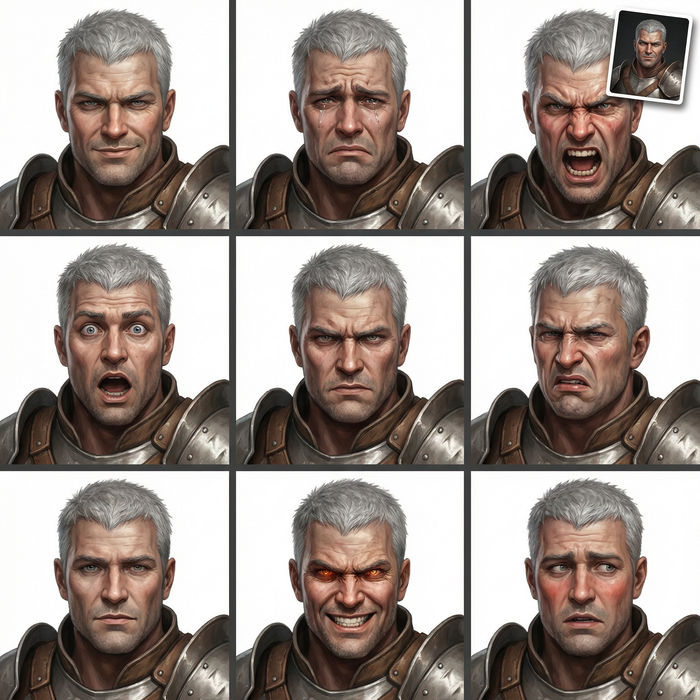
Use the Character Lineup workflow to lock in each avatar's look, then reference those character cards in every prompt. Morphic preserves the iconography, the colour palette, and the signature attributes so the ten avatars feel like one continuous series.
How do I write a good prompt for a Dashavatara scene?
Name the avatar, the moment, the iconography, the lighting, and the camera direction. For example: "Vamana mid-transformation into Trivikrama, one foot lifted toward the sky, Bali kneeling at the base, gold-and-saffron palette, slow tilt-up camera." The more specific your imagery, the closer the output matches your imagination.
Can I add narration and music to my Dashavatara videos?
Yes. The Speech tool generates a voiceover from your script in the voice you choose, and the Music tool produces an original soundtrack to score the scene. Layer them onto your generated video to publish the full ten-part Dashavatara cycle as a complete series.
What visual style works best for Dashavatara videos?
Two styles consistently land. Pichvai-inspired devotional painting suits the temple-panel and revelation scenes across the cycle. Cinematic photoreal lifts the Matsya flood, Narasimha emergence, and Kalki future scenes. You can mix the two for an episodic series, with the painted style for older yugas and photoreal for the Kalki finale. Name the style directly in the prompt and Morphic will hold it across the series.