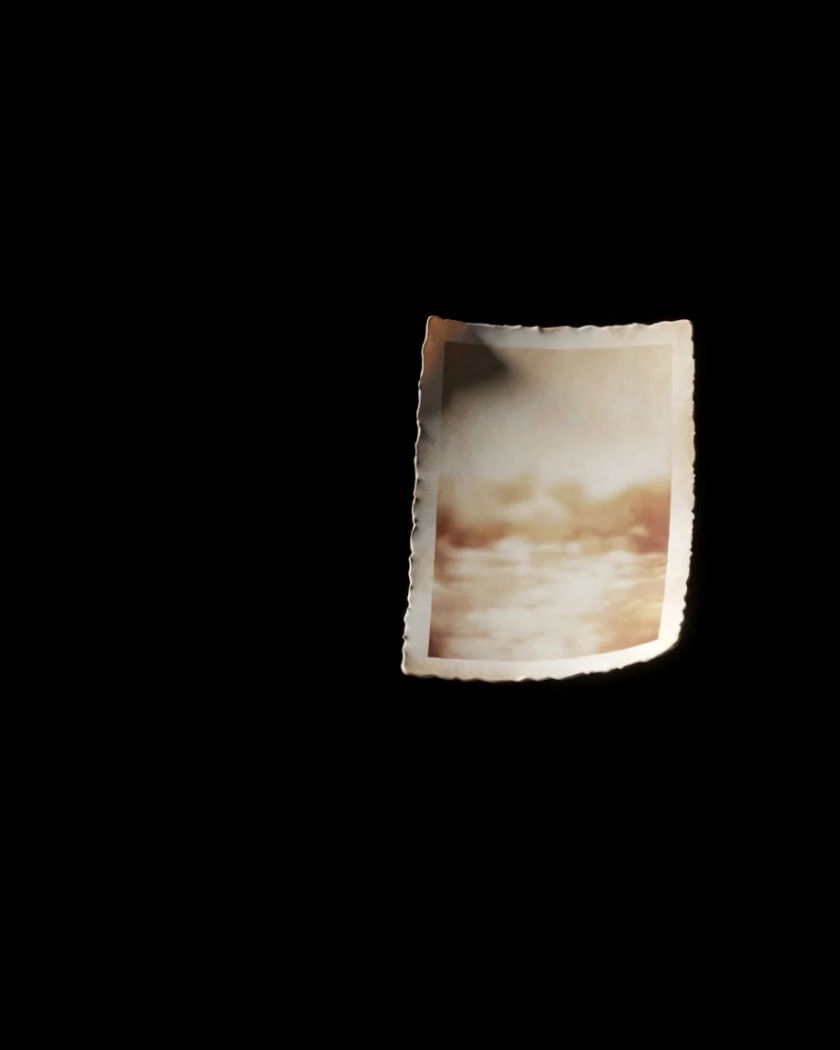
A sepia effect gives video the warm brown tone of an old photograph: one brown-and-cream colour, soft grain, faded blacks and a vignette, often with the colour draining away as a moment becomes a memory. On Morphic you describe the scene and when the colour goes in one prompt and get the clip, vertical or widescreen.
It is the look of a toned print from the early days of photography, applied to moving pictures. Everything in the frame sits in one warm range from deep brown to cream, with no other colour, plus the things that make it feel old: grain, blacks that never reach true black, and corners that fall off into a vignette. It works three ways. A colour shot can drain into sepia on screen, which reads as a present moment becoming a memory. A scene can be in sepia from the first frame. Or it can go further into an early film reel, with scratches, dust specks and flicker. Editors use it for flashbacks, memory scenes, period openings and title sequences.
Petals fall on a couple leaving a chapel as the colour drains into an old wedding photo. Realistic widescreen footage outside an old stone chapel on a sunny summer afternoon. 35 mm lens at chest height, slow dolly back. A just-married couple in their thirties, the man in a navy suit and the woman in a simple white dress with a small bouquet, walk out through the arched wooden doors hand in hand, laughing, while four adult guests on either side of the path toss white petals over them. For the first two seconds the footage is in full natural colour: green lawn, blue sky, the guests' coloured summer clothes. Then over two seconds the colour drains from the edges of the frame inward until everything is one warm brown-and-cream sepia tone, with soft film grain, gently faded blacks and a darker vignette, like an old wedding photograph that has started to move. The couple, the guests, the petals and the camera move exactly as before; only the colour changes. Natural skin, real textures. No readable text, no logos, no brand marks.
A horse-drawn cart rolls past poplars and the colour fades into an old, scratched reel. Realistic widescreen footage of a dusty country road past a row of tall green poplars on a summer afternoon, golden fields beyond. 35 mm lens at eye level from the roadside, locked off as the cart passes. A horse-drawn wooden cart rolls slowly along the road, an old farmer in a wide straw hat and a blue shirt holding the reins, a second man in a red neckerchief walking alongside. For the first one and a half seconds it is ordinary live-action footage in full natural colour. Then over two seconds the colour drains until the whole frame is one warm brown-and-cream sepia tone, and the look of a very old film reel arrives: heavy grain, thin vertical scratches, white dust specks flashing on and off, a visible flicker in the brightness, a soft gate weave and a dark vignette. The cart keeps rolling after the change. The road, the cart and the framing stay the same; only the colour and the film texture change. No readable text, no logos, no brand marks.
She looks up from a letter and the room drains to warm brown around her. Realistic vertical footage of a woman in her thirties in a soft blue sweater sitting by a tall window in a quiet living room, reading a handwritten letter, afternoon light falling across her. For the first two seconds the footage is in full natural colour: blue sweater, green plants on the sill, warm wooden floor. Then, as she lowers the letter and looks up toward the window with a faint smile, the colour drains out of the frame from the edges inward until everything is a single warm brown-and-cream sepia tone, with soft film grain, gently faded blacks and a darker vignette around the corners, like a remembered moment turning into an old photograph. She keeps breathing and blinking after the change. 50 mm lens, slow push in. The letter shows no legible writing. No readable text, no logos.
A dog trots off a porch in full colour, then into a scratched, flickering sepia reel. Realistic vertical phone footage of a shaggy brown-and-white farm dog on the wooden steps of a white farmhouse porch on a sunny afternoon, green grass and red flowers in the yard. 35 mm lens at the dog's height, locked off. The dog stands, stretches and trots down the steps toward the camera, tail wagging. For the first one and a half seconds it is ordinary live-action footage in full natural colour. Then over two seconds the colour drains until the whole frame is one warm brown-and-cream sepia tone, and the look of a very old film reel arrives: heavy grain, thin vertical scratches running down the frame, small white dust specks flashing on and off, a visible flicker in the brightness, faded blacks and a dark vignette. The dog keeps trotting toward the camera after the change. The porch, the dog and the framing stay the same; only the colour and the film texture change. No readable text, no logos, no brand marks.
Summer colour drains from the edges inward until the moment looks like a family album. Realistic vertical footage whose colour drains into a warm sepia tone, like an old photograph. An older man in a grey wool cardigan sits on a wooden porch swing on a summer evening, a glass of lemonade beside him, and smiles as he looks out over a garden. For the first two seconds the footage is in full natural colour: green leaves, blue sky, golden light. Then the colour slowly drains from the edges inward until the whole frame is a single warm brown-and-cream sepia tone, with soft film grain, gently faded blacks and a darker vignette around the corners. The swing keeps moving and he keeps smiling after the change, now looking like a moving photograph from a family album. 50 mm lens, slow push in. No readable text, no logos.
A traveller lifts his hat through drifting steam as the colour drains to warm brown. Realistic vertical phone footage on an old railway platform under an iron canopy on a bright morning, steam drifting across from an unseen train. 50 mm lens at eye level, locked off. A man in his forties in a long camel wool coat and a brown felt hat stands holding a leather suitcase and lifts his hat in greeting to someone off camera with a warm smile. For the first one and a half seconds the footage is in full natural colour: camel coat, green-painted ironwork, blue sky beyond the canopy. Then over two seconds the colour drains away until the whole frame is one warm brown-and-cream sepia tone, with soft film grain, faded blacks, a few faint dust specks and a darker vignette, like a photograph from the 1920s. The steam keeps rolling and he keeps smiling after the change. The platform, the man and the framing stay the same; only the colour changes. No readable text, no station signs, no logos, no brand marks.
Fishermen haul a net at a stone quay as the dawn colour drains into sepia and mist. Realistic widescreen footage of a stone harbour quay at dawn, small wooden rowing boats and an old wooden sailing boat with plain unpainted hulls rocking on blue-green water, two fishermen in navy wool sweaters and red caps hauling a wet net onto the quay, gulls overhead. 35 mm lens at eye level from the quay, slow pan right. For the first one and a half seconds the footage is in full natural colour: pink dawn sky, blue water, red caps. Then over two seconds the colour drains from the edges inward until the whole frame is one warm brown-and-cream sepia tone, with soft film grain, gently faded blacks, mist over the water and a darker vignette, like an old harbour photograph that has started to move. The fishermen keep hauling and the gulls keep gliding after the change. The quay, the boats and the framing stay the same; only the colour changes. The hulls carry no names, numbers or markings. No readable text, no logos, no brand marks.
A couple on a tandem ride toward you as the summer colour drains into warm sepia. Realistic vertical phone footage of a dirt country lane between green hedgerows on a sunny summer afternoon. Camera tracks backward in front of them at handlebar height, 35 mm lens. A young couple in period clothes, a man in a flat cap and waistcoat and a woman in a long blue skirt and a wide-brimmed hat with a red ribbon, ride a tandem bicycle toward the camera, laughing. For the first one and a half seconds the footage is in full natural colour: green hedges, blue sky, the red ribbon. Then over two seconds the colour drains from the edges inward until the whole frame is one warm brown-and-cream sepia tone, with soft film grain, gently faded blacks and a darker vignette, like a photograph from a century ago. They keep pedalling and laughing after the change. The lane, the couple and the framing stay the same; only the colour changes. No readable text, no logos, no brand marks.
Friends laugh around a fire as the orange glow drains to a soft cream. Realistic widescreen footage at night of four adult friends in their twenties sitting around a crackling campfire at a lakeside campsite, wrapped in blankets and laughing at a story, sparks rising into the dark. For the first two seconds the footage is in full natural colour: orange firelight, blue night, coloured blankets. Then the colour slowly drains away until the whole frame is a single warm brown-and-cream sepia tone, the firelight now a soft cream glow, with soft film grain, gently faded blacks and a darker vignette around the corners, as if the night is already becoming a memory. They keep laughing and the fire keeps flickering after the change. 35 mm lens at seated eye level, slow push in. No readable text, no logos, no brand marks.
A grandmother and her daughter knead dough and laugh as the colour slips away. Realistic vertical footage in a sunny, lived-in kitchen. A grandmother in her seventies and her adult daughter in her forties knead bread dough together at a flour-dusted wooden table, laughing, flour on their hands and aprons. For the first two seconds the footage is in full natural colour: red apron, green tiles, golden light. Then the colour slowly drains away until the whole frame is a single warm brown-and-cream sepia tone, with soft film grain, gently faded blacks and a darker vignette around the corners, so the moment looks like a page from an old family album. They keep kneading and laughing after the change. 50 mm lens at table height, slow push in. No readable text, no logos, no labels.
How do I add a sepia effect to a video?
01
Decide when the colour goes
Choose whether the shot starts in full colour and drains to sepia on a beat, or is sepia from the first frame. A drain lands best on a look, a smile or a pause.
02
Describe the old-photo tone
Ask for one warm brown-and-cream tone, soft grain, faded blacks and a vignette. Add scratches, dust specks and flicker if you want it to feel like an old film reel.
03
Generate, then cut it in
Generate from a prompt, a photo or your own clip, take a few versions and keep the cleanest fade. Lay music under it and trim the moment the colour goes in Compose, the timeline editor in Morphic.
Sepia prompts to try
Copy a prompt or send it straight to Morphic. Change the people, the scene or when the colour drains to make it yours.
A porch swing fades to sepia
An older man smiles on a porch swing on a summer evening, then the colour drains from the edges inward until the frame is warm brown sepia with soft grain, faded blacks and a vignette
A man in a wool coat and felt hat lifts his hat in greeting on an old railway platform, then the colour drains as steam drifts past until the frame is warm brown sepia with soft grain, faded blacks and a vignette
A horse-drawn cart rolls along a dusty road past tall poplars in full summer colour, then the frame turns into an old sepia film reel: heavy grain, vertical scratches, flashing dust specks, flicker and a dark vignette
Four friends laugh around a campfire at night, then the colour drains until the frame is warm brown sepia, the firelight a soft cream glow, with grain, faded blacks and a vignette
Describe the scene and when the colour drains, then generate the clip on Morphic. Ask for a single warm brown-and-cream tone with soft grain, faded blacks and a vignette, which is what makes it read as an old photograph.
Can I add a sepia effect to my own footage or photo?
Yes. Start from a photo and describe the sepia look, or upload a clip and ask for a video-to-video edit that tones it. Use footage you shot or have the rights to.
Can I finish the edit in Morphic?
Yes. Bring the clip into Compose, the timeline editor in Morphic, to trim the moment the colour drains, add music and cut it together with your other shots before you export.
Can my team review the clip together?
Yes. In Compose, teammates can leave comments pinned to a frame of the cut and tag each other, so a note about when the colour drains lands on the exact frame, and on the Pro plan and above several people can edit the same timeline live.
How does this compare to a sepia grade done by hand?
A grade or a brown overlay tints footage you already have, and the grain, scratches and vignette are extra layers you match by hand. Here the tone, the grain, the vignette and the moment the colour drains are generated with the scene, then you trim and finish the cut in Compose. You can also start from nothing but a prompt.
What is the difference between sepia and black and white?
Black and white runs from black to white with no colour. Sepia runs from dark brown to cream, the warm tone old prints took on, which is why it reads as a memory or an earlier era.