How to make Greek pottery art with AI

Greek pottery art is the painted vase, fired in Athenian and Corinthian workshops between roughly the seventh and fourth centuries BCE. The body of the vessel becomes a narrative surface: black-figure incision before about 530 BCE, red-figure painting after, the same myths told in two opposite techniques on the same shapes.

Three thousand vases survive intact; tens of thousands of fragments. Now you can produce your own, for any myth and any vase shape.

Greek pottery art is the original printing press of the Mediterranean: black-figure and red-figure vases that carried mythology, history, and daily life across three centuries of Athenian commerce. Morphic lets you produce any of it in your browser. Pick a figure, a composition, or a workflow below and start now.

Greek pottery art figures you can paint

Greek pottery art compositions you can paint

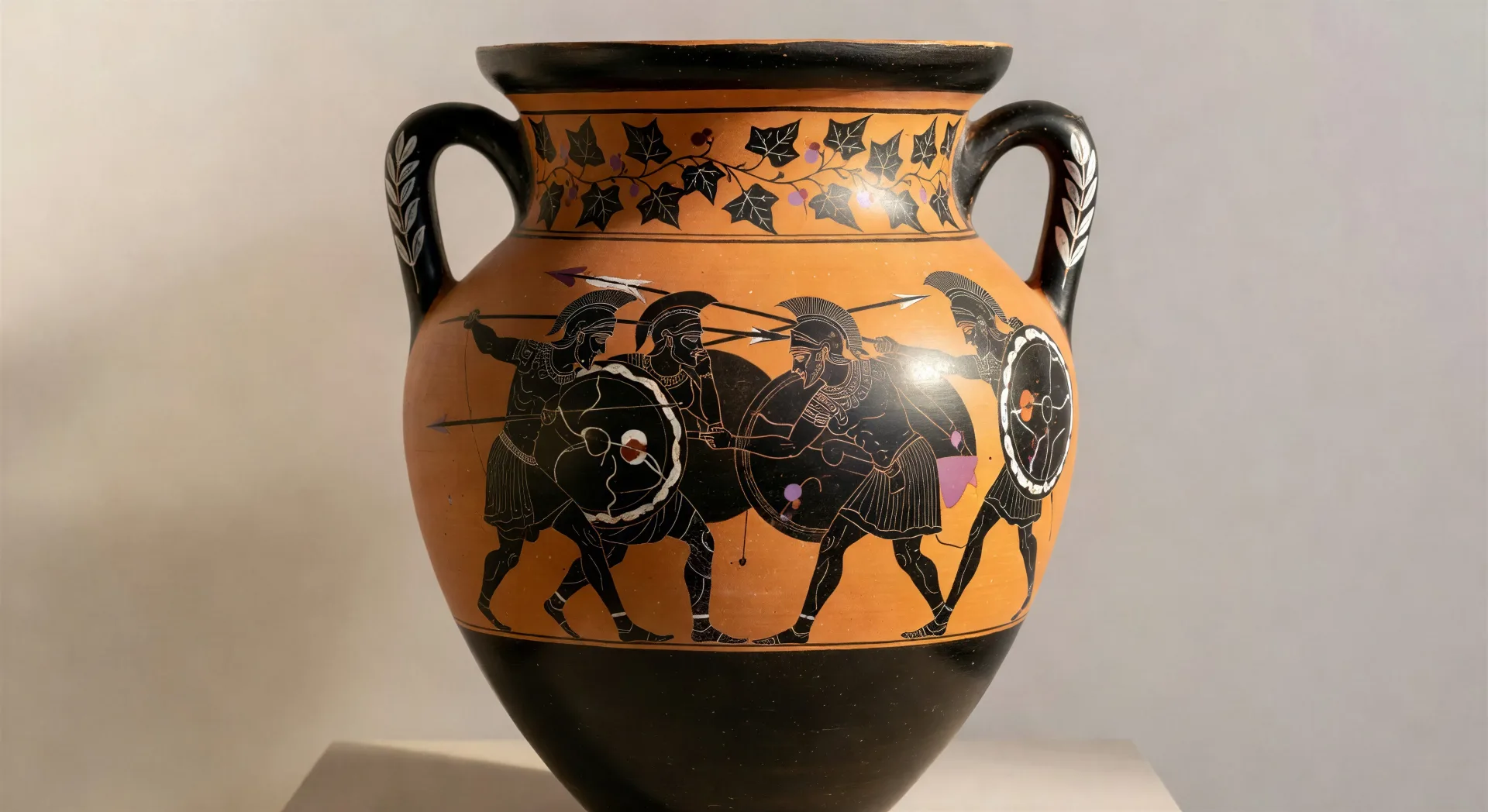
Black-figure amphora battle scene

A two-handled amphora wrapped in a black-figure battle scene, hoplites locked in close combat, shields and spears incised with detail, ivy frieze along the lip, palmettes at the handles.

Try this prompt
Black-figure amphora battle scene

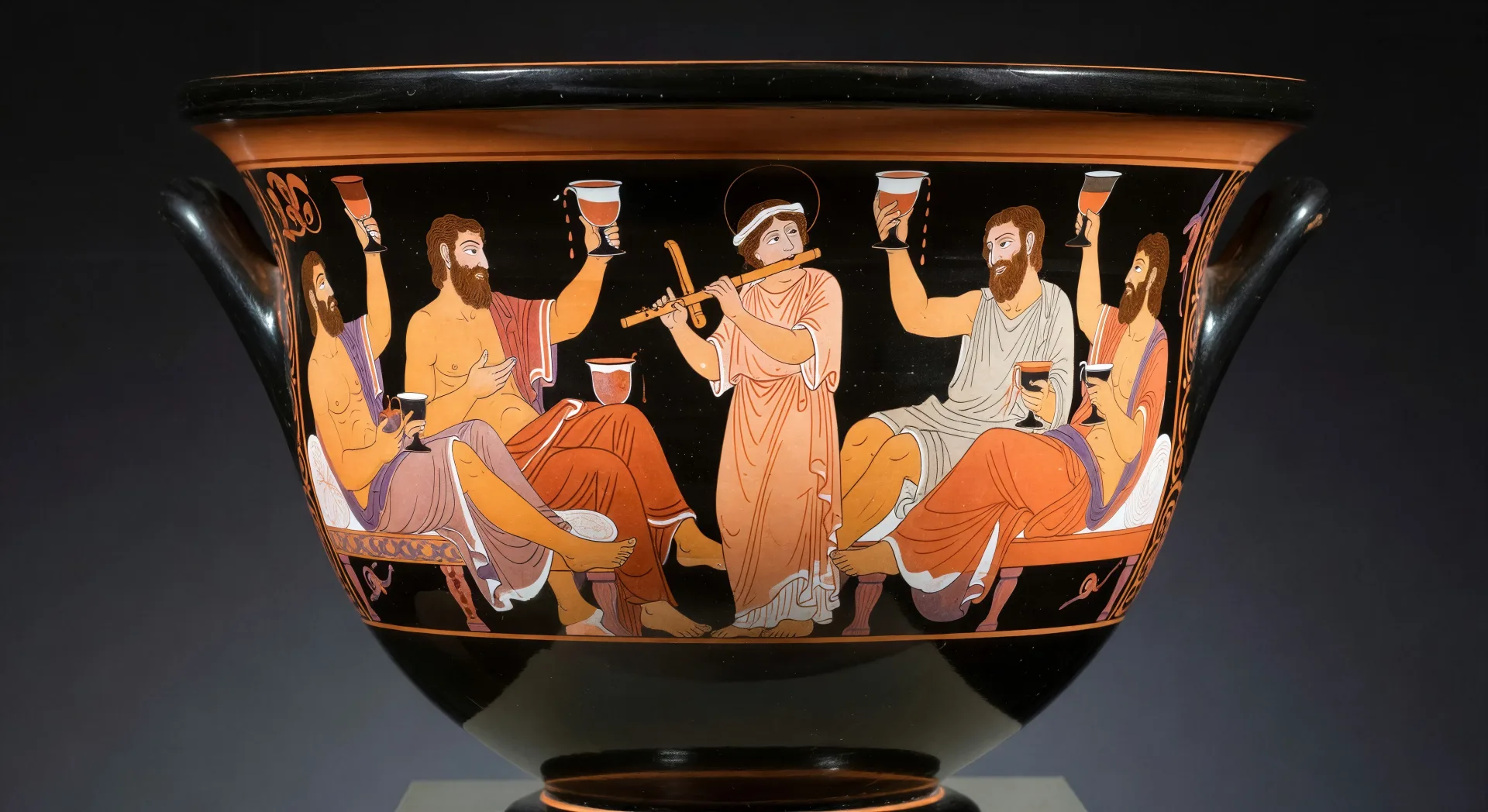
Red-figure krater symposium

A wide-mouthed krater painted in red-figure: men reclining at the symposium, wine cups raised, a flute-girl playing in the center, the gloss-black background framing the figures.

Try this prompt
Red-figure krater symposium

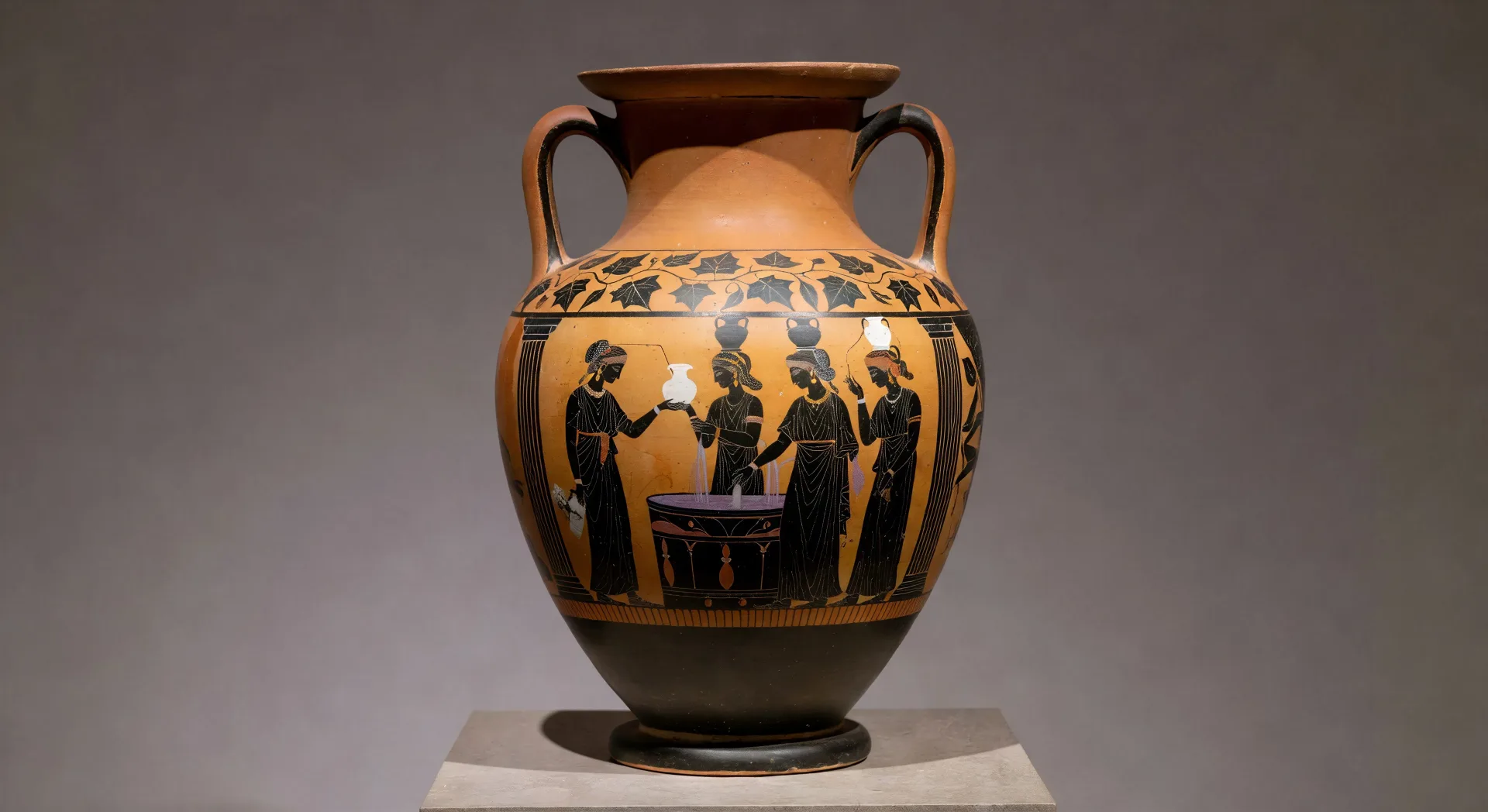
Black-figure hydria water-fetching

A three-handled hydria painted in black-figure: women at a fountain house with water-jars on their heads, columns at the side, ivy frieze along the shoulder.

Try this prompt
Black-figure hydria water-fetching

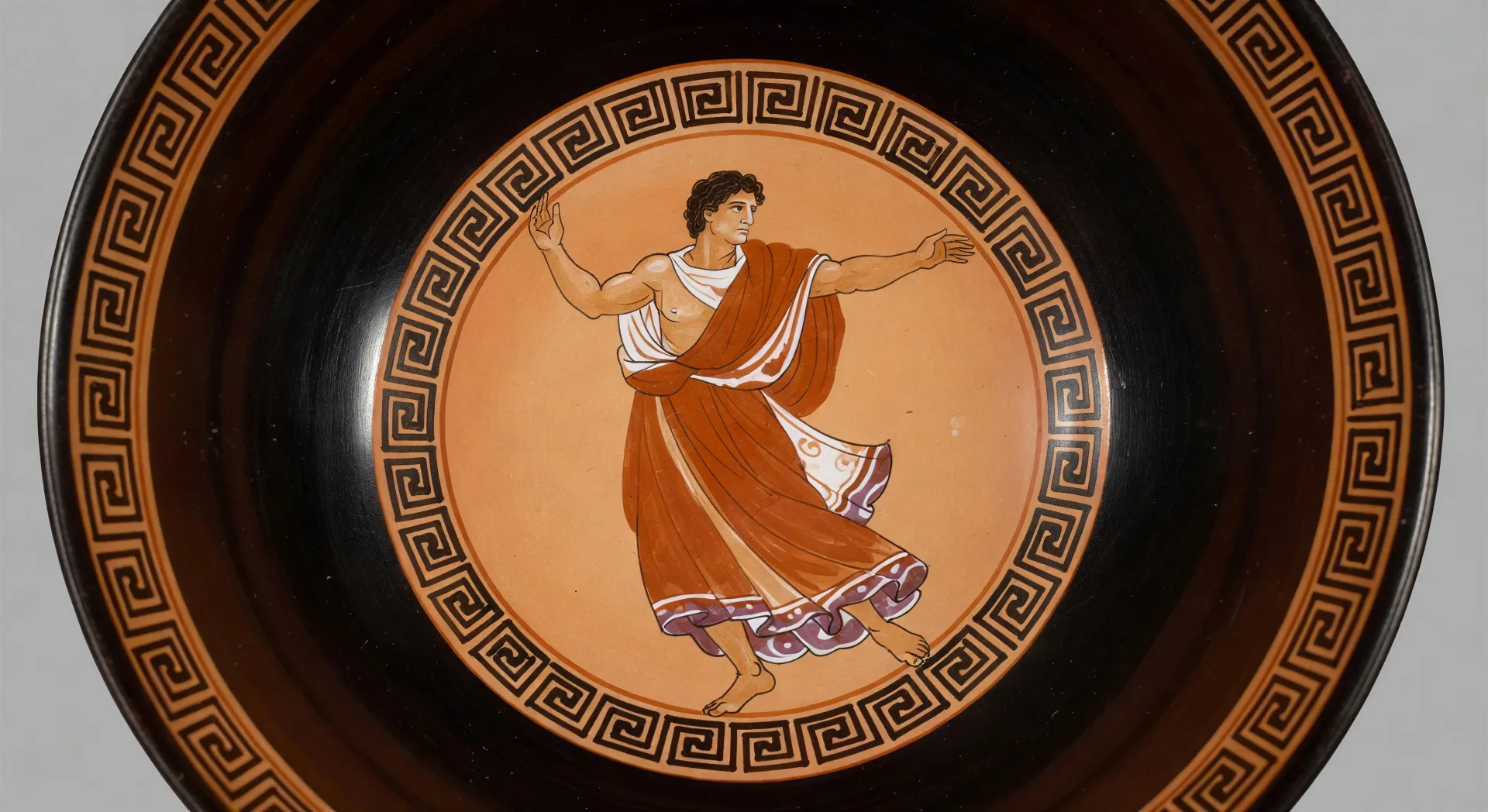
Red-figure kylix interior

The interior of a red-figure kylix, the central tondo showing a single figure in dramatic gesture, a meander border encircling the rim, the gloss-black ground curving away.

Try this prompt
Red-figure kylix interior

White-ground lekythos funeral

A slender lekythos in the white-ground technique: a seated woman at a grave-stele, multi-color over-paint at the drapery, the vaseʼs vertical proportions framing the scene.

Try this prompt
White-ground lekythos funeral

Geometric krater funeral procession

An early Geometric krater painted with a horizontal funeral procession: stylized mourners, horse-drawn cart, body laid in state, key-pattern borders above and below, terracotta clay glowing through.

Try this prompt
Geometric krater funeral procession

How to make it on Morphic

  1. 01

    Open the Image tool on Morphic

    Sign in to Morphic in your browser and head straight to the entry point below. No installs, no setup, and any device with a connection picks up where you left off.

    Open Image
  2. 02

    Describe what you want to see

    Write the Greek pottery piece you want to see in your own words. Name the technique (black-figure, red-figure, white-ground, Geometric), the vase shape (amphora, krater, hydria, kylix, lekythos), the figure or composition, and the framing register. The more specific your description, the closer the result lands to a genuine vase look.

    A red-figure kylix interior with a single dramatic figure at the central tondo, drapery and anatomical detail in dilute slip, meander border encircling the rim, gloss-black ground curving away. Tight overhead framing.
  3. 03

    Generate, refine, and publish

    Morphic returns an image to your canvas. Refine the prompt for variations, regenerate to fix what missed, or iterate into a series. Download or share when the frame lands.

Related workflows

A short guide to Greek pottery art for image creators

Greek pottery art splits cleanly into two figure techniques and a small set of vase shapes. The two techniques: black-figure (figures painted in black slip on the natural red clay, details incised through the slip with a sharp tool, accents in opaque white and dark red); red-figure (the figures left in the natural red clay, the background painted black, details drawn directly with a brush in dilute slip allowing finer line and greater anatomical detail). Black-figure dominates roughly 700 to 530 BCE, red-figure roughly 530 to 320 BCE; the two overlap and a few painters worked in both. The vase shapes carry the painted scenes and dictate the composition: the amphora (two-handled storage jar, narrative usually wraps the body), the krater (wide-mouthed mixing bowl for wine, the showpiece of the symposium), the hydria (three-handled water jar, narrative on the shoulder), the kylix (shallow drinking cup, scenes painted on both interior and exterior), the lekythos (slender oil flask, often white-ground for funerary use), the pelike (storage jar with a swelling lower body), the oinochoe (wine-pouring jug). Each shape implies a context (storage, mixing, drinking, oil, funerary) and a default scene scale.

For image generation, anchor each Greek pottery prompt to one technique and one vase shape. The visual library is precise: black slip glossy after firing, the iron-rich clay glowing terracotta orange, dilute slip allowing brushwork detail, white-ground lekythoi with multi-color over-paint, the typical figural anatomy (heroic nudity, profile-with-frontal-eye for early figures, three-quarter view for later red-figure painters like the Berlin Painter and the Niobid Painter). Use the canonical palette: terracotta orange, gloss black, opaque white, purpled red, occasional gold detail.

Lean into the medium-native styles. Black-figure at the height of incision: thick black silhouettes with engraved hair and drapery lines, decorative friezes of palmettes and ivy, the vase-shape silhouette dictating the composition. Red-figure at the height of brushwork: anatomical detail in dilute slip, three-quarter views, dramatic gesture, the great mythological scenes (Heracles vs the Nemean lion, Theseus and the Minotaur, Achilles and Ajax playing dice). Name the technique directly in the prompt.

You might also like

Frequently asked questions

Where can I make Greek pottery art with AI?
You can create Greek pottery art directly in your browser on Morphic. Open the Image tool, describe the technique and vase shape with the figure or composition spelled out, and Morphic produces the painted vase. No installs and no specialist software needed.
What Greek pottery techniques can I generate?
All four canonical techniques: black-figure (figures in black slip with incised detail), red-figure (figures left in natural terracotta with brushwork detail and gloss-black ground), white-ground (typically funerary lekythoi with multi-color over-paint), and Geometric (early stylized figures and key-pattern borders). Name the technique upfront in your prompt so Morphic picks the right slip and palette.
How do I get the right vase shape?
Name the shape directly: amphora for two-handled storage jars wrapping the narrative around the body, krater for wide-mouthed mixing bowls, hydria for three-handled water jars, kylix for shallow drinking cups with painted interior tondi, lekythos for slender oil flasks. Each shape implies a context and a default scene scale.
How do I write a good prompt for Greek pottery art?
Name the technique, the vase shape, the figure or composition, and the framing register. For example: "Black-figure amphora with hoplite battle scene, ivy frieze along the lip, palmettes at the handles, terracotta glowing through the gloss-black silhouettes." Specifying the technique and shape is what separates a Greek pottery prompt from a generic mythological illustration.
Can I generate the right palette and the slip-effect?
Yes. The canonical palette is terracotta orange, gloss black, opaque white, purpled red, occasional gold detail. Mention "iron-rich Athenian clay glowing through the slip" for the period-accurate look, "dilute slip brushwork in red-figure detail" for the later technique, "white slip ground" for funerary lekythoi.
Do I need any prior knowledge of Greek pottery to make this art?
No. Morphic runs in your browser and you direct it with plain-language prompts. A short reading on the two figure techniques (black-figure, red-figure) and the five common vase shapes (amphora, krater, hydria, kylix, lekythos) helps you write more specific prompts but is not required.