How to make a comic book with AI

The Western comic book has been the dominant Anglophone form of sequential art for the better part of a century. Wider page spreads than manga, full colour as the default, and a panel grammar built around horizontal reading flow, splash pages, and decompressed action sequences that let one moment breathe.

Until recently, drawing one meant a pencil-and-ink team plus a colourist plus a letterer. AI image generation has changed which parts of that you actually need to own. The grammar is finally something you can prompt directly.

Western comic books have a different grammar from manga or manhwa. Wider panels, horizontal page spreads, splash pages built for impact, and a long tradition of decompressed pacing where a single moment is broken across half a page. Morphic puts the toolkit, from character design to splash composition, in your browser. Pick a character, a panel, or a workflow below and start now.

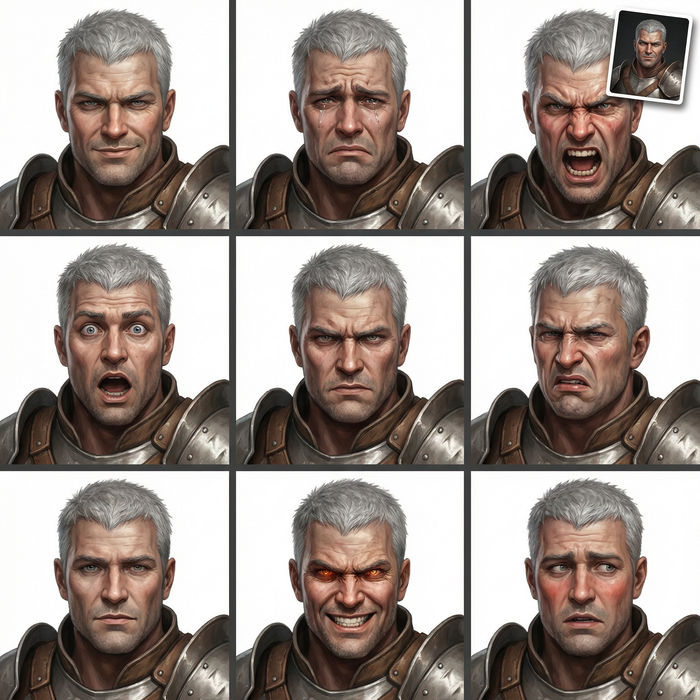
Comic book characters you can create

Comic book panels you can compose

Splash page hero entrance

Single full-page panel: the Hooded Vigilante steps onto a rain-slick rooftop under a broken sky, gargoyle silhouette beside, neon city below.

Try this prompt

Decompressed three-panel beat

Three small panels in a horizontal row: the Hardboiled Detective lights a cigarette, looks up, exhales. Each panel held tight on the face.

Try this prompt

Compressed action panel

Single wide panel with three figures mid-motion: vigilante mid-leap, two assailants thrown back, speed lines and impact debris layered.

Try this prompt

Establishing skyline at golden hour

Wide horizontal panel: city skyline at golden hour, signs of life on rooftops, single distant figure crossing a fire escape silhouette.

Try this prompt

Origin flashback inset

Inset panel with a torn-page border, sepia-tone palette, child version of the protagonist on a swing in a quiet suburban yard.

Try this prompt

Cliffhanger final panel

Bottom-of-page final panel: extreme close-up of a hand reaching out of frame, eyes lit on a half-shadowed face above, single line of dialogue.

Try this prompt

How to make it on Morphic

  1. 01

    Open the Text to Video tool on Morphic

    Sign in to Morphic in your browser and head to the Text to Video tool. No installs, no setup, and any device with a connection picks up where you left off.

    Open Text to Video
  2. 02

    Write your scene in plain language

    Write the comic book character or panel you want to see in your own words. Name the genre (superhero, crime noir, indie, period, sci-fi), the panel orientation (single panel, splash page, double-page spread), the pacing intent (decompressed beat, compressed action), and the style register (bold primary, muted indie, duotone noir). The more specific the description, the closer the result lands to the look in your head.

    Comic book splash page, hooded vigilante on a rain-slick city rooftop at night, gargoyle silhouette beside, neon city below, bold ink lines, deep blacks, single sodium-yellow practical light, dramatic low-angle.
  3. 03

    Generate, refine, and publish

    Morphic returns a clip to your canvas. Refine the prompt for variations, regenerate to fix what missed, or remix into a longer sequence. Download or share when the shot lands.

Related workflows

A short guide to comic books for image creators

Western comic-book grammar is built on a small set of recurring tools. Panels are read left-to-right, top-to-bottom across a horizontal page spread, with the gutter between panels acting as the unit of pacing. A splash page is a full-page panel reserved for a moment that needs to land hard, often the issue opener or a major reveal. A double-page spread doubles down on that and is reserved for the biggest moments. When you prompt a comic-book image, name whether the result is a single panel, a splash page, or a double-page spread, and the orientation that implies.

Pacing is where Western comics differ most from manga. Decompression breaks a single moment across multiple panels in a row, holding on micro-shifts of expression or motion. Compression does the opposite, fitting a sequence of beats into a single panel through layered figures or speed-line motion. Indie comics tend to lean decompressed; superhero books lean compressed for action and decompressed for character beats. For prompts, name the pacing intent ("decompressed three-panel beat on a single eyebrow shift" or "compressed action panel with three figures in motion") so Morphic understands what timing the image is meant to carry.

Style is the third lever. Modern superhero books run on bold ink, bright primary colour, and dynamic anatomy. Indie and prestige books often use thinner line, muted palettes, and a documentary-realist composition. Crime and noir comics lean black-and-white or duotone with heavy shadow. Period romance and historical books use painted shading and reference photography. Name the style register upfront so Morphic picks the right line weight and colour palette. Use the Character Lineup workflow to lock in each character before producing pages, and reference those character cards in every panel prompt for cross-page consistency.

You might also like

Frequently asked questions

Where can I make comic books with AI?
You can create comic-book panels and character designs directly in your browser on Morphic. Open the Image tool, name the panel orientation, the genre, and the style register, and Morphic produces the artwork. No installs and no specialist software needed.
What comic book styles can I generate?
Modern superhero with bold ink and bright primary colour, indie and prestige with thinner line and muted palette, crime noir in black-and-white or duotone with heavy shadow, sci-fi with painted shading and dense world detail, and period historical with photo-reference grading. Name the style upfront in your prompt.
How do I keep comic-book characters consistent across pages?
Use the Character Lineup workflow to lock in each character's signature hook (costume, mask shape, signature accessory, scar, eye colour) before you produce any pages, then reference those character cards in every panel prompt. Morphic preserves the design across pages so an issue feels continuous.
How do I write a good prompt for a splash page or action panel?
Name the panel orientation, the pacing intent, the camera angle, and the lighting. For example: "Comic book splash page, hooded vigilante on a rooftop at night, dramatic low-angle, bold ink lines, deep blacks, single sodium-yellow practical light." For a compressed action panel, add the layered-figure direction explicitly: "three figures mid-motion, speed lines, impact debris."
Can I generate full multi-panel comic pages?
Generate each panel separately with its own composition prompt, then arrange them on a page in your editor of choice using the gutter rhythm (decompressed three-panel beat, compressed action panel, splash) you want. For now Morphic produces panel-level artwork; full multi-panel page composition is best done by combining individual panels.
Do I need any prior drawing or inking experience to make comic books?
No. Morphic runs in your browser and you direct it with plain-language prompts. Anyone who can describe a comic-book panel can produce one. Pencilling, inking, colouring, and lettering software are not required.