How to make Celtic mythology videos with AI

Celtic mythology is the body of stories carried by the Iron Age peoples of Ireland, Scotland, Wales, Brittany, and Gaul, transmitted orally for centuries and finally written down in monastic Ireland and medieval Wales. The Tuatha De Danann who came to Ireland on dark clouds, Cu Chulainn defending Ulster single-handed, the Morrigan circling the field as a raven, druids cutting mistletoe with a golden sickle in the oak grove. The visual library is enormous and barely touched by modern film.

Most of it has been flattened by fantasy fiction into something it never was. That part has changed.

Celtic mythology is one of the oldest unbroken story traditions in Europe. A war goddess who turns into a raven, a sun god who masters every craft, a hero in battle-spasm twisting his body inside out, druids gathering mistletoe in oak groves at dawn. Morphic lets you direct any of it in your browser. Pick a god, a hero, or a scene below and start now.

Celtic mythology characters you can direct

Celtic mythology scenes you can stage

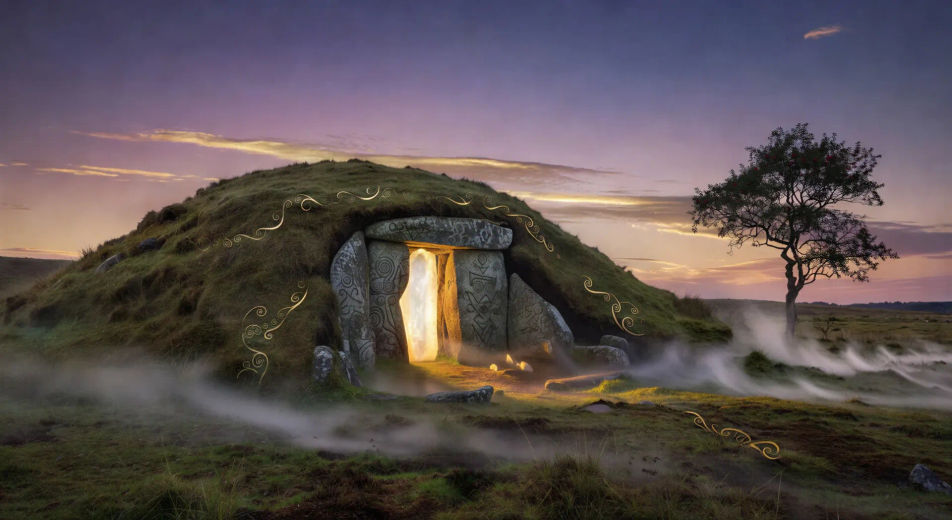
Sídhe mound opening at twilight

A grass-covered Neolithic mound (Brú na Bóinne) with a stone passage glowing from within at dusk. Mist rising in the surrounding pasture, a single rowan tree silhouetted against the violet sky.

Edit prompt
Sídhe mound opening at twilight

Battle of Mag Tuired

The Tuatha De Danann clashing with the Fomorians on a heather-covered plain. Lugh swinging his spear at one-eyed Balor whose evil eye lifts open. Storm clouds boiling overhead, banners and dust and bronze.

Edit prompt
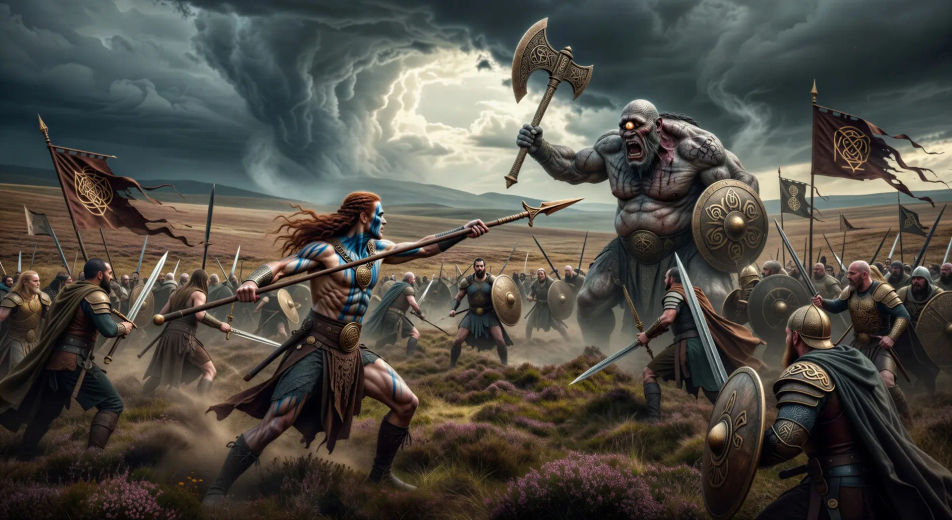
Battle of Mag Tuired

Newgrange winter solstice dawn

The first beam of solstice sun cutting through the roof-box of Newgrange and travelling down the stone passage to flood the chamber. Quartz facade catching pink dawn, the spiral carvings just visible.

Edit prompt
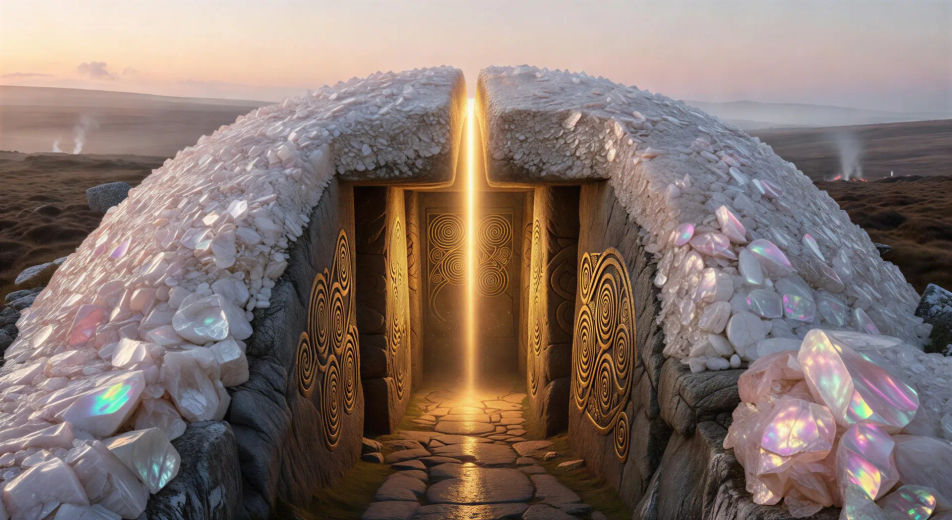
Newgrange winter solstice dawn

Druid ritual in the oak grove

A circle of robed druids around a great oak in a moss-floored grove at first light. The high druid lifts a golden sickle to cut the sacred mistletoe. White cloak below to catch it. Mist drifting between trunks.

Edit prompt
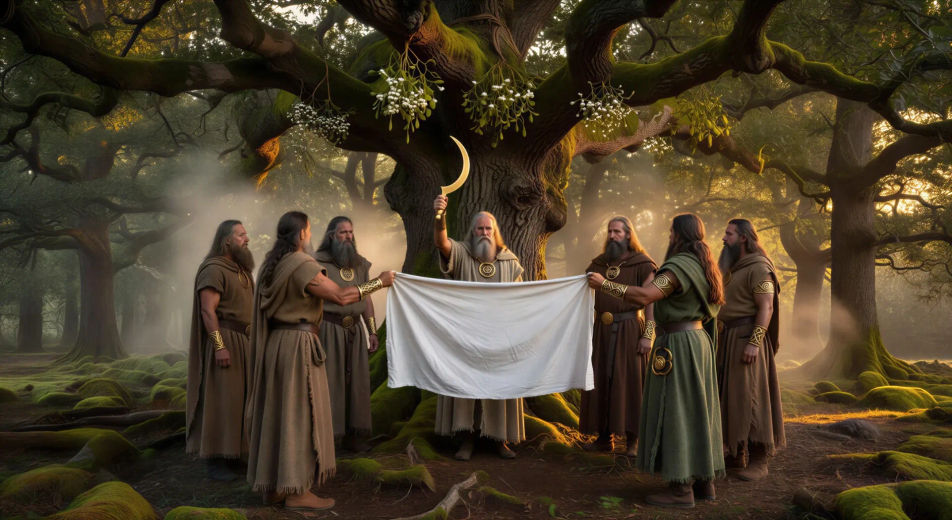
Druid ritual in the oak grove

Salmon of Knowledge in the forest pool

A massive silver salmon turning in a still forest pool overhung with hazel branches. Hazelnuts dropping into the water sending out concentric ripples. Late evening light filtering through the canopy in shafts.

Edit prompt
Salmon of Knowledge in the forest pool

Currach under storm sky

A leather-hulled currach cresting a wave on a black Atlantic, sail half-furled, the cliffs of an Otherworld island looming in the spray ahead. Storm clouds breaking gold-rimmed at the horizon.

Edit prompt
Currach under storm sky

Make Celtic mythology videos in three steps

  1. 01

    Describe your Celtic mythology scene

    Write the Celtic mythology scene you want to see in your own words. Be specific about the moment, the lighting, the god or hero in frame, and the camera direction. The more concrete the description, the closer the result lands to what you pictured.

  2. 02

    Generate the video

    Morphic produces a clip on your canvas in seconds.

  3. 03

    Refine your Celtic mythology video

    Tweak the prompt, regenerate, or remix into a longer sequence. Download or share when the shot lands.

Related workflows

A short guide to Celtic mythology for video creators

Celtic mythology splits into two great branches. The Insular Celtic tradition gives us the Irish cycles (Mythological, Ulster, Fenian, Historical) preserved in manuscripts like the Book of the Dun Cow and the Book of Leinster, and the Welsh Mabinogion preserved in the White Book of Rhydderch and the Red Book of Hergest. The Continental Celtic tradition was lost when Rome absorbed Gaul and the druids stopped writing things down on principle, but Caesar, Strabo, and Lucan left thumbnail sketches of the gods (Cernunnos, Lugus, Taranis, Esus, Toutatis) and the priesthood. The Insular sources are the deeper well.

The pantheon is layered. The Tuatha De Danann ("the people of the goddess Danu") are the older gods of Ireland, defeated by the mortal Milesians and driven into the sídhe mounds where they became the aos sí, the fairy people. Lugh of the Long Arm is their champion, sun god and master of every craft. The Dagda is their good father with a club that kills with one end and revives with the other. Brigid is goddess of fire, poetry, and smithcraft. The Morrigan is the war goddess in three faces who decides every battle. Across in Wales, Math fab Mathonwy, Gwydion, Rhiannon, Pwyll, and Branwen carry the Mabinogion. Underneath all of it sits the druidic priesthood and a cosmology of three worlds (Land, Sea, Sky) connected by the world-ash and watered by the sacred wells.

For video, this means a deep visual library: standing stones at solstice dawn, sídhe mounds opening into the Otherworld, currach longboats under storm sky, Iron Age war chariots wheeling on a hilltop, oak groves shafted with golden light through mist, the Cauldron of the Dagda glowing with the food that never runs out. Anchor each Celtic mythology scene to a specific moment, location, and time of day. Name the god, hero, or creature in frame, the camera direction, and the lighting. Lean on the Insular palette: bog-water peat brown, gold torc, Irish green, blackthorn dark, salmon silver, raven black, hawthorn white. The more concrete the prompt, the closer the result lands to what readers of the Tain and the Mabinogion already see in their heads.

You might also like

Frequently asked questions

Where can I make Celtic mythology videos with AI?
You can create Celtic mythology scenes directly in your browser on Morphic. Open the Text to Video tool, describe the scene you want, and Morphic produces the clip. No installs and no specialist software needed.
What kinds of Celtic mythology scenes work best with AI video?
Single-shot moments with strong composition tend to work best: Cu Chulainn at the ford, the Morrigan as a raven over a battlefield, a druid grove at dawn, Newgrange catching the solstice sun, a sídhe mound opening at twilight. Anchor each Celtic mythology scene to a specific moment, location, time of day, and mood.
How do I keep my Celtic mythology characters consistent across scenes?
Use the Character Lineup workflow to lock in each god or hero’s look, then reference those character cards in every prompt. Morphic preserves wardrobe, torc, weapon, and signature details from scene to scene so a Celtic mythology series feels continuous.
How do I write a good prompt for a Celtic mythology scene?
Name the moment, the location, the time of day, the lighting, and the camera direction. Pull in the Insular palette where it fits: bog-water peat brown, gold torc, Irish green, blackthorn dark, salmon silver, raven black, hawthorn white. For example: "Lugh raising the spear that never misses on the plain of Mag Tuired, sun behind him, low-angle slow push-in." The more specific your imagery, the closer the output matches your imagination.
Can I add narration and music to my Celtic mythology videos?
Yes. The Speech tool generates a voiceover from your script in the voice you choose, and the Music tool produces an original soundtrack to score the scene. Layer them onto your generated video to publish a complete Celtic mythology episode.
How do I make my Celtic mythology videos feel Iron Age, not generic fantasy?
Strip the high-fantasy costume language out of your prompt. The Tuatha De Danann are not elves and the druids are not wizards. Anchor on Iron Age sources: La Tène metalwork, the Gundestrup cauldron, Newgrange spirals, Insular illuminated manuscripts (Book of Kells, Lindisfarne). Ask for "based on Iron Age Celtic iconography" and avoid words like "elf", "wizard", or any modern fantasy reference.