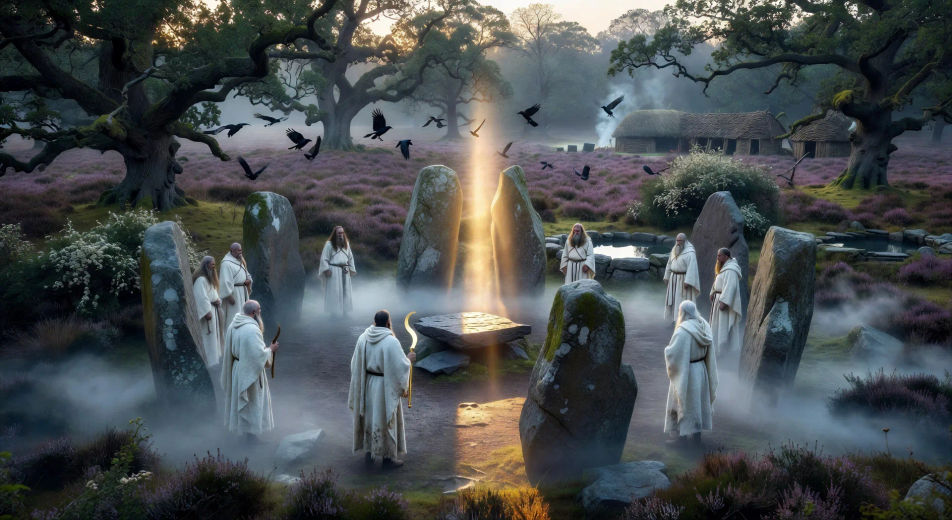
The druids served three overlapping functions in Iron Age Celtic society. They were priests of the polytheistic religion, conducting sacrifices and seasonal rites at sacred groves (the nemeton), at standing stones, and at sacred wells. They were the scholars and judges of the tribe, holding the oral law and arbitrating disputes between kingdoms. And they were diviners and prophets, reading the flight of birds, the patterns of cloud, the entrails of sacrifice, and the dreams of kings. Caesar reports that initiates trained for up to twenty years to memorise the full body of druidic learning, none of it written down.
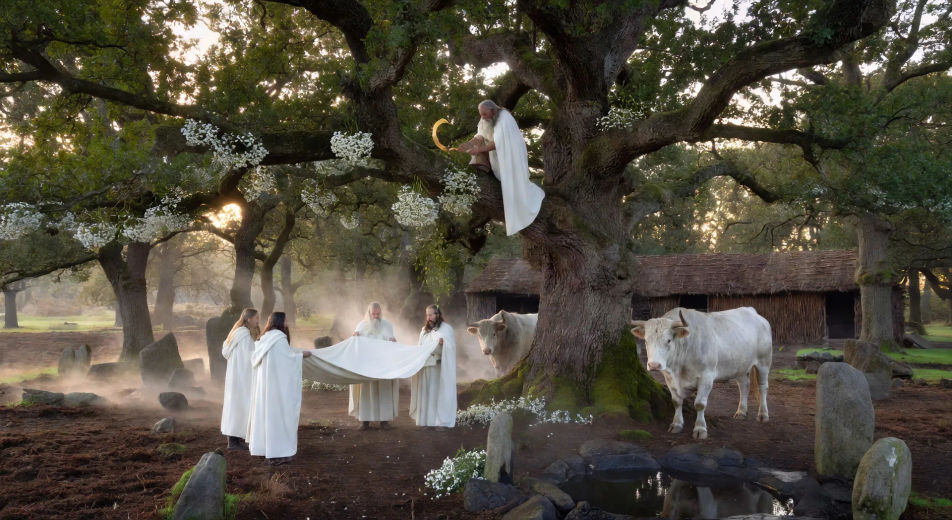
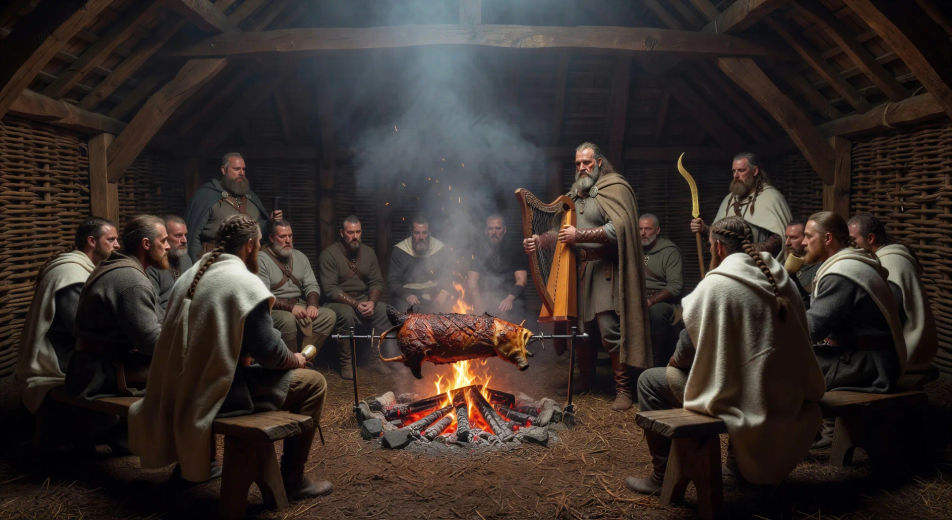
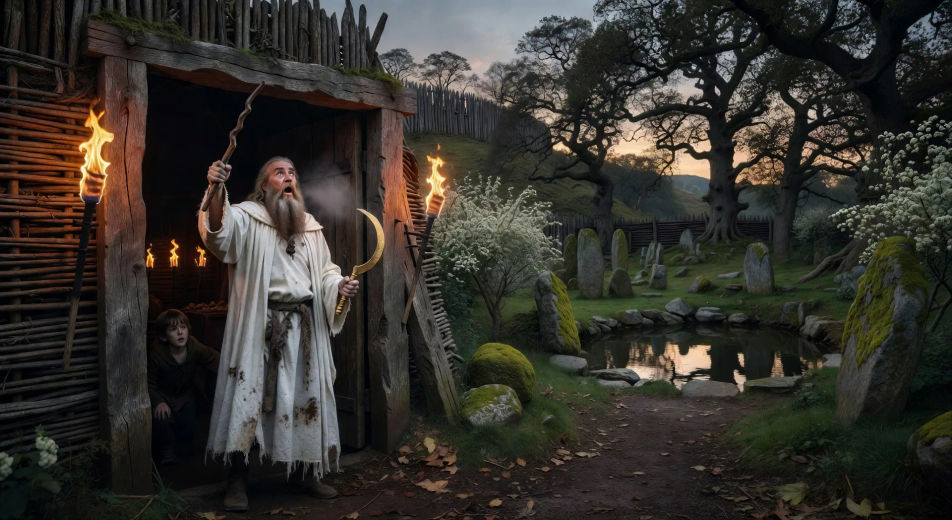
The most famous single image is Pliny’s description of the mistletoe ritual: a white-robed druid climbs a sacred oak, cuts the mistletoe with a golden sickle, and lets it fall onto a white cloak held below by other druids. Two white bulls are sacrificed at the foot of the tree. The mistletoe is shared as a healing remedy and an emblem of immortality. Beyond this, Iron Age sources show us the bard at the king’s feast (the filidh in Ireland, the bardd in Wales), the seer at the doorway of Emain Macha (Cathbad in the Ulster Cycle, who prophesies the doom of Cu Chulainn), the judge with the staff at the boundary stone, and the great gatherings at sites like the Hill of Uisneach in Ireland and Anglesey in Wales. The Romans destroyed the druid college on Anglesey in AD 60, after which the Continental and British druidic traditions effectively ended; the Irish tradition survived into the early Christian period and bequeathed its forms to the monastic schools.
For video, anchor each druid scene to a specific function and a specific moment: the mistletoe-cut at the sacred oak, the seer at the doorway with a wand of yew, the bard at the king’s feast in the rath, the judge between two kings on the boundary, the gathering at the standing stones at solstice. Lean on the Iron Age palette: white wool, golden sickle, oak green, hawthorn white, peat brown, bog-iron grey, raven black. Mention the nemeton (sacred grove), the standing stones, the boundary cairns, the wattle-and-daub feasting hall. The more concrete the moment, the closer the output lands to the Iron Age sources.