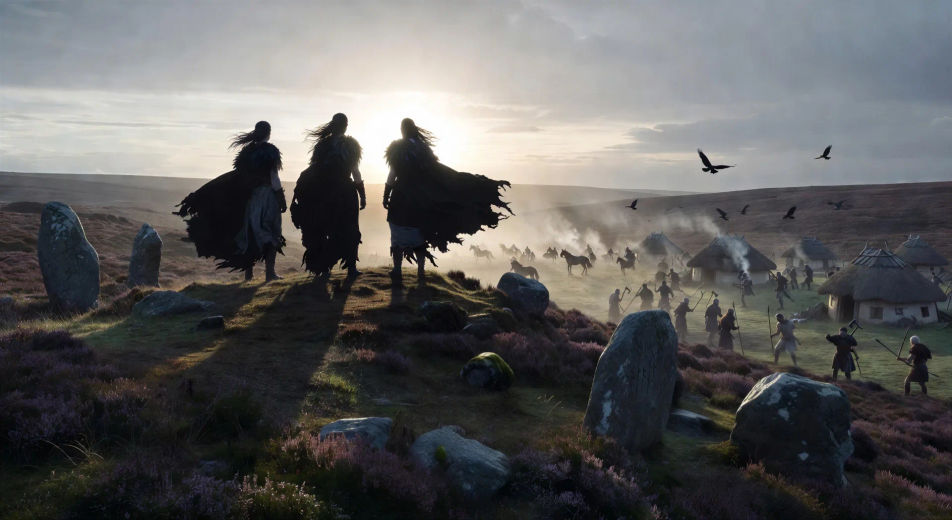
The Morrigan appears across all four cycles of Irish mythology but is most concentrated in the Mythological Cycle (the Cath Maige Tuired, the second battle of Mag Tuired, where she sings the prophecy of the world after the Tuatha victory) and the Ulster Cycle (the Tain Bo Cuailnge, where she circles Cu Chulainn’s every fight). She is sometimes treated as a single goddess, sometimes as a triad of sister-goddesses: Badb (the scald-crow, panic in battle), Macha (sovereignty and curses, who cursed the men of Ulster to suffer birth-pangs in time of crisis), and Nemain (frenzy and confusion). Some sources add Anand or Anu as a fourth aspect.
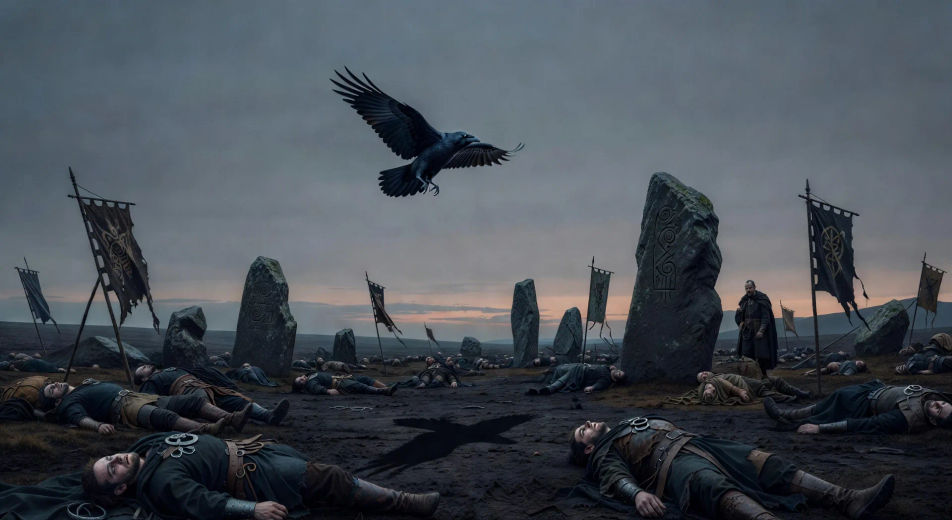
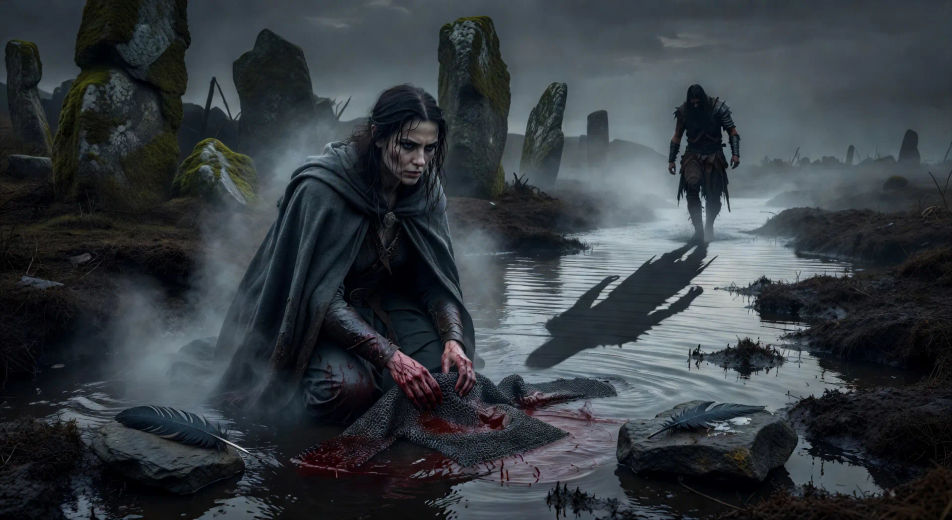
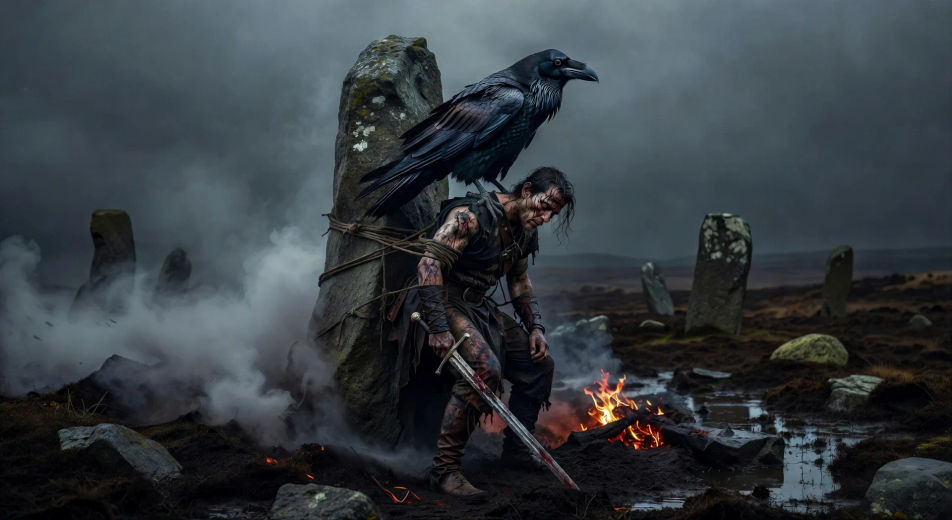
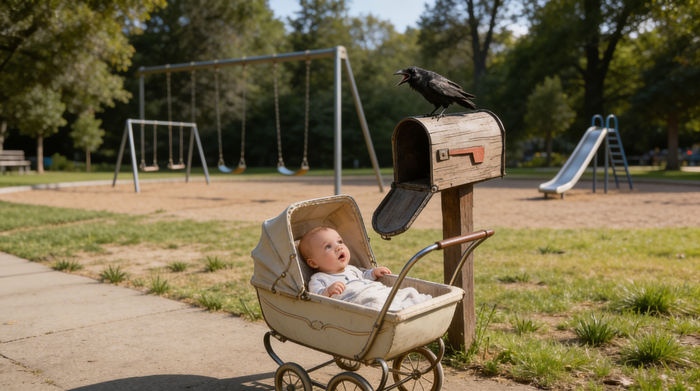
Her standard appearances are devastating. She washes the bloody armour of doomed warriors at a ford before they reach it (the bean-níthe or washer at the ford). She lights on the shoulder of a king who is about to die. She offers herself as a lover to a hero, and when refused, becomes his enemy in the next battle (this is what she does to Cu Chulainn at the ford, after which she fights him in three forms: eel, wolf, hornless red heifer). Her standard form is the carrion crow standing on the body of the slain, watching the field cool. The horror of her presence is not in violence but in the certainty of what she announces.
For video, anchor each Morrigan scene to a moment of prophecy or transformation: the wash at the ford before a doomed army arrives, the raven on a standing stone, the three sisters singing on a hill above a battle, the shift from hag to maiden to crone in a single frame, the perch on Cu Chulainn’s shoulder at the pillar-stone. Lean on the Iron Age palette darkened: peat-bog black, raven feather, blood red, slate grey, wet stone, copper torc. The more concrete the moment, the closer the output lands to the cycles.