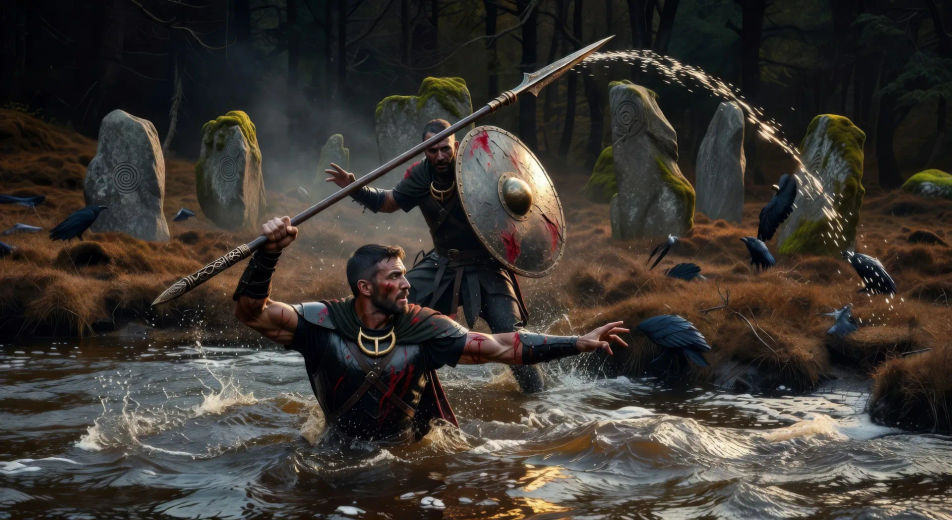
The boyhood deeds (macgnímartha) come first. Setanta, the boy who would become Cu Chulainn, kills the smith Culann’s great hound in self-defence and offers to take its place until a new pup can be raised. From that day his name is Cu Chulainn, the Hound of Culann. He goes to study warfare with Scáthach on her island fortress in the Hebrides, where she gives him the Gae Bolg, the barbed spear that opens thirty wounds when it strikes. He returns to Ulster a fully trained warrior and almost immediately enters the Tain.
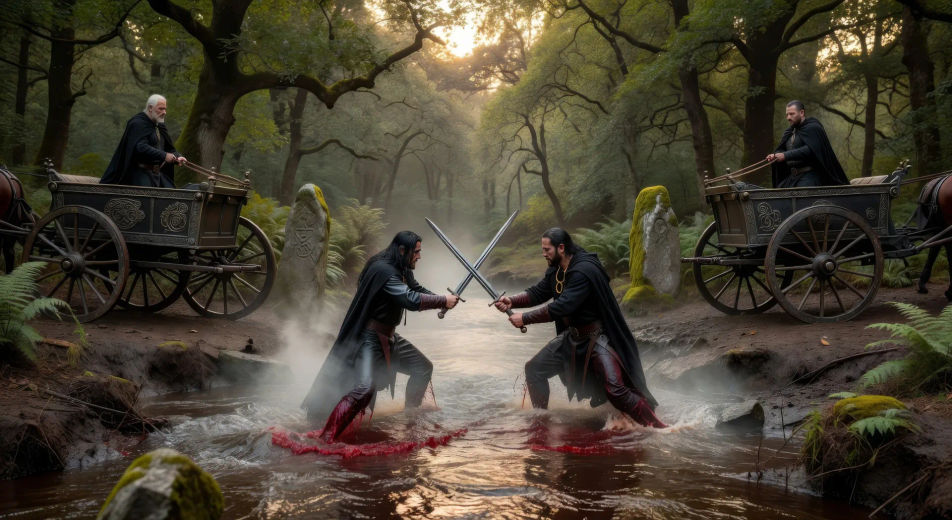
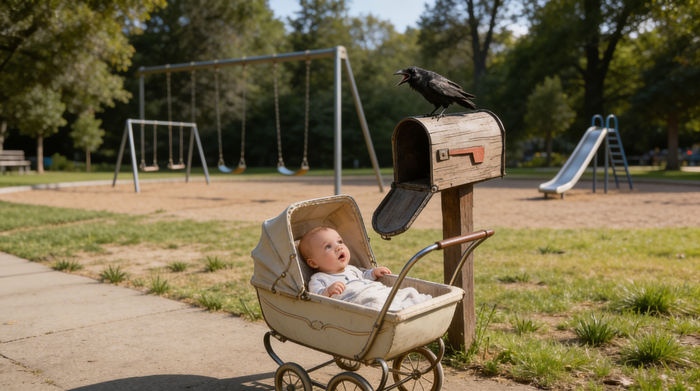
The Tain itself is the cattle-raid set in motion by Queen Medb of Connacht, who marches an army across Ireland to steal the Brown Bull of Cooley from Ulster. The men of Ulster lie under a debilitating curse from the goddess Macha and cannot fight. Cu Chulainn alone holds the kingdom’s frontier. He fights every champion Medb sends in single combat at the ford for months, including his foster-brother Ferdiad in the most famous duel of the cycle: three days of fighting, three nights of shared wine, ending with the Gae Bolg through Ferdiad’s gut. When Cu Chulainn finally falls in a later tale, he ties himself standing to a pillar-stone so he can die on his feet, and the raven of the Morrigan lights on his shoulder to announce that he is gone.
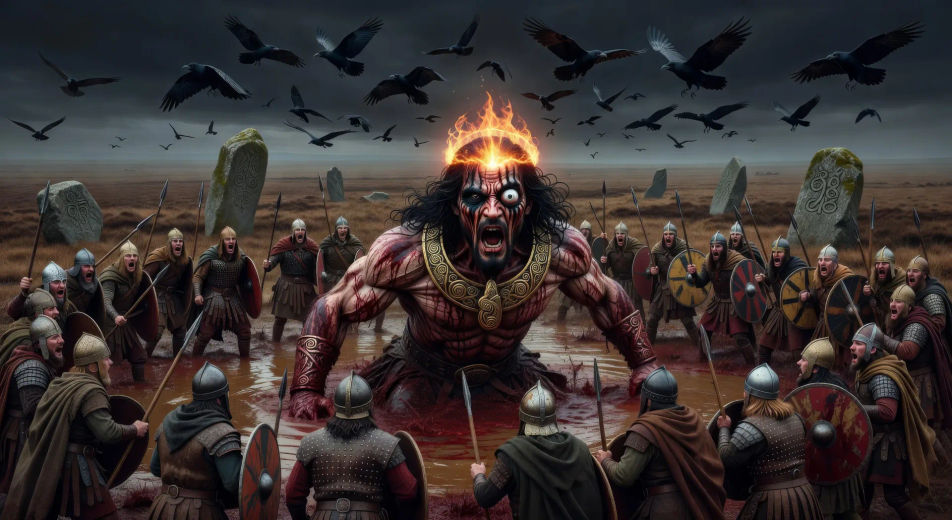
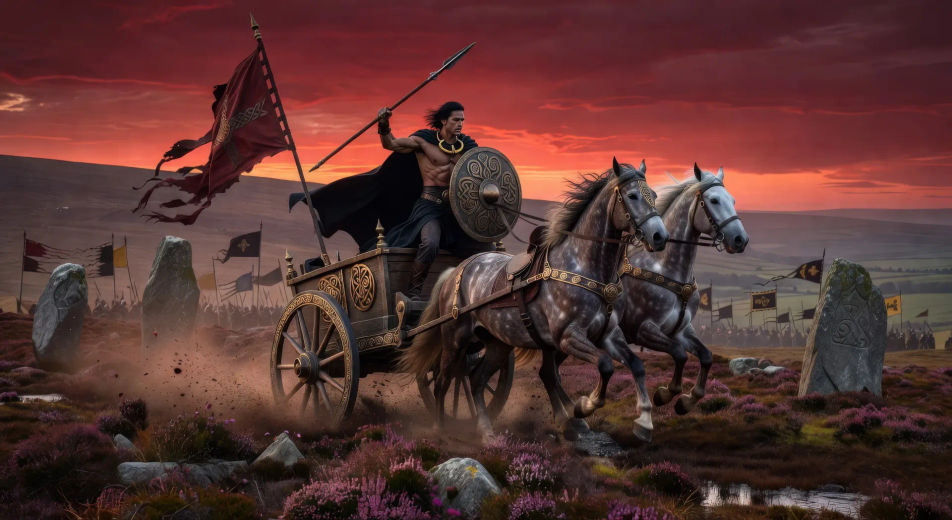
For video, anchor each scene to a moment from the cycle: the boy taking the hound’s place at Culann’s gate, the warp-spasm transformation on the field at Mag Muirthemne, the ford duel with Ferdiad, the chariot pursuit with Laeg the charioteer, the final death-stand at the pillar-stone. Lean on the Iron Age Irish palette: bog-water peat brown, gold torc, blood red, blackthorn dark, salmon silver, raven black, river-stone grey. Mention the Gae Bolg, the chariot, the warp-spasm, the standing stones, the bronze cauldrons of the war camp. The more specific the moment, the closer the output lands to the Tain.