How to make King Arthur videos with AI

King Arthur is the legendary high king of Britain, central figure of the Matter of Britain and the most enduring secular cycle of medieval European literature. The legend stretches from Geoffrey of Monmouth’s Historia Regum Britanniae (1136) through Chrétien de Troyes, the Vulgate Cycle, and Malory’s Morte d’Arthur (1485) into modern reinvention. Arthur, Guinevere, Merlin, Lancelot, Mordred, the Round Table, the Holy Grail, the passage to Avalon.

It is one of the deepest visual libraries in Western myth, and it is firmly in the public domain.

King Arthur is the high king of Britain at the heart of the Matter of Britain: the boy who pulled the sword from the stone, the high king who held Camelot, the leader of the Round Table fellowship, the wounded king who passes to Avalon. Morphic lets you direct any of it in your browser. Pick a moment from the cycle and start now.

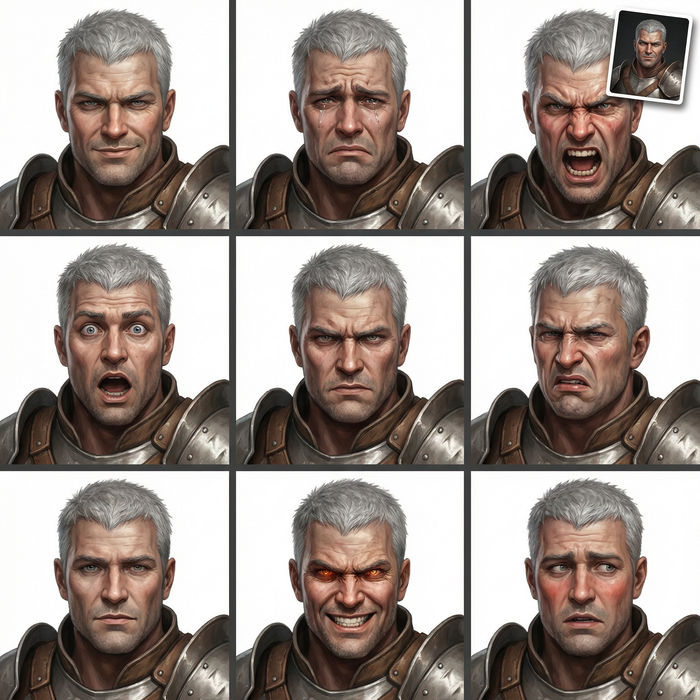
King Arthur figures you can direct

King Arthur scenes you can stage

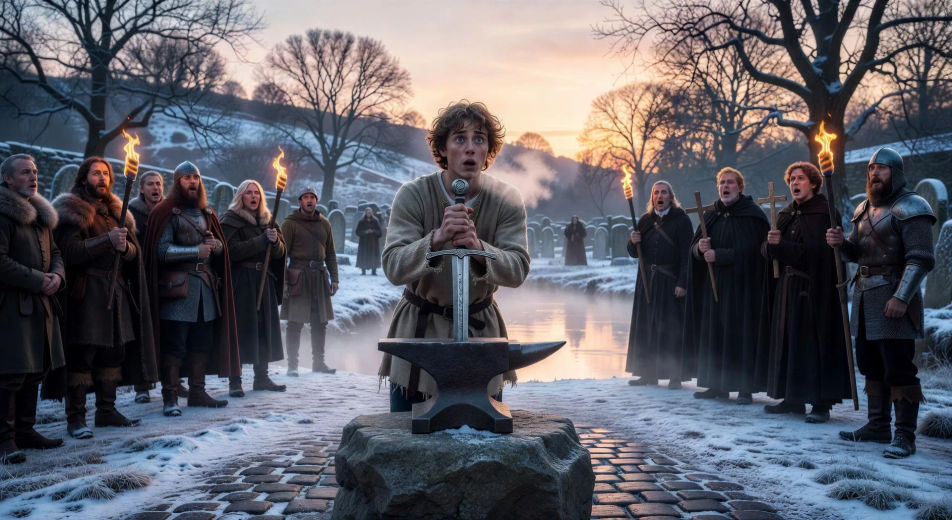
The sword in the stone

Young Arthur in a plain wool tunic at dawn in a snow-dusted London churchyard, both hands on the hilt of a slim sword fixed point-down through a flat anvil set on a great square stone. Stunned onlookers in the half-light.

Edit prompt
The sword in the stone

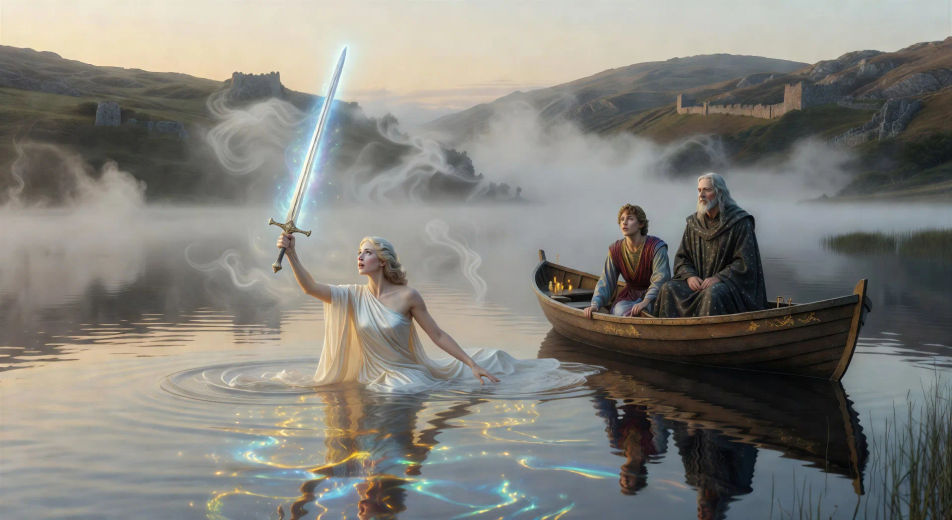
The gift of Excalibur

A still lake at first light, mist on the water. The hand of the Lady of the Lake rising from the surface, Excalibur held aloft in clean white silk wrappings. Arthur and Merlin in a small boat watching from a few yards off.

Edit prompt
The gift of Excalibur

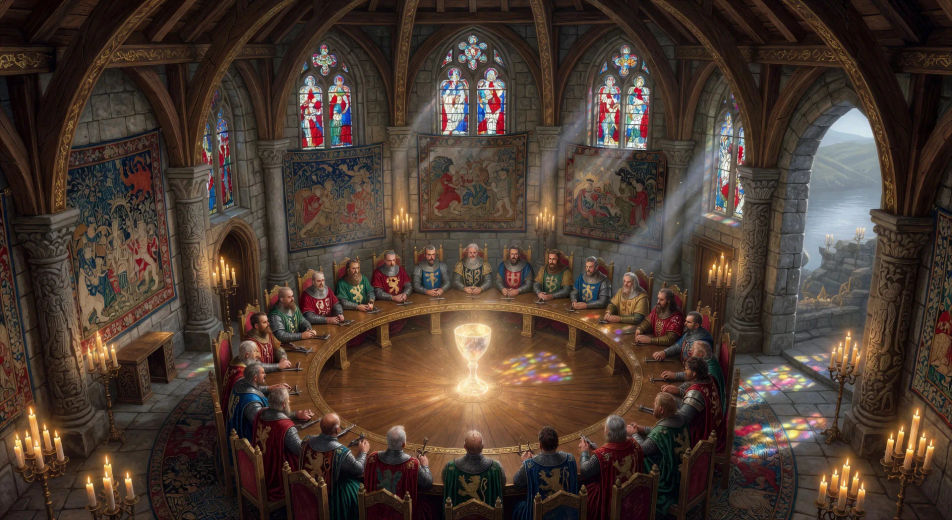
The Round Table at full session

Top-down composition of the great Round Table at full session under a high beamed roof, every seat filled with a knight in his surcoat, the central place glowing faintly with the Sangreal vision. Stained-glass light slanting in from a high window.

Edit prompt
The Round Table at full session

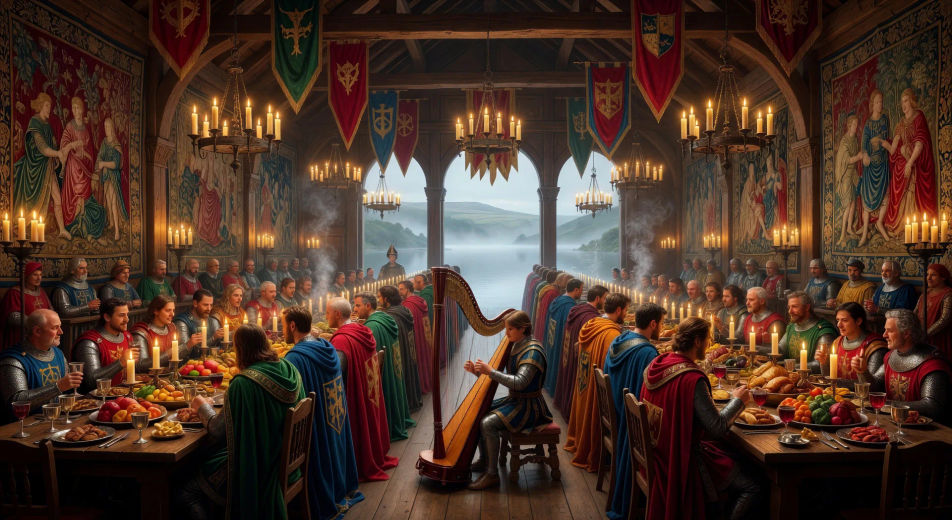
Wedding feast at Camelot

The great hall of Camelot at the wedding feast of Arthur and Guinevere by candlelight, long trestle tables, knights in their colours, banners against the rafters, a young harper at the centre. Tapestried walls in deep crimson and gold.

Edit prompt
Wedding feast at Camelot

The last battle at Camlann

Arthur and Mordred locked in single combat on a corpse-strewn western plain at sunset, the surviving fellowship in the middle distance, Mordred impaled on Arthur’s spear and driving his own blade home in the same stroke. Crows in the storm sky.

Edit prompt
The last battle at Camlann

The barge to Avalon

Bedivere on a misty lake-shore at twilight watching a small black barge moving away from him, three veiled queens around the dying Arthur on the deck, Excalibur already cast back to the water. Mist closing on the wake.

Edit prompt
The barge to Avalon

Make King Arthur videos in three steps

  1. 01

    Describe your King Arthur scene

    Write the King Arthur scene you want to see in your own words. Be specific about the moment from the cycle, the source (Malory, Geoffrey, Mabinogion), the lighting, and the camera direction. The more concrete the description, the closer the result lands to what you pictured.

  2. 02

    Generate the video

    Morphic produces a clip on your canvas in seconds.

  3. 03

    Refine your King Arthur video

    Tweak the prompt, regenerate, or remix into a longer sequence. Download or share when the shot lands.

Related workflows

A short guide to King Arthur for video creators

The Arthurian cycle has Brittonic Celtic roots. The earliest mentions are in the Welsh Y Gododdin (a 7th-century poem that compares a hero "though he was no Arthur"), the 9th-century Historia Brittonum (which lists Arthur’s twelve battles), and the medieval Welsh tales of the Mabinogion (Culhwch and Olwen, The Dream of Rhonabwy). Geoffrey of Monmouth wrote Arthur into a continuous Latin history of Britain in 1136, inventing the basic shape: Arthur the son of Uther Pendragon, conceived at Tintagel through Merlin’s magic, crowned high king of Britain, victorious against Saxons and Romans, betrayed by his nephew Mordred, mortally wounded at Camlann, carried to Avalon. Chrétien de Troyes (c. 1170–90) added Lancelot, Perceval, and the Holy Grail. The 13th-century Vulgate Cycle systematised the lot. Malory in 1485 closed the canon for all anglophone readers since.

The standard cycle, in order, runs: the conception at Tintagel; the boy Arthur drawing the sword from the stone in a London churchyard at the New Year; the gift of Excalibur from the Lady of the Lake at the lake-bank; the founding of Camelot and the Round Table; the marriage to Guinevere of Cameliard; the long fellowship of the Round Table knights (Gawain, Lancelot, Percival, Bedivere, Kay, Tristan, Galahad); the Quest for the Holy Grail (only Galahad attains it, only Percival survives intact); the love of Lancelot and Guinevere uncovered, splitting the fellowship; the rebellion of Mordred; the final battle at Camlann where Arthur kills Mordred and is mortally wounded; Bedivere casting Excalibur back into the lake on Arthur’s order; the barge of three queens carrying Arthur across to Avalon to be healed against the day Britain calls him back.

For video, anchor each King Arthur scene to a specific moment from the cycle and a specific source: the sword-from-stone (Vulgate Merlin), the gift of Excalibur (Malory I.25), the wedding feast in the great hall of Camelot, the Round Table at full session, the Holy Grail vision in the candlelit hall, the duel with Mordred at Camlann, Bedivere on the lake bank casting the sword. Lean on the late-medieval / early-Arthurian palette: pre-Raphaelite jewel tones, Burne-Jones gold leaf, illuminated manuscript blue and crimson, real Welsh hill-fort grey, mist over still water. Avoid Hollywood plate armour. The more concrete the moment, the closer the output lands to the cycle.

You might also like

Frequently asked questions

Where can I make King Arthur videos with AI?
You can create King Arthur scenes directly in your browser on Morphic. Open the Text to Video tool, describe the moment from the cycle you want, and Morphic produces the clip. No installs and no specialist software needed.
What kinds of King Arthur scenes work best with AI video?
Single-shot moments from the Arthurian cycle work best: the sword in the stone at New Year dawn, the gift of Excalibur on the misty lake, the Round Table at full session under stained-glass light, the wedding feast at Camelot, the last battle at Camlann, the barge to Avalon. Anchor each King Arthur scene to a specific moment, location, time of day, and mood.
How do I keep my King Arthur knights consistent across scenes?
Use the Character Lineup workflow to lock each knight’s look (Arthur’s crimson Pendragon surcoat, Lancelot’s blue with three silver bends, Gawain’s green pentangle, Mordred’s red wyvern), then reference those character cards in every prompt. Morphic preserves heraldry, mail, and bearing from scene to scene so an Arthurian series feels continuous.
How do I write a good prompt for a King Arthur scene?
Name the moment from the cycle, the location, the time of day, the lighting, and the camera direction. Lean on the late-medieval and pre-Raphaelite palette: jewel-tone surcoats, illuminated-manuscript blue and crimson, gold leaf, mist on still water, Welsh hill-fort grey. For example: "Arthur drawing the sword from the stone at dawn in a snow-dusted London churchyard, slow low-angle push-in." The more specific your imagery, the closer the output matches your imagination.
Can I add narration and music to my King Arthur videos?
Yes. The Speech tool generates a voiceover from your script (a passage from Malory, Tennyson’s Idylls of the King, the Mabinogion in translation) in the voice you choose, and the Music tool produces an original medieval-tinged soundtrack to score the scene. Layer them onto your generated video to publish a complete King Arthur episode.
How do I make my King Arthur videos feel medieval Arthurian, not Hollywood?
Strip the Hollywood plate-armour costume language out of your prompt. The Arthurian knights are 12th–15th-century mail-and-surcoat figures, not 16th-century full-plate or 21st-century leather-and-buckle. Anchor on medieval sources: Burne-Jones and Waterhouse paintings, the Très Riches Heures du Duc de Berry, the Bayeux Tapestry, illuminated manuscript marginalia, the actual hill-fort at South Cadbury. Ask for "based on illuminated manuscript Arthurian iconography" and avoid words like "blockbuster", "fantasy armour", or any modern adaptation reference.