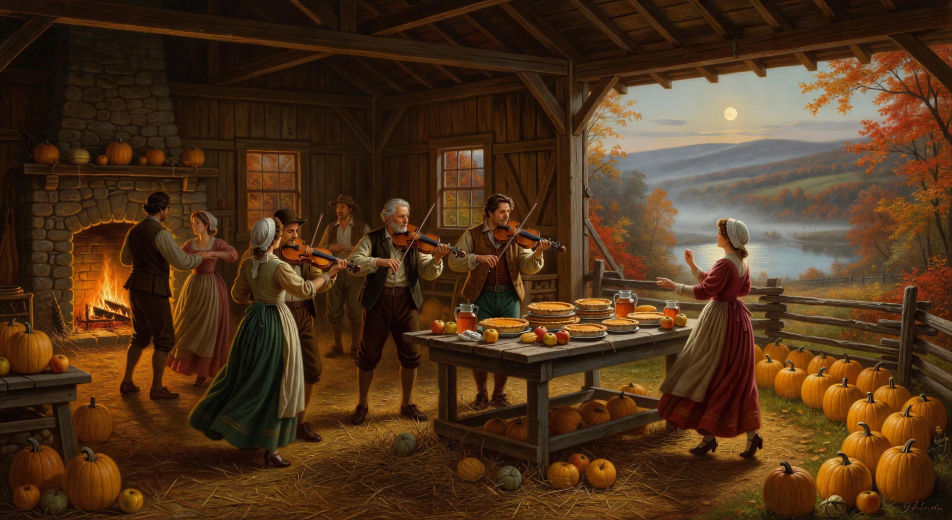
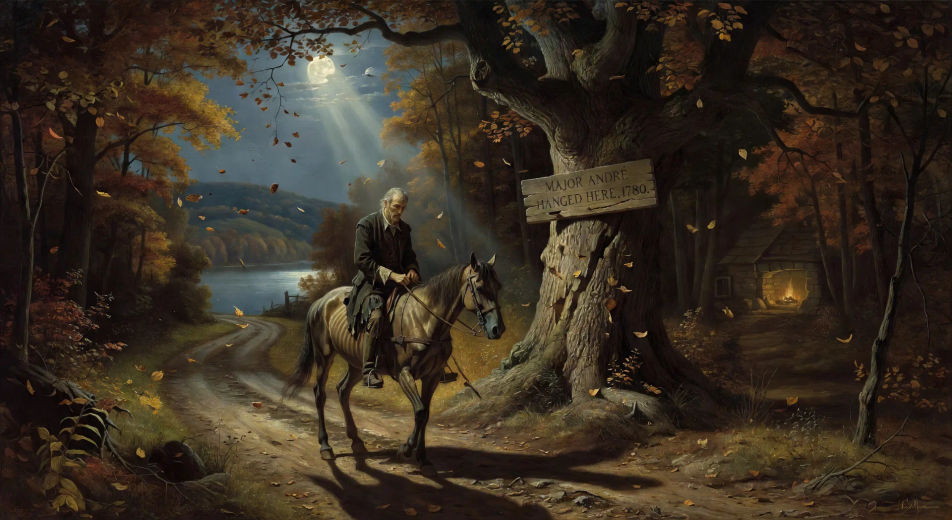
The story moves through a clean Hudson Valley geography. The little village of Sleepy Hollow with its thatched cottages and one-room schoolhouse. The dirt road climbing past the Old Dutch Church and its small graveyard, where the Horseman is supposed to keep his nightly tomb. The Van Tassel farm with its fat barns, golden pumpkins ranked along the fence, and the long supper-table set under the harvest sky. The wooded glen between the farm and the schoolmaster's rented room, with the great tulip tree where Major André was hanged. The narrow covered wooden bridge over the brook below the church, traditionally the boundary of the Horseman's ride. The pumpkin smashed in the road at dawn.
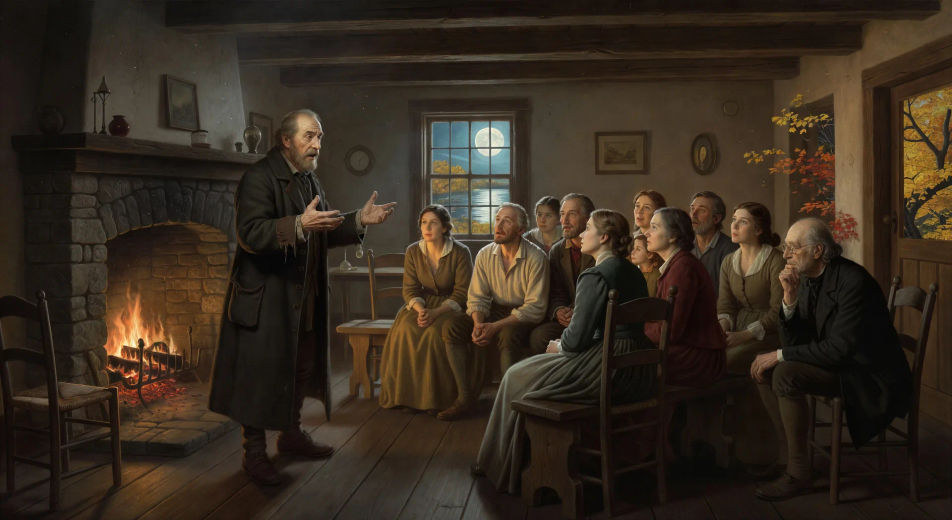
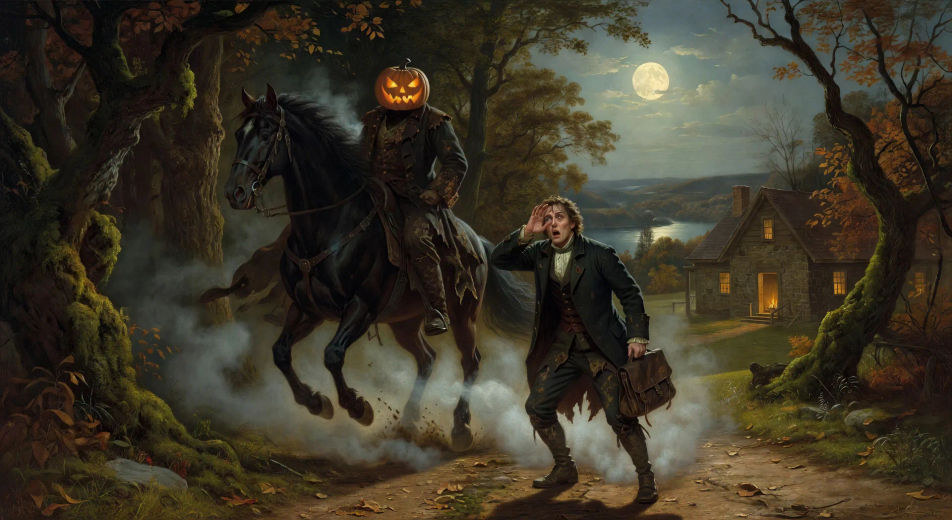
For video, anchor each scene to one of these locations and one beat. The visual library is unusually compact and powerful: Ichabod riding the borrowed plow-horse Gunpowder along a ridge under harvest moonlight; the Van Tassel barn lit warm with fiddlers and dancing on the threshing-floor; an old Dutchman telling ghost stories at the fireside; Ichabod alone in the wood at midnight; the black horse and headless rider emerging from the trees; the chase to the covered bridge; the smashed pumpkin in the dirt at first light.
Three styles consistently land. Cinematic photoreal in the spirit of high-budget American period drama delivers the prestige Hudson Valley look. Painterly oil with chiaroscuro echoes the Hudson River School painters of Irving's era — Thomas Cole, Frederic Church, John Quidor. Storybook animation in the spirit of mid-century Halloween specials can carry the warmer family tone. Name the style directly in the prompt.