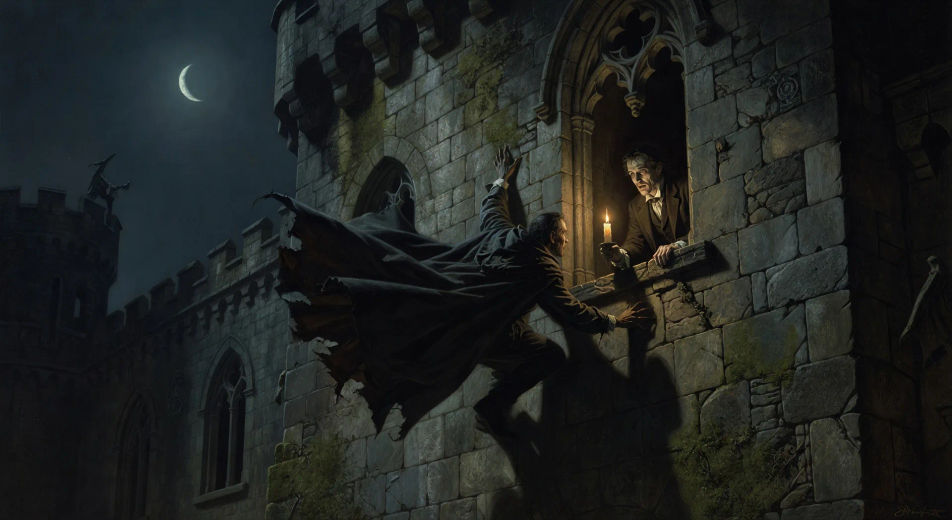
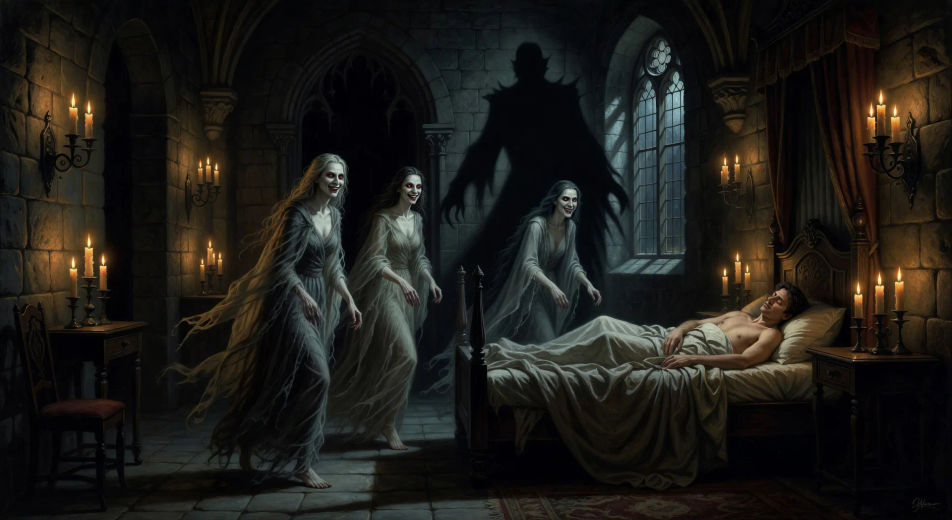
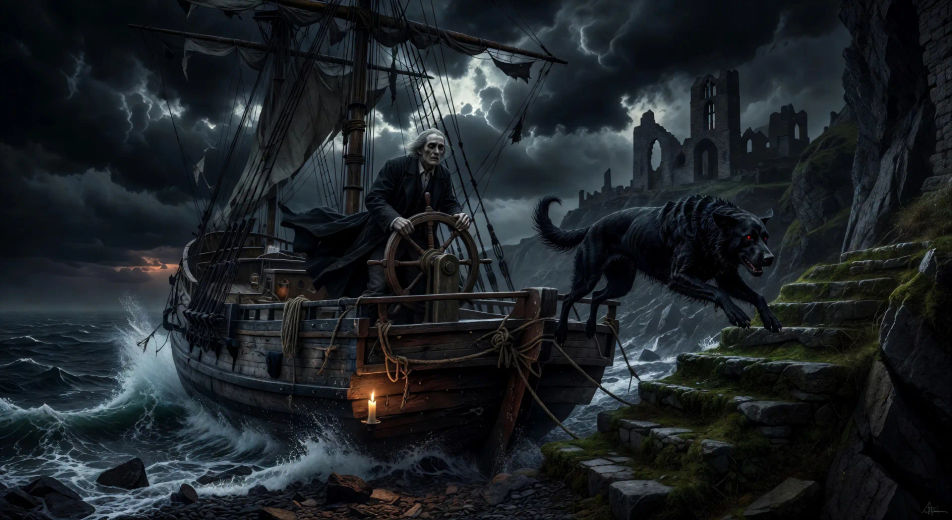
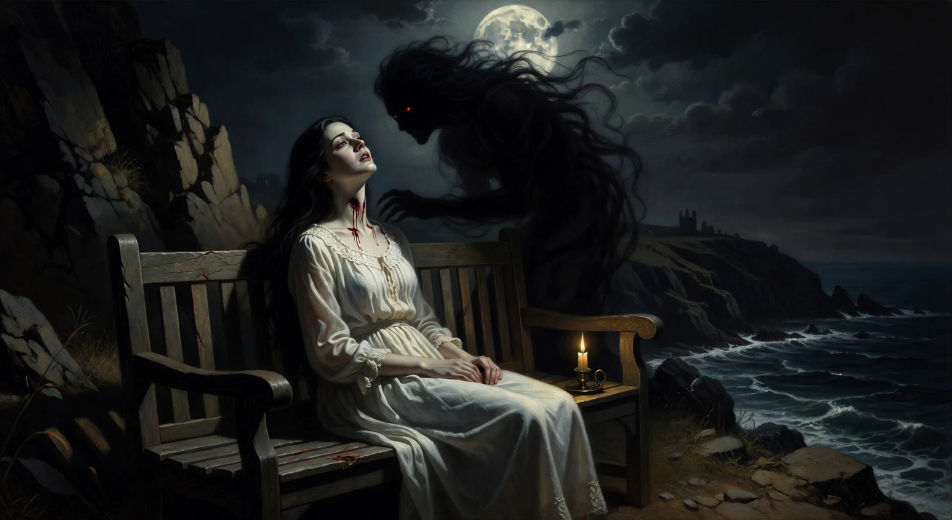
The Dracula novel splits into a clean three-act geography. Act one: Jonathan Harker travels by coach through the Borgo Pass into Transylvania, dines with the count, watches the count crawl head-first down the outer wall like a lizard, is locked in the castle with the three vampire brides. Act two: the Demeter arrives at Whitby with its captain lashed dead to the wheel and a great black dog leaping ashore. Lucy is hunted, dies, returns as the Bloofer Lady stalking children on Hampstead Heath. Mina is contaminated. Renfield, the fly-eater at the asylum, is murdered by his master. Act three: the hunt. Van Helsing, Jonathan, John Seward, Arthur Holmwood, and Quincey Morris pursue the count back across Europe by train and river, catching him in his earth-box on a Borgo Pass road just before sundown.
For video, anchor each Dracula scene to one location and one beat of the chase. The visual library is unusually cinematic: the wolves of the Borgo Pass at dusk, the candle-lit dining hall in the castle, the count's slow head-first descent of the outer wall, the three brides at the foot of the bed in moonlight, the ship under a black sky off Whitby Abbey, Lucy in white at the bench above East Cliff, Renfield at the bars of his cell with flies on his hands, the long final ride across Transylvania at sundown.
Three styles consistently land. Cinematic photoreal in the spirit of high-budget gothic period drama delivers the prestige look. Painterly oil with chiaroscuro echoes the Symbolist and Pre-Raphaelite painters of Stoker's era. Expressionist black-and-white with hard shadows lands as homage to the silent-film vampire genre. Name the style directly in the prompt and avoid actor-likeness language for any film adaptation.