Baritone AI voices

Try Morphic

Browse AI baritone voices from resonant documentary narrators to bright lyric baritones, or build your own with the baritone voice generator, then lip sync any line so your narrator speaks it on screen.

Baritone voices for audiobooks, documentary narration, and trailer voiceovers

Caldwell

A resonant documentary narrator, deep and smooth, unhurried with a rich low body

Brandt

A rich radio-host baritone, warm and rounded, easy and inviting in the lower register

Sinclair

A commanding stage baritone, full and theatrical, projecting with weight and polish

Monroe

A mellow late-night baritone, low and intimate, soft and close with a velvet edge

Grayson

A lyric baritone, bright and clear at the top of the range, flexible and expressive

Thorne

A gravel-edged bass-baritone, heavy and grounded, dark and weighty at the bottom

Design your baritone voice

Mix and match the traits below. Your prompt builds as you go.

Archetype
Depth
Texture
Mood

A bottomless, gravelly, menacing overlord baritone voice

Generate

Turn a baritone voice into a talking character

Most voice tools stop at an audio file. Morphic maps the read onto a face so your narrator speaks the line on screen, mouth and timing matched, taking you from a written line to a talking baritone clip that carries its full low-register weight.
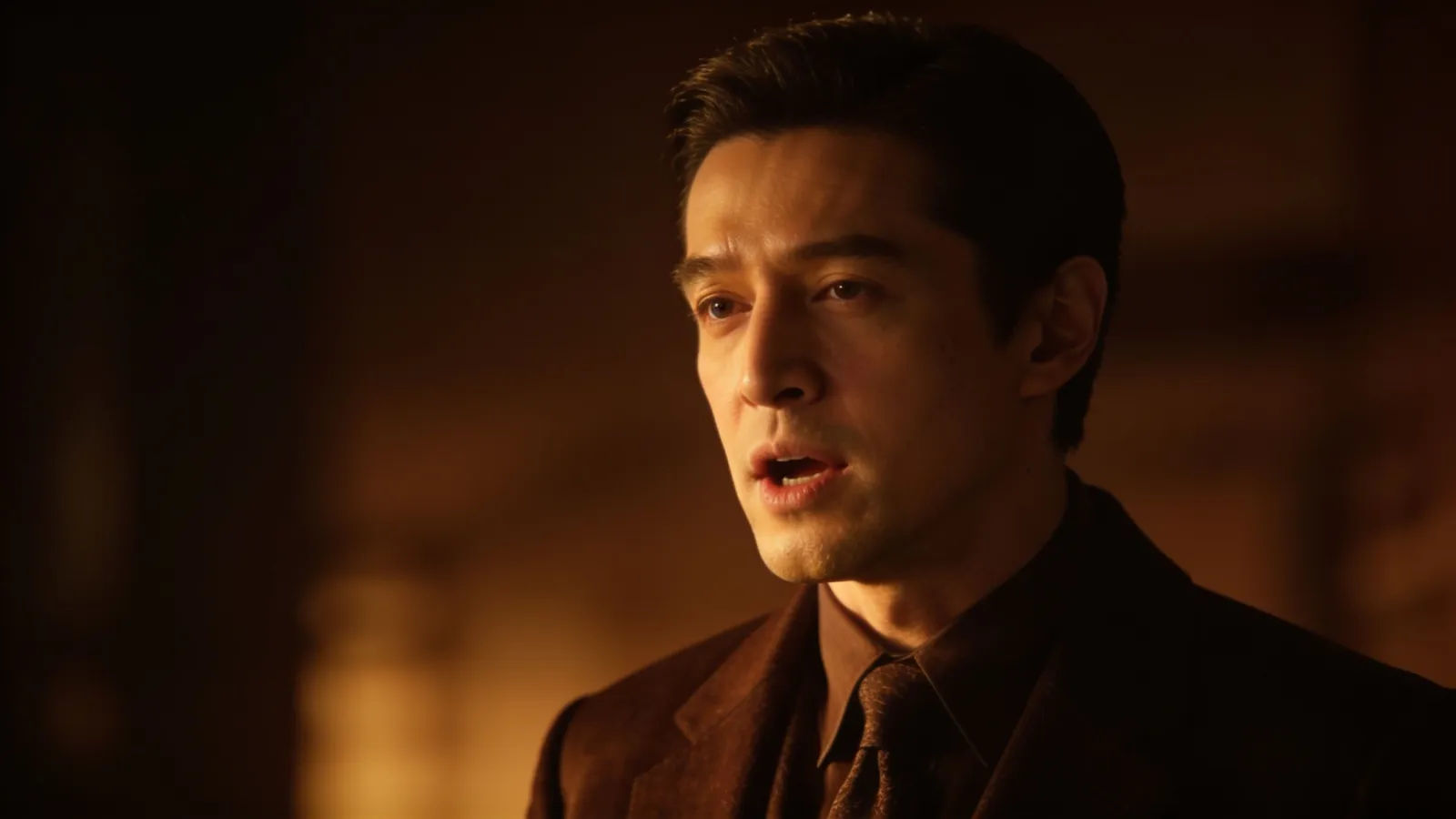
Distinguished man mid-narration in bronze low-key portrait

Deep voices for audiobooks, documentary narration, and trailer voiceovers

Give every narrator, radio host, and stage actor its own voice. Browse baritone archetypes from resonant bass-baritones down to lighter lyric baritones, each directed from a prompt and ready to drop into an audiobook chapter, a documentary voiceover, or a cinematic trailer.
Warm vintage recording studio with suspended microphone

Baritone voice text to speech for narration and announcements

Paste a script and turn it into a rich baritone read in seconds, no recording booth. Morphic converts written dialogue into a deep, grounded delivery for narration, station IDs, and formal announcements, with pace, pitch, and warmth you direct in plain English.

Deep bronze and amber glowing waveform in darkness

A baritone voice generator you direct in plain English

Describe the voice you want, name the depth, texture, and mood, and the generator builds the read. Re-voice the same line as a smoother or a deeper baritone anytime by editing the prompt, a whole range of low male voices from one workspace.
Hands at analog console with warm-amber audio interface

More voice styles

Simple pricing

Get started for free today, with the option to upgrade or cancel anytime.

Basic

$19/ month
billed as $0 per year

2400 monthly credits

1 user only

All models

Workflows

Standard

$24/ month
billed as $0 per year

3625 monthly credits

1 user only

All models

Workflows

Pro

$45/ month
billed as $0 per year

6350 shared monthly credits

1 user

+ up to 4 more at extra cost

All models

Workflows

Max

$170/ month
billed as $0 per year

24650 shared monthly credits

1 user

+ up to 9 more at extra cost

All models

Workflows

Enterprise

For higher limits

Custom

pricing and billing terms

High-volume credits
Custom seat limits
All models
Workflows
Pricing Gradient

Free

For playing around

$0

forever free

Up to 20 credits
1 user only
Limited models
Workflows

FAQs

What is an AI baritone voice?
An AI baritone voice is a generated performance shaped around a deep male vocal range rather than one fixed narrator. You describe the character, such as a resonant documentary narrator or a bright lyric baritone, then direct pitch, texture, and pace so the read sits in the register you want. In Morphic the same line can be re-voiced as a different baritone without re-recording anything.
How do I make a custom baritone voice in Morphic?
Open the speech tool, paste your line, and describe the voice in plain English. Name the depth, then add cues for warmth, resonance, and pace so the low end carries. Generate, listen, and adjust the prompt until the tone lands. The compare tool on this page composes that direction for you and carries it straight into Studio.
Can I turn a baritone voice into a talking character?
Yes. After you render the voice, the lip sync tool maps the audio onto a face so the mouth and timing match the read. That takes you from a written line to a talking baritone clip in one workflow, which is the step a voice-only generator cannot complete.
Can I use these voices commercially?
Yes, voices generated on paid Morphic plans can be used in commercial films, ads, games, and animated content. Review the Morphic terms for full licensing detail before you publish.
How many different baritone voices can I create?
There is no fixed roster. Because each voice is directed from a prompt, you can create as many distinct baritones as your project needs and revise any of them by editing the direction. Build a whole range of low male voices from a single workspace.
What languages and accents are supported?
The Morphic speech tool supports English plus a growing set of languages and accents. For a baritone you can specify an accent or a particular resonance in the prompt to match the narrator or character you have in mind.