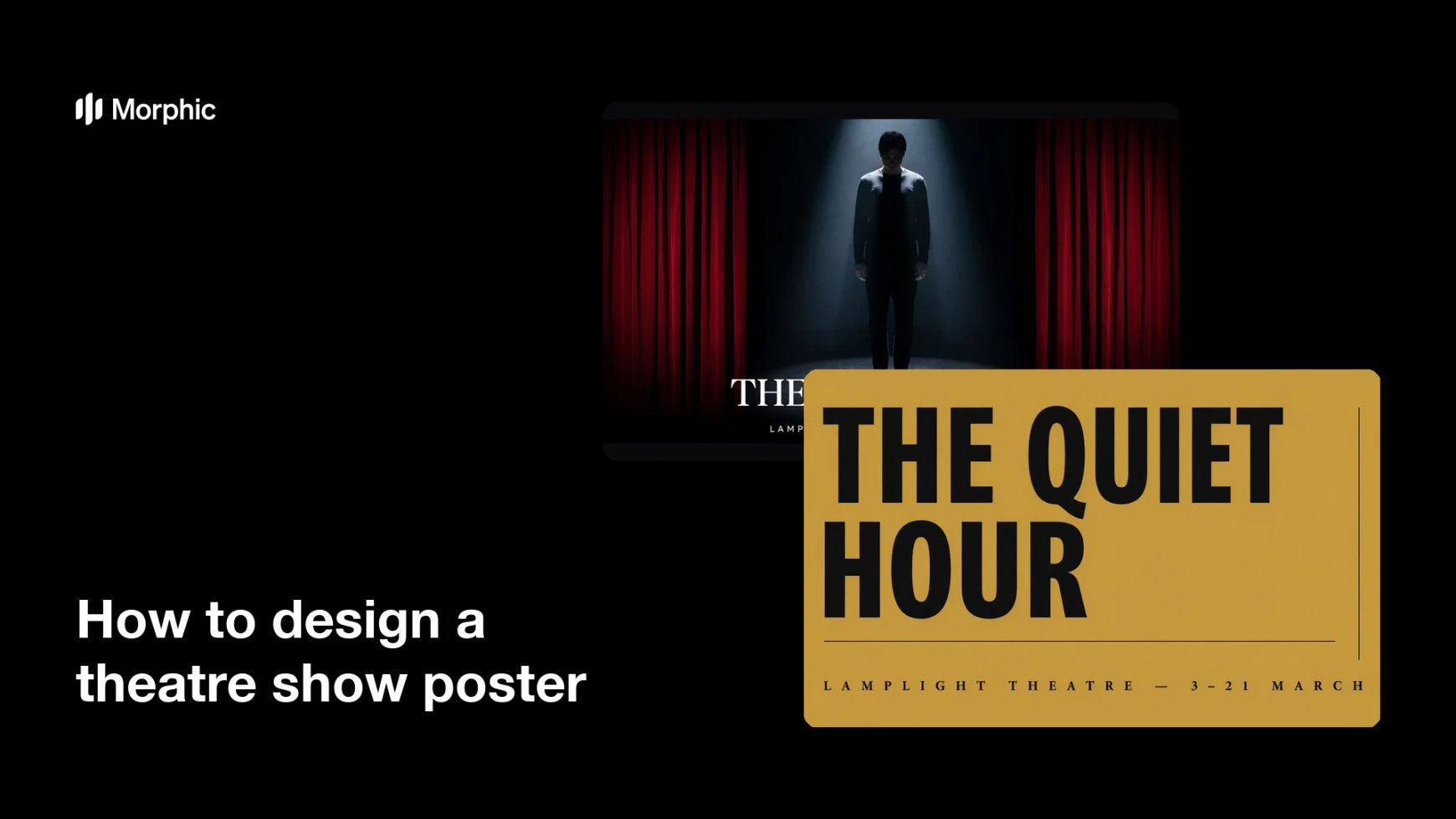
What is a theatre show poster?
A theatre show poster is the key image for a production: the show title, the venue, the run dates, and the billing block that credits the company. Theatres, touring companies, and student and fringe productions use it on walls, in programmes, and as the listing image on ticketing sites. Its job is to communicate the tone of the production, comedy or tragedy, intimate or spectacular, in a single glance.
With Morphic you design that poster from a text prompt in your browser. Describe the production's mood, supply the title and billing text, compare a few directions, then download in HD. You get a poster that suits the show without commissioning a full design round.
Pin down the billing
Write the show title, venue, run dates, and any credits exactly as they must appear. Theatre billing is often contractual, so getting the wording right first prevents reprints.
Describe the production's tone
Open Morphic and describe how the show should feel: stark and modern, lush and period, unsettling, or playful. The tone you describe drives the imagery, palette, and lighting more than any single visual instruction.
Ask for a poster composition
Request a vertical poster with a strong central image, the title dominant, and a clear space at the foot for dates and billing. Ask for two directions so you can compare a bold image-led poster against a typographic one.
Proof the title and dates
Read the title, venue, and run dates on each option and confirm the spelling and formatting are correct. Regenerate any poster where the billing block is crowded or a character is malformed.
Export for print and listings
Preview the poster large and as a small listing thumbnail to confirm it works at both. Download in HD, then send it to print and use it for your ticketing and social listings.
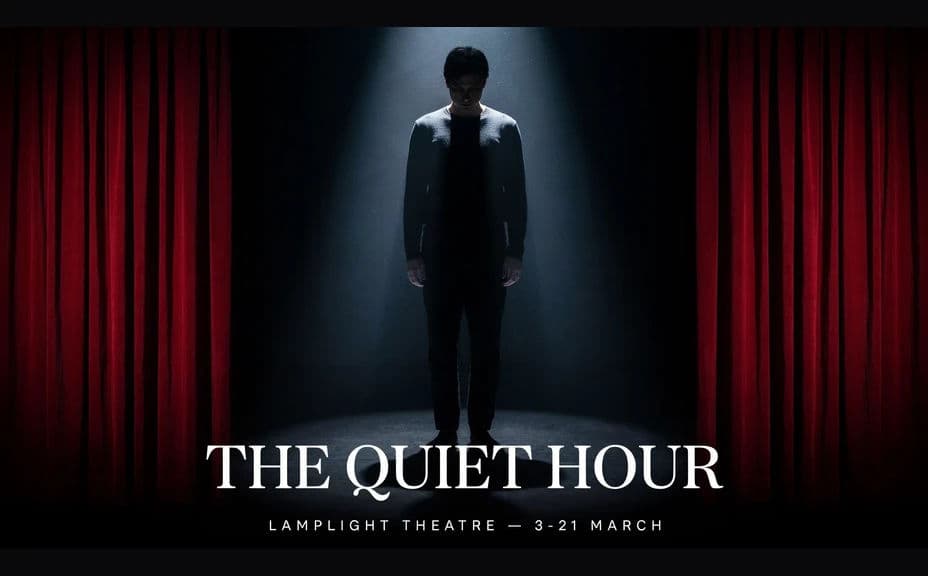
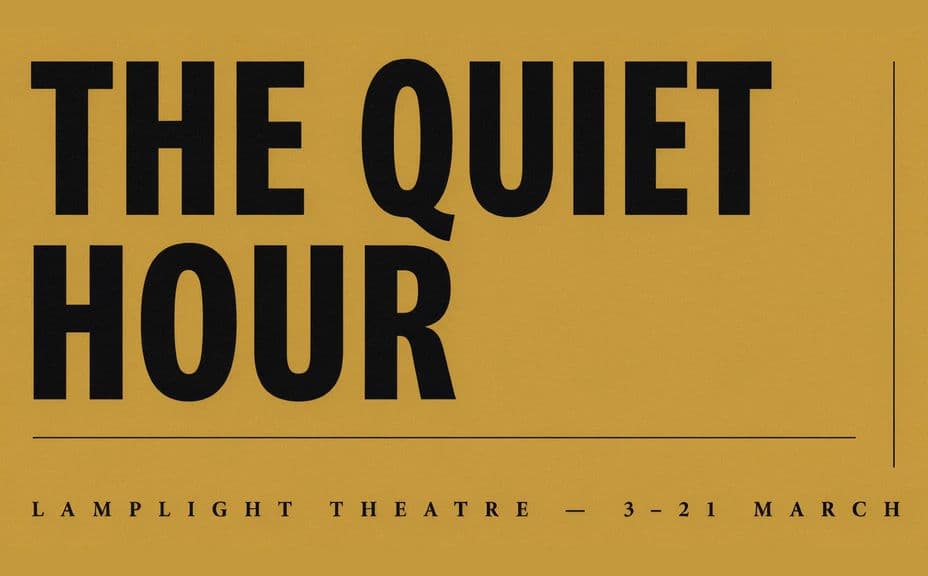
Two poster directions for the same production, each carrying the title and run dates.
What makes a good theatre show poster
| Quality | What it means | Why it matters |
|---|---|---|
| Tone that matches the show | The image signals the genre | Audiences self-select from the poster alone |
| Dominant title | The show name leads the design | It is what people search and remember |
| Legible billing block | Dates, venue, and credits are clear | Bookings and contractual credits depend on it |
| Works at both sizes | Strong as a wall poster and a thumbnail | The same image sells the run online and in the street |
Morphic vs the traditional way
| Morphic | A design studio or design software | |
|---|---|---|
| Cost | Available on Morphic | Studio fee or software subscription |
| Time | A finished poster in minutes | Weeks of concepts and revisions |
| Skill needed | Describe it in plain language | Art direction and typography skills |
| Consistency | Regenerate matching art for the whole season | A new design round for each production |
FAQs
Yes. Provide the title, venue, and run dates in your prompt, then proof the rendered text and regenerate if any wording is wrong.
Yes. Ask for several treatments of the same production and compare them side by side, then choose the one that suits the show.
Yes. Download in HD and preview the poster at full size before you send it to print, regenerating anything that looks soft.
Yes. Describe a shared visual system and generate each show within it, so the season reads as one programme.
Describe the new dates and regenerate in the same style. There is no manual relayout, so a change is quick.
Yes. Designs you generate with Morphic are cleared for commercial use across your print, ticketing, and marketing.