What is a brand style guide visual?
A brand style guide visual shows the rules in practice: how the palette, mood, and imagery style look when applied, not just described. A guide full of hex codes and adjectives leaves room for interpretation; example visuals remove it, so everyone touching the brand makes the same choices.
Morphic lets you generate those examples from a description of the brand's look. Define the style once, generate representative images that embody it, refine until they capture the rules exactly, and download them for the guide. The guide becomes a set of pictures your team can match rather than a document they have to decode.
Write the visual rules in plain language
Describe your brand's look in words a prompt can use: the palette, the lighting, the mood, the kind of subjects and settings that fit. This description is the seed for every example, so make it specific enough to be repeatable.
Generate example images that embody the style
Feed the description to Morphic and generate a set of images that show the style in action across different subjects. Seeing the rules applied to varied scenes proves they hold together. Pick the examples that capture the brand most clearly.
Show the boundaries, not just the ideal
A guide is clearer when it shows what is off brand too. Generate a counter-example or two that break a rule, and label them so the line is unmistakable. The contrast teaches faster than the ideal alone.
Keep the set consistent
Every example should feel like the same brand. Reuse the same descriptive language across prompts so the palette and mood stay steady, and refine any image that drifts. Consistency across the examples is the whole point of the guide.
Export for the document
Adapt the images to the shape your guide uses and export in HD so they stay sharp in print and on screen. Pair each with the rule it illustrates so the guide reads as instruction, not decoration.
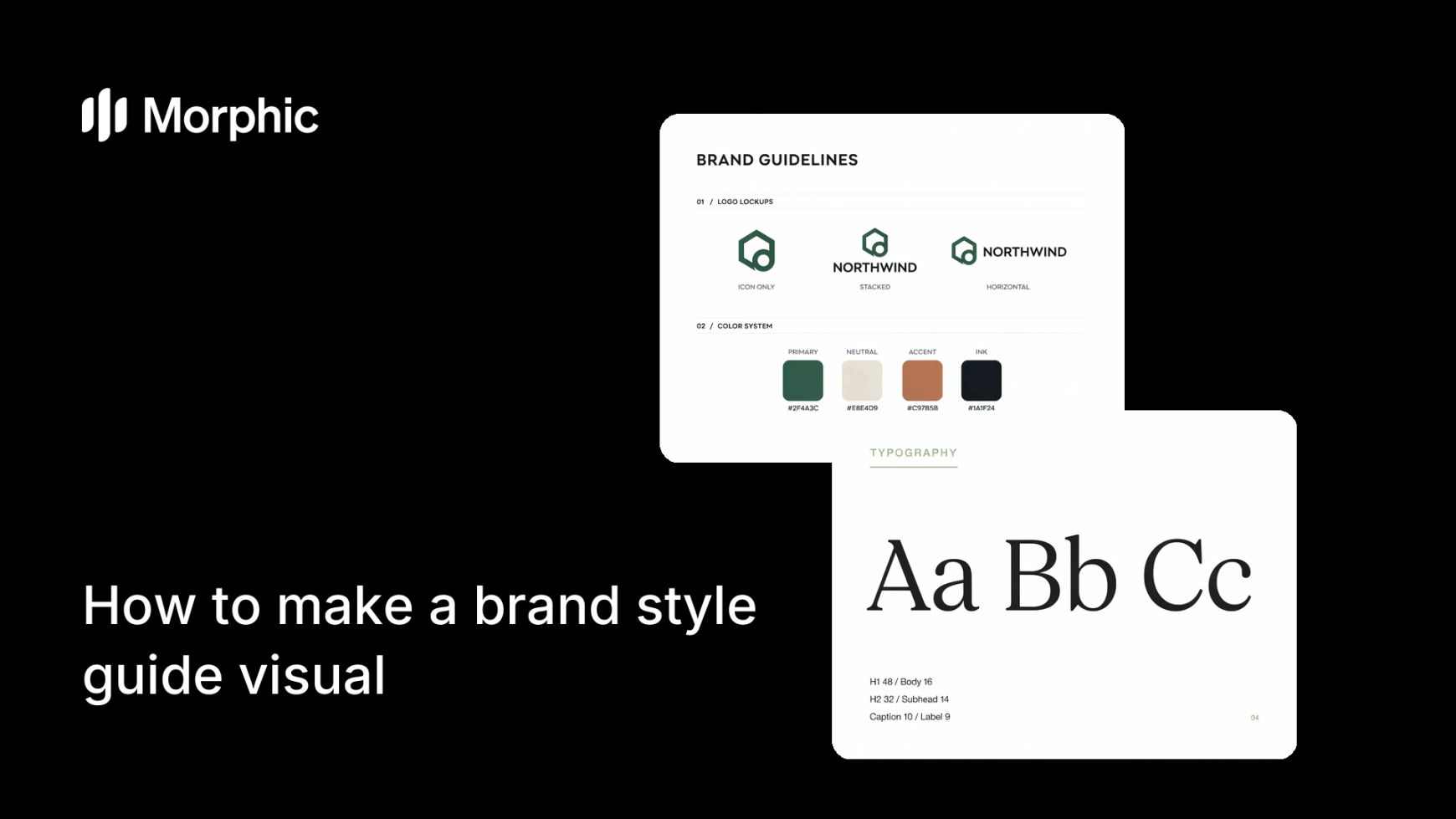
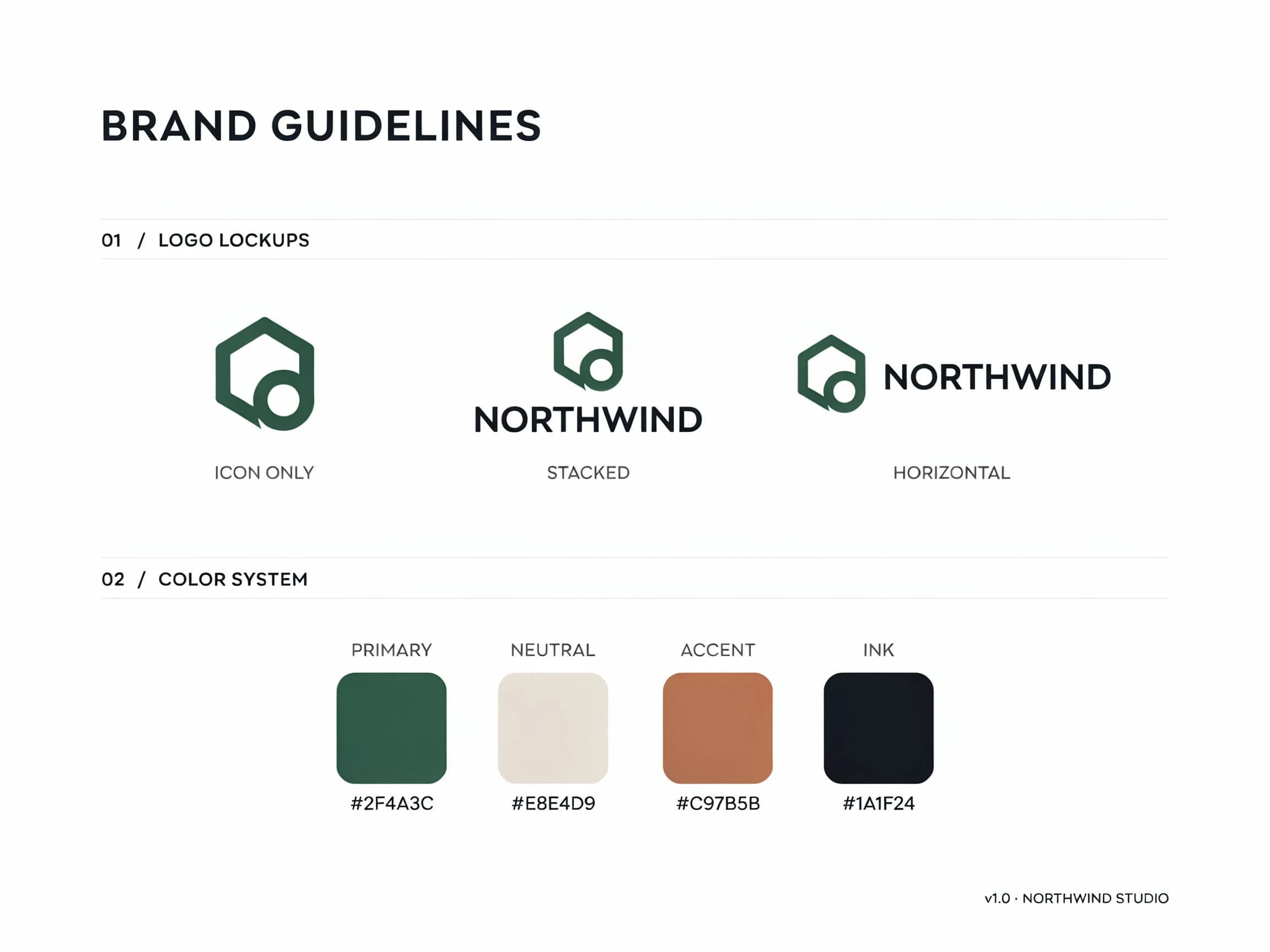
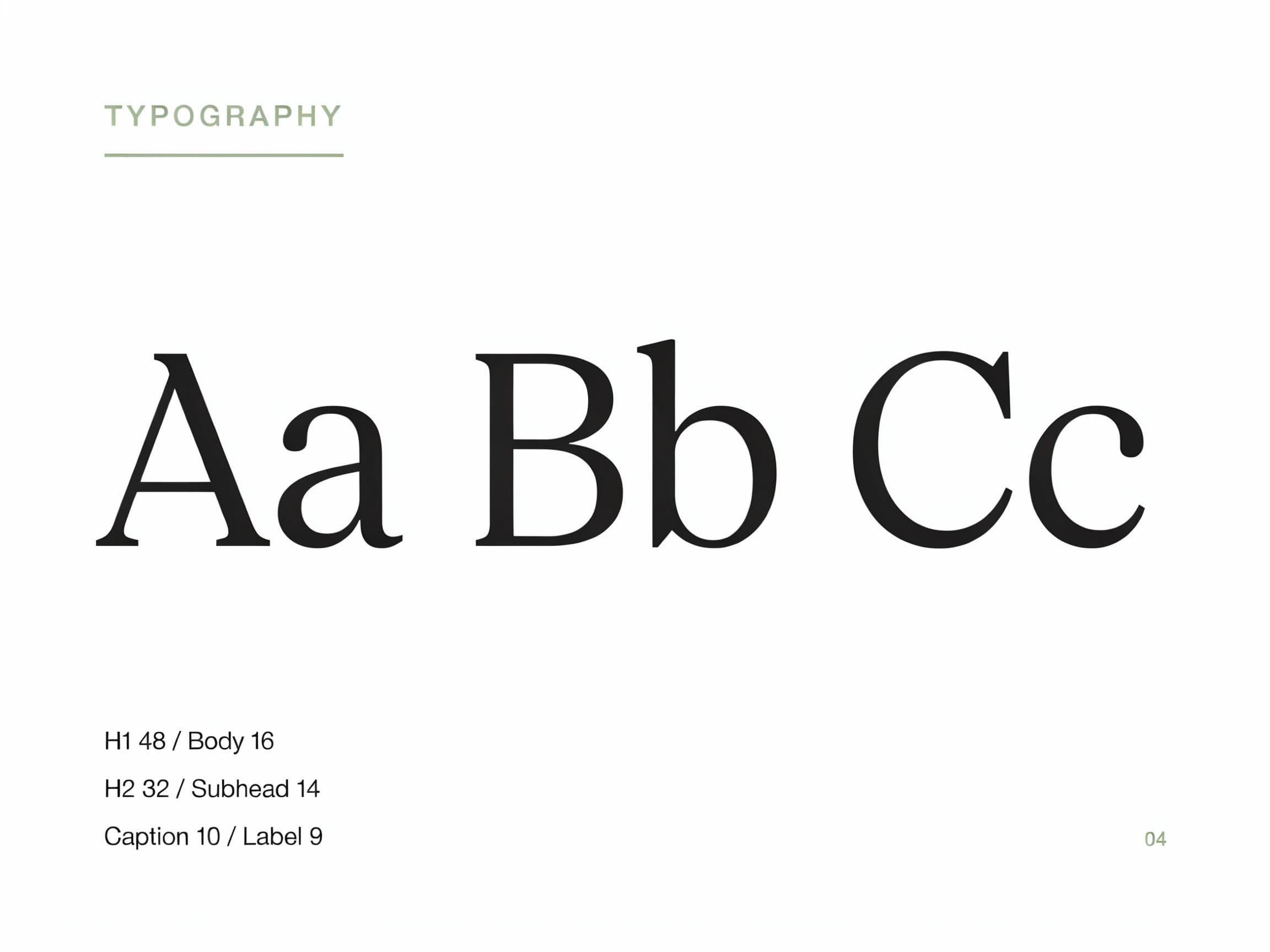
Two spreads from one brand style guide.
What makes a great style guide visual
| Quality | What it means | Why it matters |
|---|---|---|
| Rule made visible | The example embodies a written rule | The team matches a picture, not a paragraph |
| Clear boundaries | On brand shown next to off brand | The line is unmistakable, not interpreted |
| Internal consistency | Every example shares the same look | The guide proves the rules cohere |
| Document-ready | Sized and sharp for the guide | The examples read cleanly in context |
Morphic vs a text-only style guide
| Morphic | Written guide with stock examples | |
|---|---|---|
| Cost | One browser tool | Stock licenses or a photo shoot |
| Time | A full example set in a session | Sourcing images that only half fit |
| Skill needed | Write a clear prompt | Search or photography and staging |
| Fit to brand | Generate exactly your style | Approximate with the closest stock |
FAQs
Written rules leave room for interpretation. Example images show the palette, mood, and style applied, so everyone touching the brand makes the same choices instead of guessing from a hex code.
Yes. A counter-example or two, clearly labeled, makes the boundary unmistakable. The contrast between right and wrong teaches faster than the ideal on its own.
Reuse the same descriptive language for palette and mood across prompts, then refine any image that drifts. Consistency across the set is what proves the rules hold together.
Yes. Generate the same rules applied to varied scenes and subjects. Seeing the style hold across contexts is what makes the guide genuinely useful.
Adapt them to the shape your guide uses and export in HD so they stay sharp in print and on screen, then pair each with the rule it illustrates.
Yes. Visuals you create with Morphic are yours to embed in the guide and share internally as the reference for the brand.