Why test cast a micro drama first
Casting decides whether a micro drama hooks viewers in the first seconds, and it is expensive to undo once a season is shot. Make one key scene, recast it with each candidate, and compare the takes. The scene, camera and timing never change, so the only thing you judge is the person.
Micro drama test casting examples
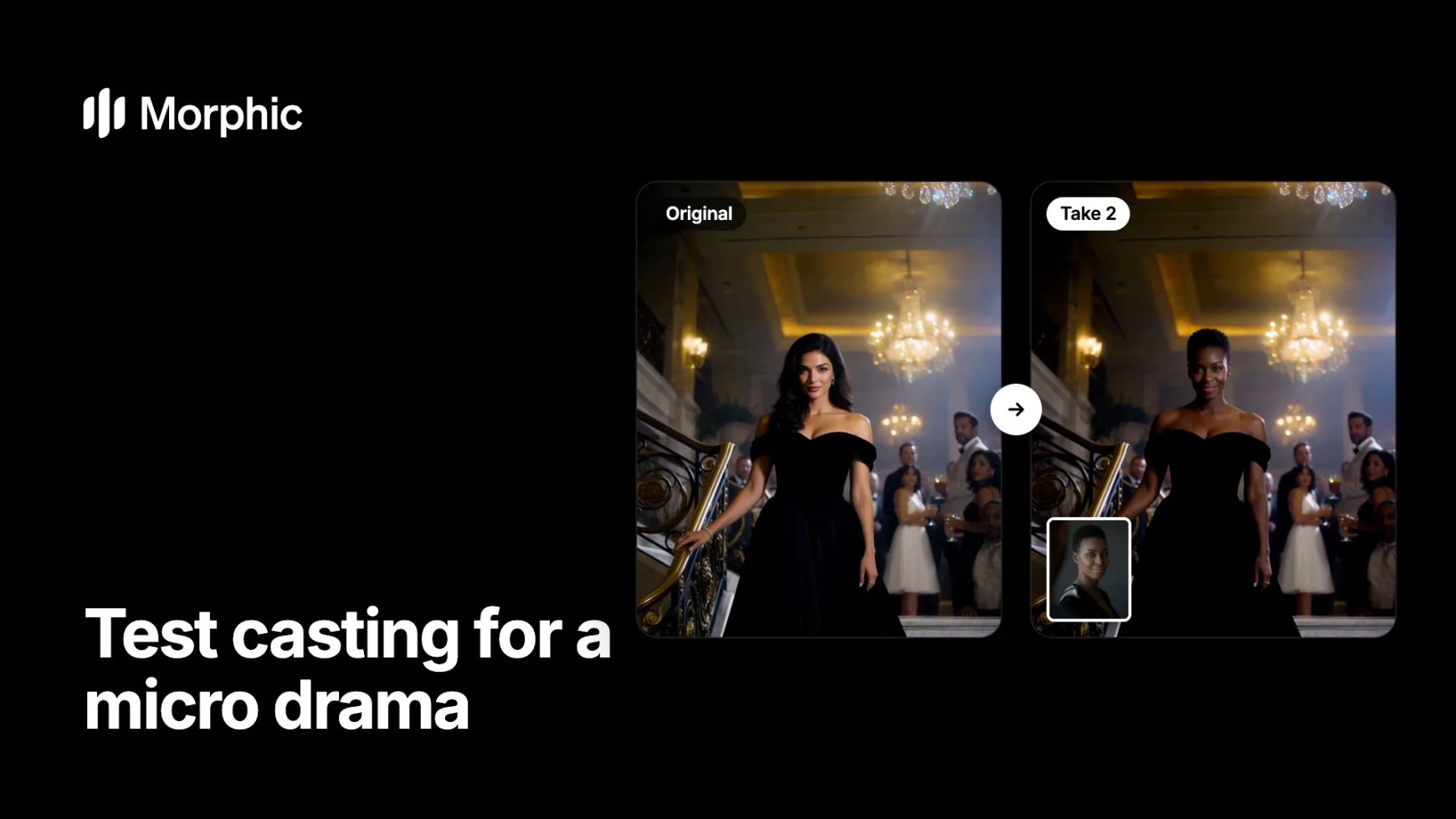
One staircase entrance, four leads. Every take keeps the same walk, the same pause and the same half-smile.
Original
Take 1
Take 2
Take 3
Three candidate leads from three photos, each dropped into the same scene. The chandeliers, the guests and the camera move never change, so the comparison is fair.
How to run a test casting in Morphic
Make the test scene
Pick the scene that sells the series: the reveal, the confrontation or the entrance. Shoot it with a stand-in or generate it in Morphic, and keep it short and well lit with the lead's face clearly visible. One shot of up to 30 seconds is enough.
Recast it once per candidate
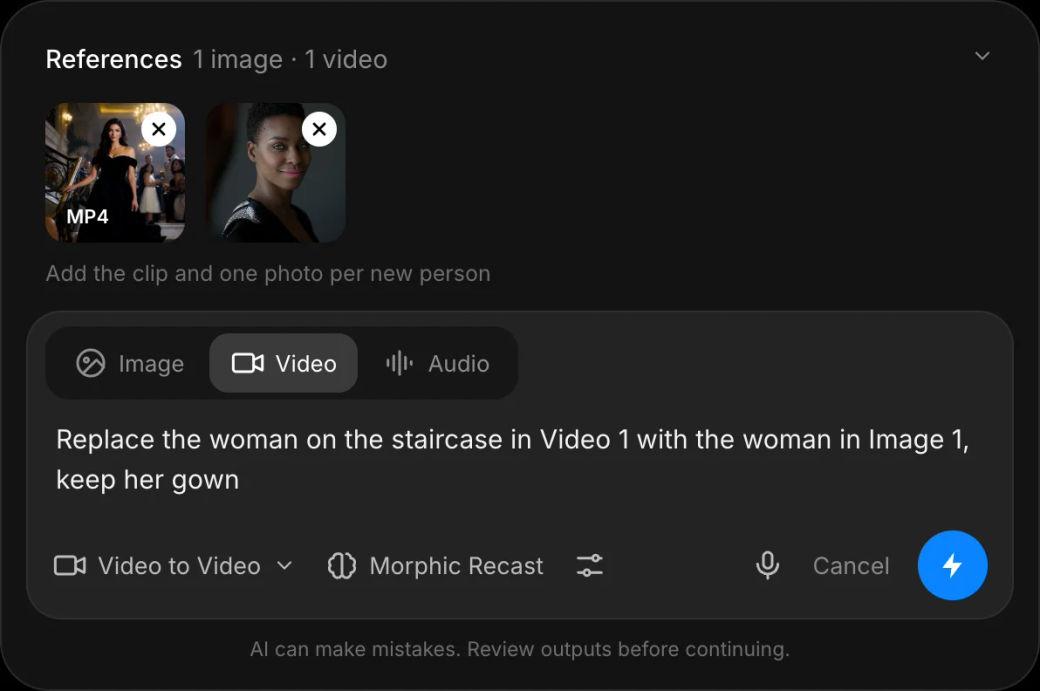
Open Morphic Recast, add the scene and one candidate's photo, and name the swap, for example "Replace the woman on the staircase in Video 1 with the woman in Image 1, keep her gown". Repeat for each candidate, or ask Copilot to run all of them at once.
Compare the takes side by side
Line the takes up on the Canvas next to the original and watch them together. Ask Copilot for a side-by-side page of the takes to share with producers, then pick the lead and recast the rest of the series with the same photo.
Casting a full slate? Let's build your custom workflow.
For micro drama studios and platforms casting several series at once. Tell us about your scenes, roles and candidates, and we'll design a custom test casting workflow with you that turns every round into side-by-side takes your team can decide on.
What to judge in a test casting take
- Presence in the first second. Micro drama viewers decide fast. Which face holds the frame before anything happens?
- Fit with the co-stars. If the scene has another lead, check how each candidate reads next to them.
- The emotional beat. Recast keeps the original expressions, so ask which face makes that expression land hardest.
- The genre. A revenge drama, a romance and a thriller can want different leads for the same role.
- The whole season. Picture the candidate on the poster and in the cliffhangers, not just in this one scene.
Test casting shows how a face plays in your scene; it does not replace auditions for a real performer's range. Use it to narrow the list and align the team before money goes into a season.
Test casting with AI or a traditional casting session?
| Test casting with Morphic Recast | Traditional casting session | |
|---|---|---|
| What you see | Each candidate in your actual scene | Each candidate reading in a room |
| What stays fixed | Scene, camera, timing, performance | Very little, every read differs |
| Best for | Comparing faces and fit fast | Judging a performer's range |
| Next step | Recast the series with the winner | Shoot with the chosen cast |
Once the lead is chosen, follow how to recast characters in a micro drama to carry them through every episode, or start a new series with the microdrama generator.
FAQs
AI test casting puts each candidate lead into the same finished scene so you can compare them directly. With Morphic Recast, one photo per candidate swaps the person while the scene, camera, timing and performance stay identical, so the only variable is who is on screen.
As many as you like. Each take is one recast of the same scene with a different photo. Ask Copilot for several at once and they arrive together, ready to compare.
No. The take keeps the original performance, so it shows how the candidate's face and presence play in the scene, not how they would act it. Use test casting to narrow the list, then audition the finalists.
The one that sells the series: the reveal, the confrontation or the lead's entrance. A short, well-lit shot with the lead's face clearly visible gives the most useful comparison.
Only with their permission. Use photos you have the rights to, such as candidates who have agreed to the test, or generated characters you create in Morphic.
Keep the takes next to the original on the Canvas, or ask Copilot to build a side-by-side page of them that you can share for review.