How to make Jekyll and Hyde videos with AI

The Strange Case of Dr. Jekyll and Mr. Hyde is Robert Louis Stevenson's 1886 novella, ninety pages long. Dr. Henry Jekyll, a tall handsome London physician with a respectable practice and rooms behind Cavendish Square, develops a chemical tincture that splits his nature in two. Drinking it, he becomes Edward Hyde — younger, smaller, hairier, with an air of unspoken deformity, and a delight in cruelty. The novella is told mostly through the lawyer Utterson, slowly piecing together what is happening behind the locked laboratory door.

A century and a half on, the book is still the template for the cinematic transformation scene. Now you can direct it.

Jekyll and Hyde is a small dark book about a respectable London doctor who drinks a tincture and turns into a smaller, younger, hairier man who tramples a child and beats an old MP to death with a cane. Morphic lets you direct any of it in your browser. Pick a moment, a figure, or a workflow below and start now.

Jekyll and Hyde characters you can direct

Jekyll and Hyde scenes you can stage

The transformation in the laboratory

In the locked laboratory at Cavendish Square at midnight, Jekyll drinks the steaming tincture under candlelight. His face convulses across a held close-up, jaw narrowing, eyes darkening, hands curling, becoming Hyde.

Edit prompt
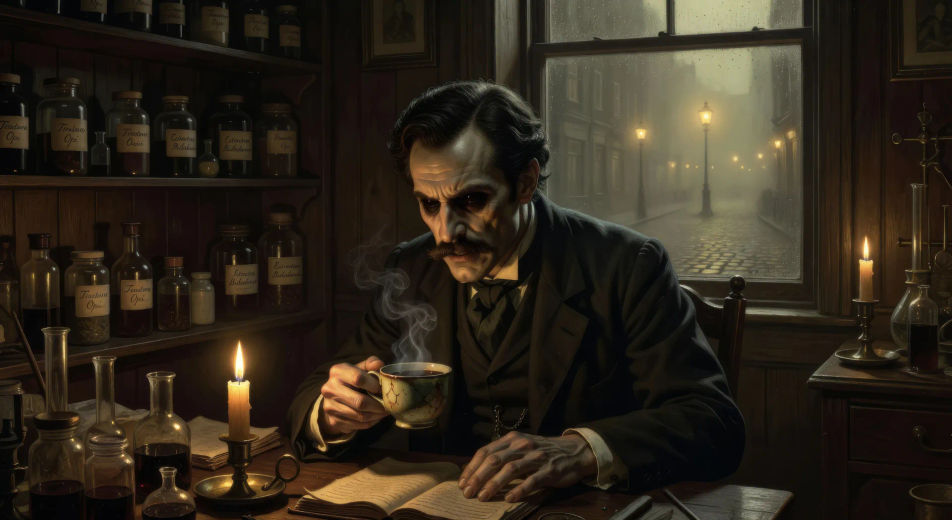
The transformation in the laboratory

Hyde tramples the child in Soho

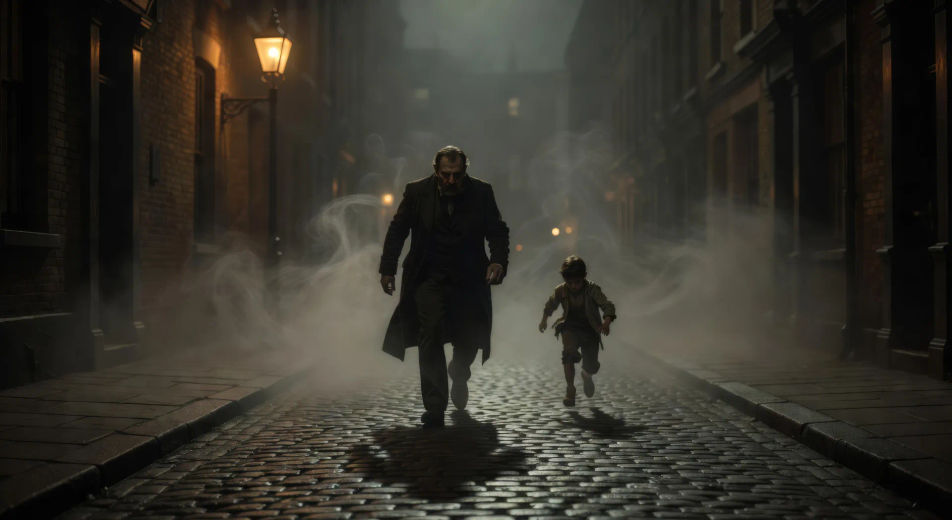
In a fog-thickened Soho side-street at three in the morning under a single gas-lamp, the small heavy figure of Hyde walks straight over a child running on the cobbles, then keeps walking without looking back.

Edit prompt
Hyde tramples the child in Soho

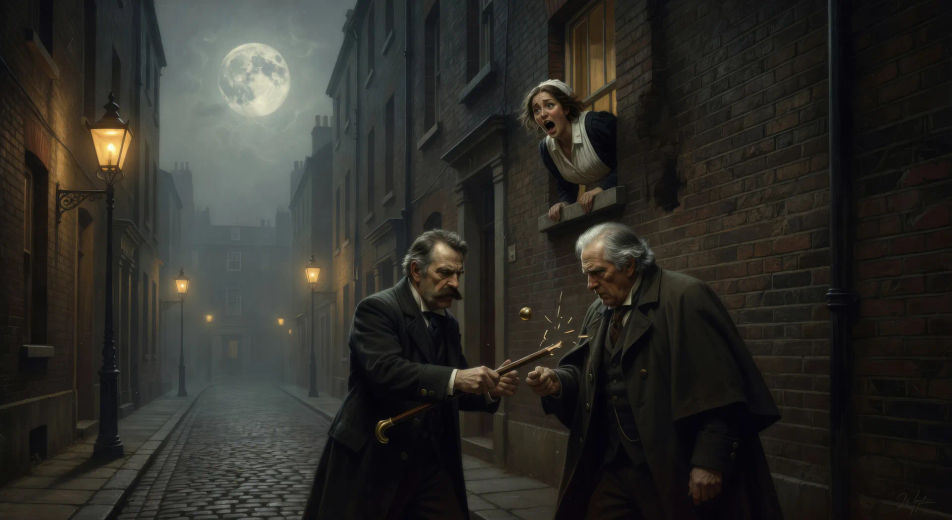
The murder of Sir Danvers Carew

Under a high full moon on a quiet London lane, Hyde brings the cane down on Sir Danvers Carew over and over until the gold-knobbed wood breaks, the white-haired old man crumpling, a maid screaming through her window above.

Edit prompt
The murder of Sir Danvers Carew

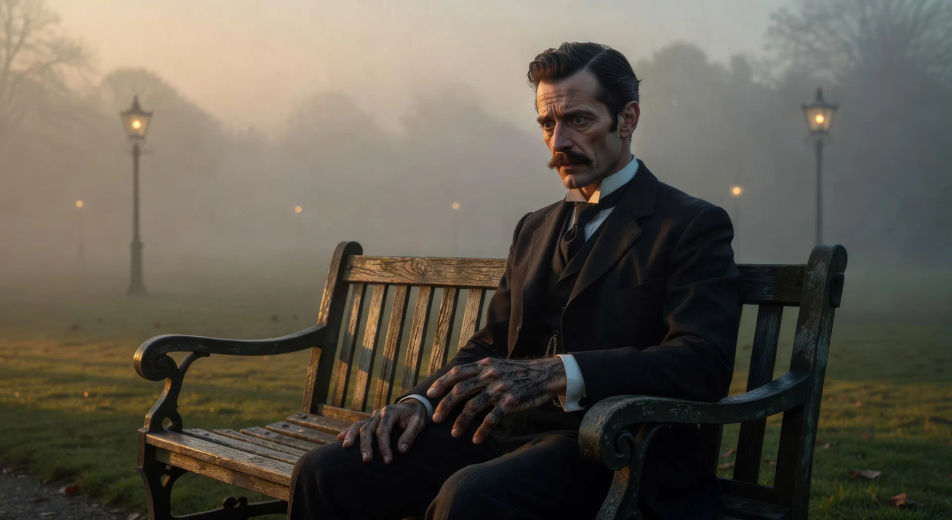
Jekyll on the bench in Regent's Park

On a Regent's Park bench in pale afternoon sun, Jekyll sits in respectable suit and looks down at his own hand turning dark and hairy in his lap, his face caught between disbelief and a long quiet horror.

Edit prompt
Jekyll on the bench in Regent's Park

Hyde slips through the side door at dawn

In a foggy gray London dawn behind Cavendish Square, the small figure of Hyde slips through a battered side-door into the courtyard, glances over his shoulder at an empty street, and disappears inside.

Edit prompt
Hyde slips through the side door at dawn

Utterson and Poole break down the door

In the laboratory anteroom by axe-light, Utterson and Poole strike down the locked cabinet door, splinters flying, the ruined chemistry table beyond strewn with shattered phials and a still figure on the floor.

Edit prompt
Utterson and Poole break down the door

Make Jekyll and Hyde videos in three steps

  1. 01

    Describe your Jekyll and Hyde scene

    Write the Jekyll and Hyde scene you want to see in your own words. Be specific about the London location, the figure in frame, the light source, and the camera direction. The more concrete the description, the closer the result lands to what you pictured.

  2. 02

    Generate the video

    Morphic generates a cinematic, frame-ready clip on your canvas in seconds — no editing software required.

  3. 03

    Refine your Jekyll and Hyde video

    Tweak the prompt, regenerate variations, then download or share the moment the shot lands.

Related workflows

A short guide to Jekyll and Hyde for video creators

The novella moves through a tight London geography. Jekyll's house at Cavendish Square, with its respectable front and the laboratory at the back, accessed by a separate door on a side-street that opens onto a courtyard. The lawyer Utterson's rooms. The chambers of Sir Danvers Carew, the elderly MP whom Hyde beats to death with a cane in a moonlit Soho lane. The Soho boarding-house where Hyde keeps his second life. The dim back-streets at midnight, gas-lamps glowing through fog. The locked laboratory where the final transformation happens, with the cabinet of chemicals smashed and the suicide note on the table.

For video, the central craft is the transformation itself. There is a clean recipe: hold a single tight close-up of Jekyll's face under wavering candlelight, let one frame ripple through the next, and let bone re-shape under skin while the eye behind it changes its meaning. The novella stages two further transformations almost in passing — Jekyll on a park bench in Regent's Park, watching his own hand turn dark and hairy in his lap; Jekyll alone in the locked laboratory, knowing this is the last. Build a scene library around the transformation: the laboratory by candlelight, the trampled child in a Soho lane at three in the morning, the cane breaking on the body of Carew under a full moon, Hyde slipping through a side-door at dawn, Utterson and Poole breaking down the laboratory door at the end.

Three styles consistently land. Cinematic photoreal in the spirit of high-budget Victorian period drama delivers the prestige look. Painterly oil with chiaroscuro echoes the dark London street paintings of Whistler and the late Pre-Raphaelites. Expressionist black-and-white with hard shadows lands as homage to the silent-era horror genre. Name the style directly in the prompt.

You might also like

FAQs

Where can I make Jekyll and Hyde videos with AI?
You can create Jekyll and Hyde scenes directly in your browser on Morphic. Open the Text to Video tool, describe the moment you want, and Morphic produces the clip. No installs and no specialist software needed.
What kinds of Jekyll and Hyde scenes work best with AI video?
The transformation itself is the centerpiece, held as a tight close-up under wavering candlelight. Around it: the trampling in Soho, the Carew murder under a full moon, Jekyll on the Regent's Park bench, Hyde slipping through a side-door at dawn, Utterson breaking the laboratory door. Anchor each Jekyll and Hyde scene to a specific London location, light source, and weather.
How do I direct the Jekyll-to-Hyde transformation in AI video?
Hold a tight close-up on Jekyll's face under candlelight. Describe the change as a sequence of small specifics: jaw narrowing, eyes darkening, the brow growing heavy, the hands curling, the moustache thickening. Let the camera stay still while the face changes. Specify a single light source so the AI does not lose focus on the face.
How do I make my Jekyll and Hyde videos feel like Stevenson, not a film?
Anchor your prompts to Stevenson's actual locations: Cavendish Square, the laboratory side-door on a courtyard, the Soho rooms, Regent's Park, the gas-lit fog-bound back-streets. Reference Whistler's London nocturnes and the late Pre-Raphaelites as the visual anchor. Avoid likeness language for any film performer.
Can I add narration and music to my Jekyll and Hyde videos?
Yes. The Speech tool generates a Utterson-narration voiceover from your script in the voice you choose, and the Music tool produces an original Victorian-gothic soundtrack. Layer them onto your generated video to publish a complete Jekyll and Hyde episode.
What visual style works best for a Jekyll and Hyde video?
Three styles consistently land. Cinematic photoreal in the spirit of high-budget Victorian period drama delivers the prestige look. Painterly oil with chiaroscuro echoes Whistler's London nocturnes and the late Pre-Raphaelites. Expressionist black-and-white with hard shadows lands as homage to the silent-era horror genre. Name the style directly in the prompt.