# 모션 코믹 제작

다음은 Morphic에서 모션 코믹을 처음부터 만드는 방법입니다.

<figure><img src="/files/432ae0bd0ee758d41f0d3102b8ab850f82e51056" alt=""><figcaption></figcaption></figure>

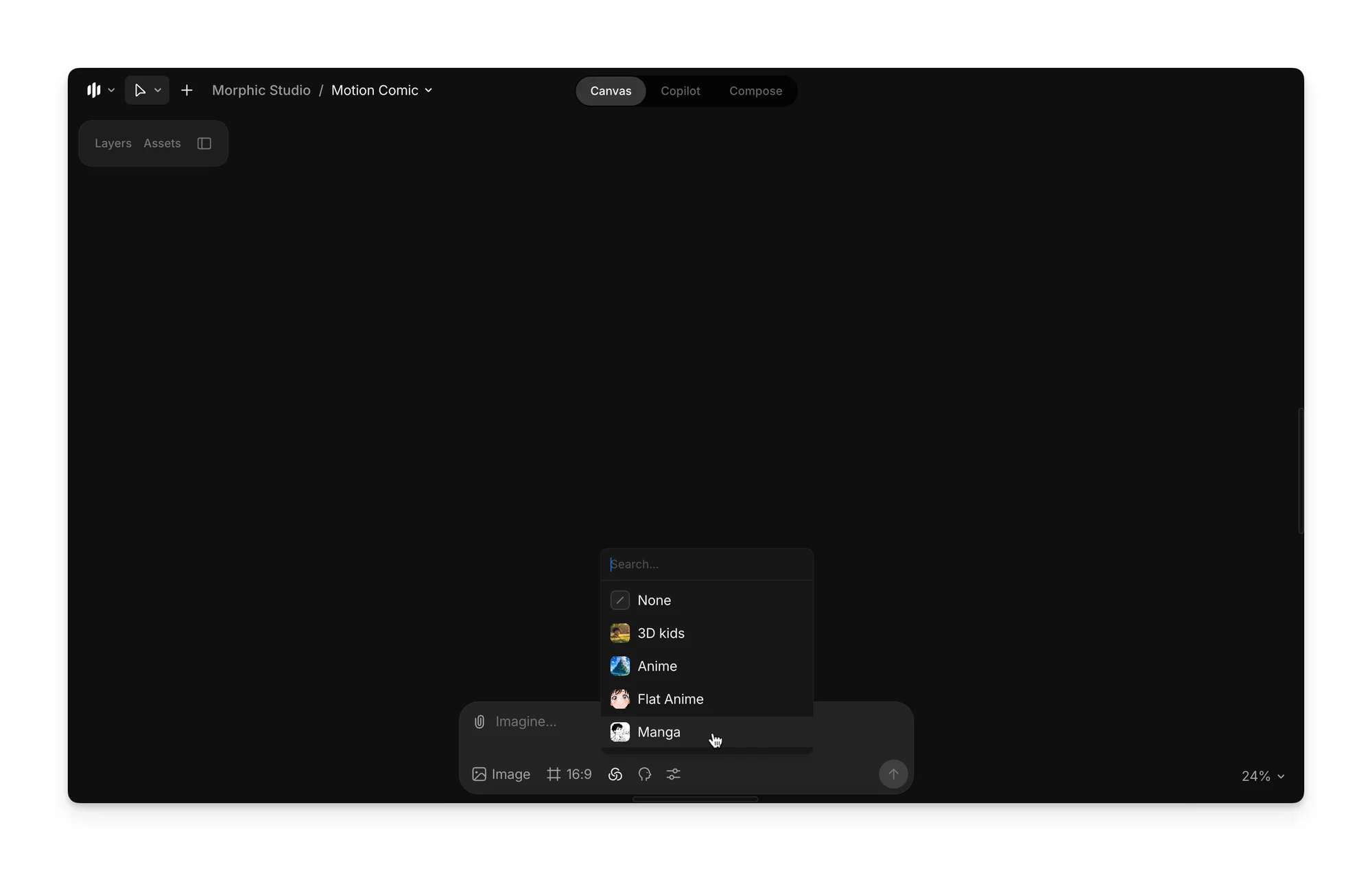
1. 프롬프트 바에서 스타일 모델로 만화를 선택하세요. 직접 [사용자 정의 스타일 모델](/docs/kr/essentials/style-models.md) 을(를) 훈련한 경우 선택할 수 있습니다.

<figure><img src="/files/4b4fa07787b4c8855c4ea741033331e4a50c8172" alt=""><figcaption></figcaption></figure>

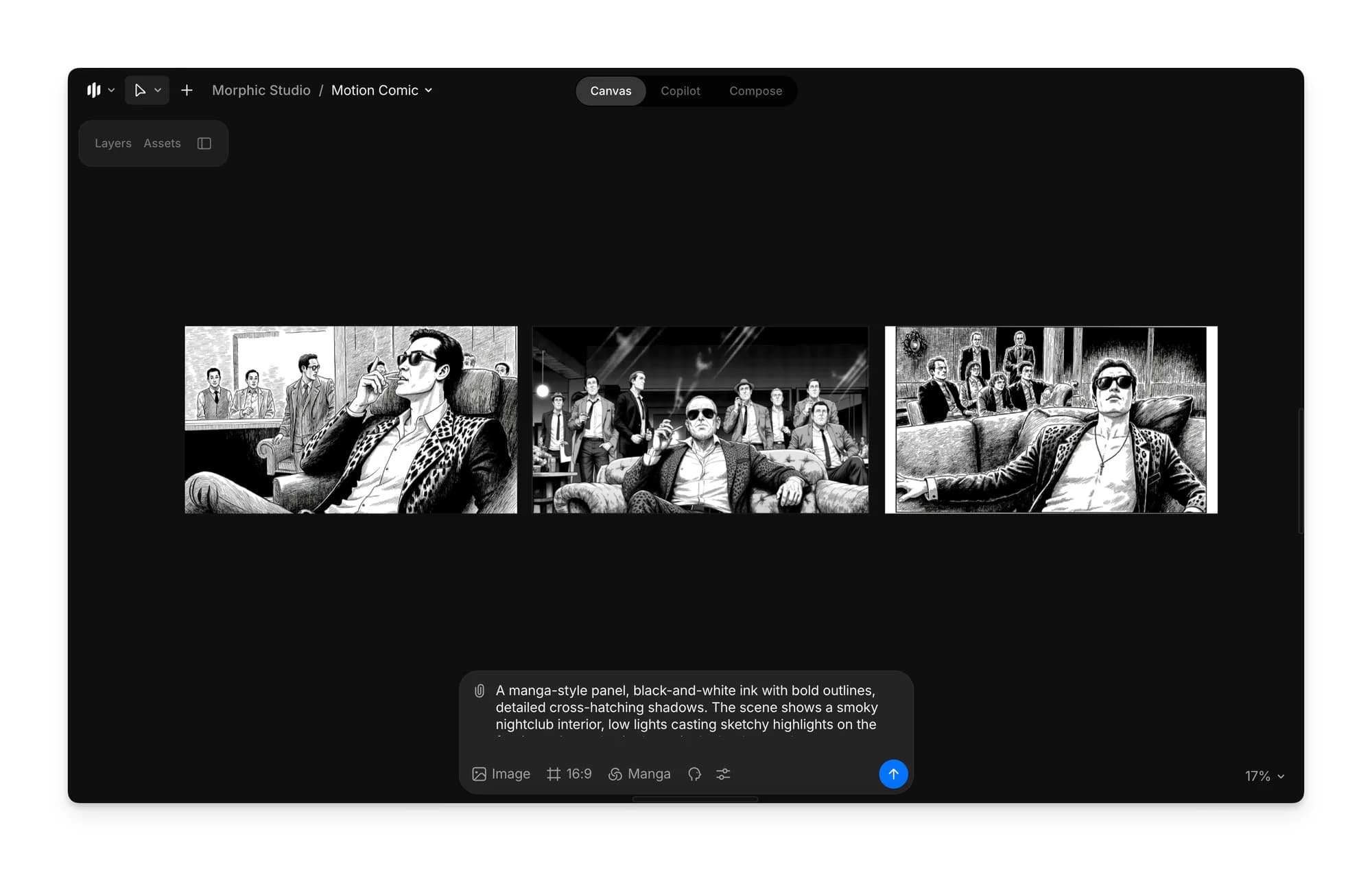
2. 모션 코믹용 이미지를 생성할 프롬프트를 입력한 다음 생성 버튼을 클릭하세요.

<figure><img src="/files/77dcefe3398173684287648061a143639f076e18" alt=""><figcaption></figcaption></figure>

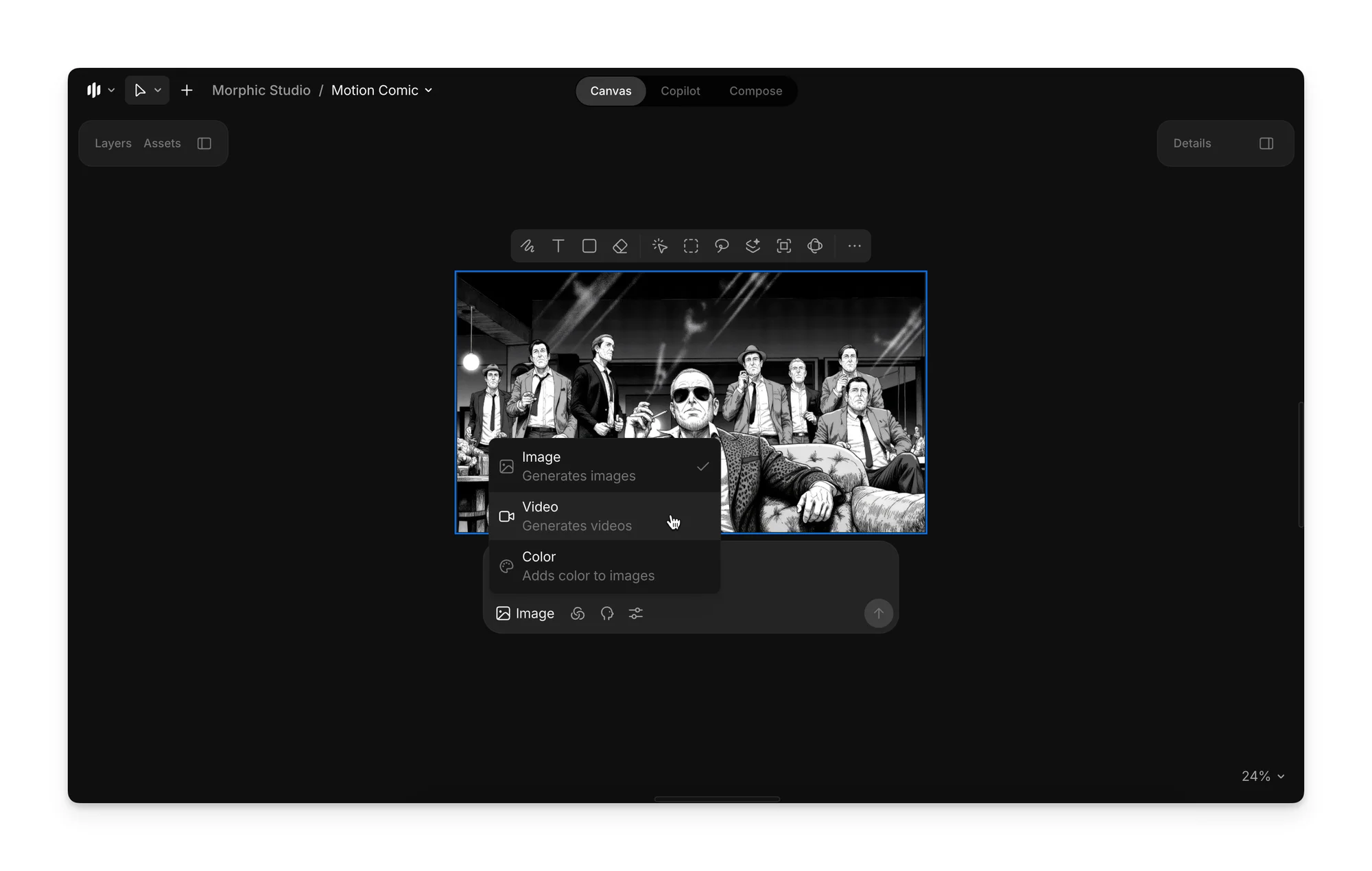
3. 계속할 이미지를 선택한 후 해당 이미지를 선택하고 비디오 모드로 전환하세요.

<figure><img src="/files/538b4225a6e37163de327e62e4bc67aebcccdd3c" alt=""><figcaption></figcaption></figure>

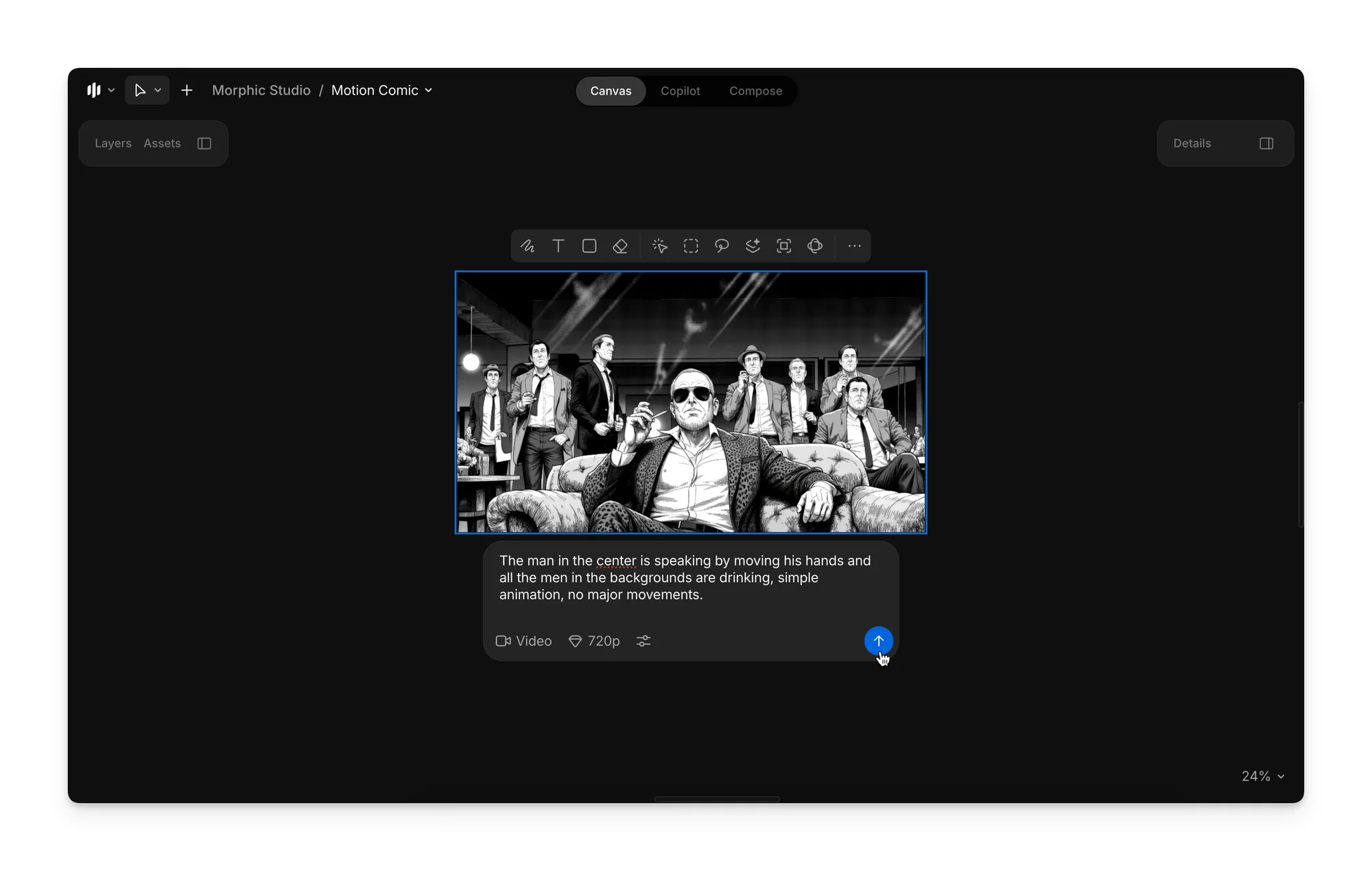
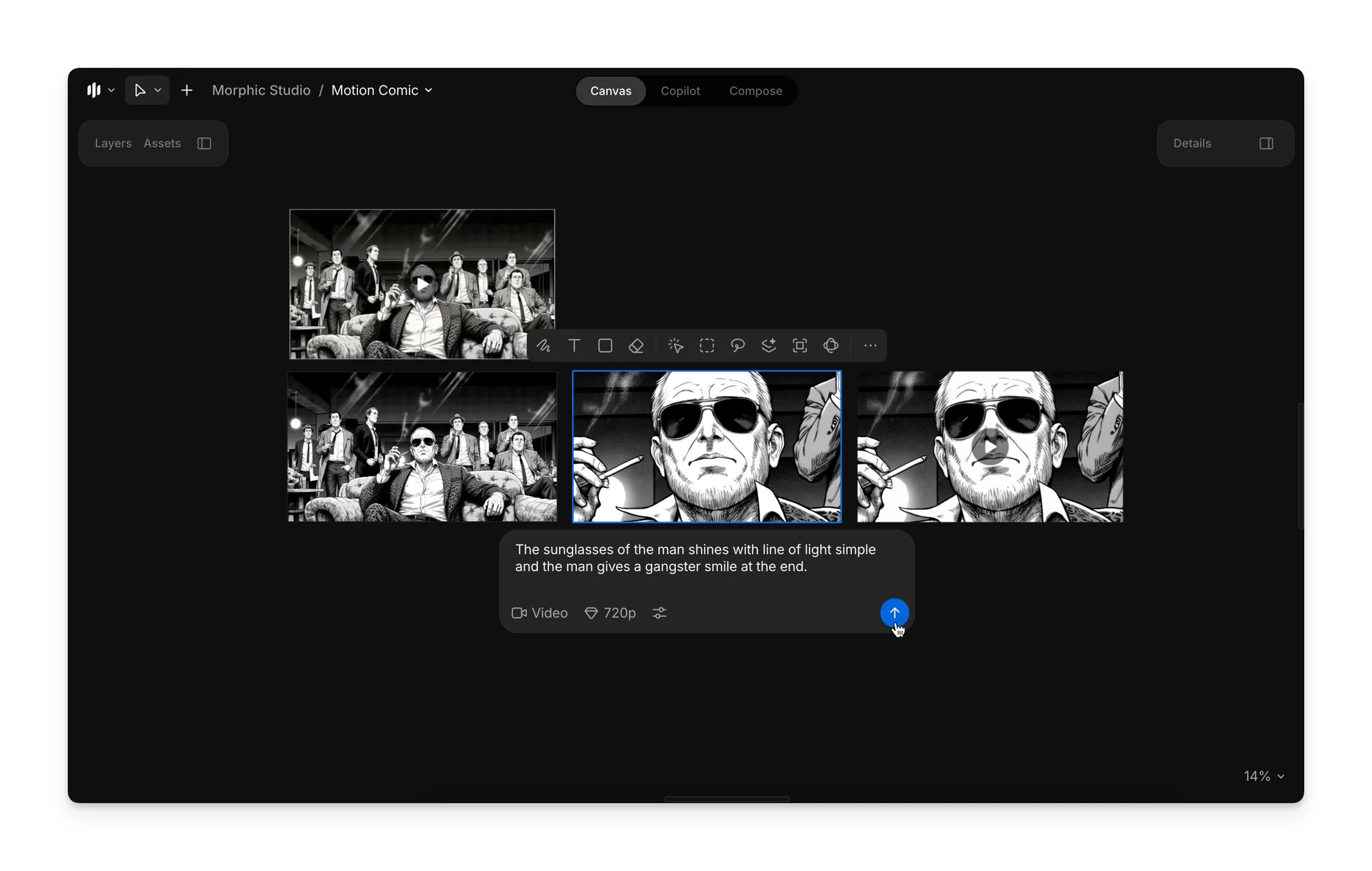
4. 보고 싶은 애니메이션을 설명하는 프롬프트를 입력하고 첫 번째 비디오를 만들기 위해 생성 버튼을 클릭하세요.

<figure><img src="/files/7d0362d2e4031e8549e5ee544c354d460395cde7" alt=""><figcaption></figcaption></figure>

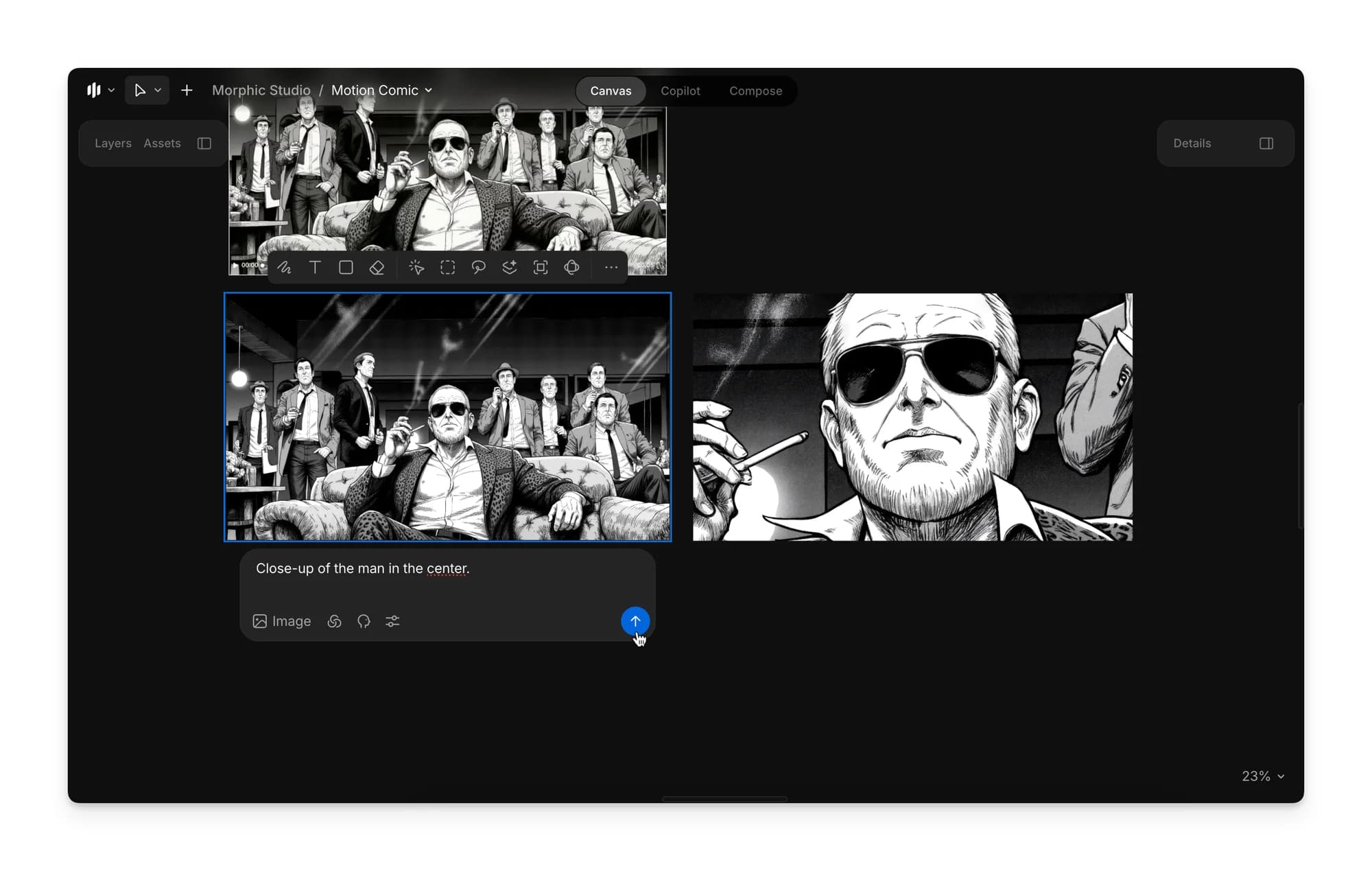
5. 다시 첫 번째 이미지를 선택하고 이미지 모드로 전환한 후 원하는 변경 사항을 설명하는 프롬프트를 입력하여 새 이미지를 생성하세요.

<figure><img src="/files/91913724034b431b6df77709dd7686a539c37cbc" alt=""><figcaption></figcaption></figure>

6. 이 새 이미지를 애니메이션화하고 두 번째 비디오를 생성하려면 4단계를 반복하세요.

<figure><img src="/files/fd0fe5e7f5dac415c01fd2b4654c6f1ea75c2ad4" alt=""><figcaption></figcaption></figure>

7. 또 다른 새 이미지를 만들려면 5단계를 반복한 다음, 이를 애니메이션화하고 세 번째 비디오를 생성하려면 다시 4단계를 수행하세요.

<figure><img src="/files/3c291afd2d19d99e782e7fa450ca57d4742d905e" alt=""><figcaption></figcaption></figure>

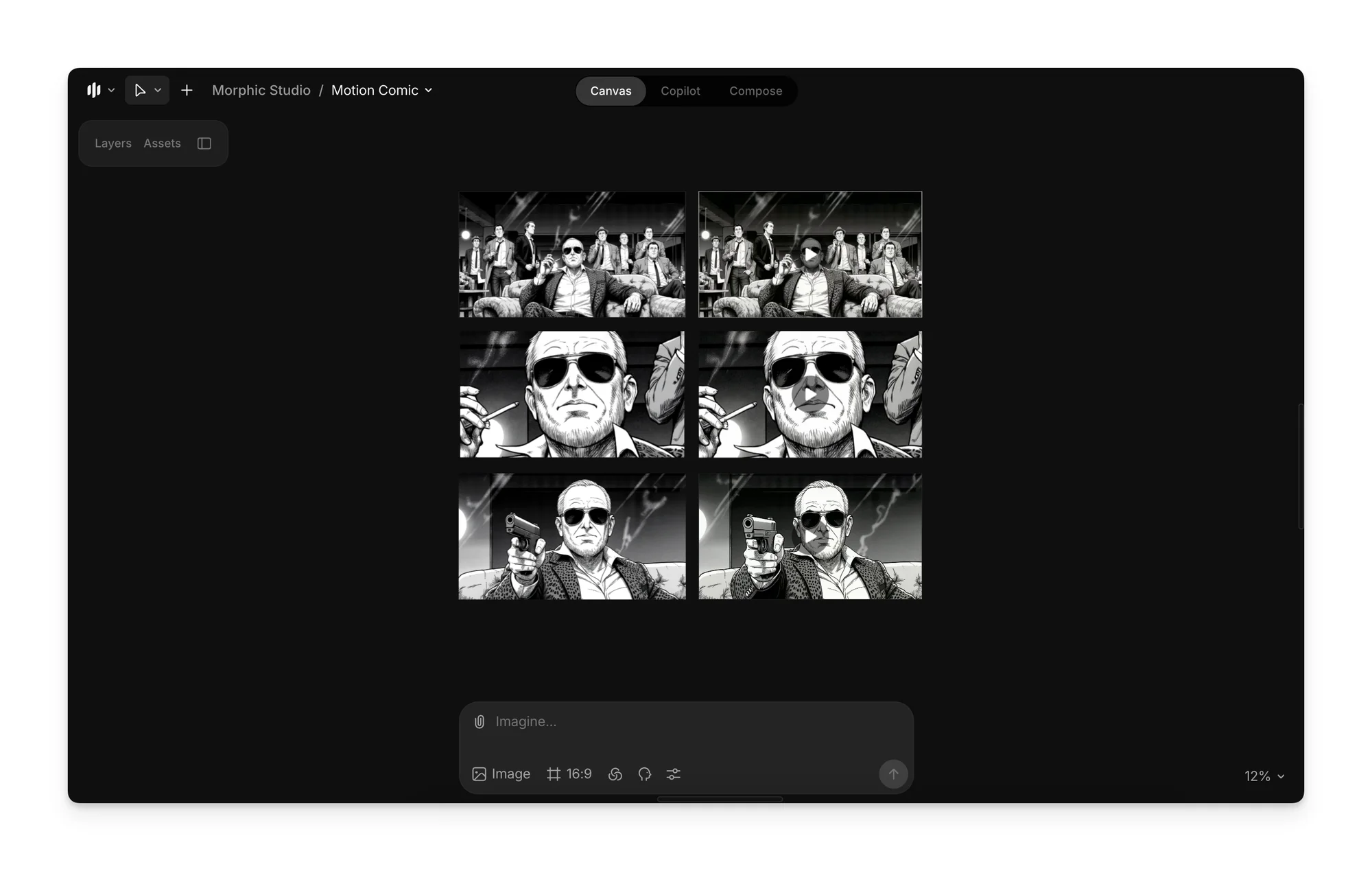
8. 이제 서로 다른 세 이미지와 세 개의 해당 비디오를 갖게 됩니다. 이 세 비디오를 이어 붙여 최종 모션 코믹 출력을 만드세요:

<figure><img src="/files/164c1a3595307f7c669a39c97933fb746e4f6b0c" alt=""><figcaption></figcaption></figure>

이는 만화나 사용자 정의 스타일 작품에 영화 같은 흐름을 더하는 데 완벽합니다. 정적인 이미지에서 모션 코믹 스토리텔링으로 손쉽게 전환할 수 있게 해줍니다.

***


---

# Agent Instructions: Querying This Documentation

If you need additional information that is not directly available in this page, you can query the documentation dynamically by asking a question.

Perform an HTTP GET request on the current page URL with the `ask` query parameter:

```
GET https://morphic.com/docs/kr/how-tos/creating-motion-comics.md?ask=<question>
```

The question should be specific, self-contained, and written in natural language.
The response will contain a direct answer to the question and relevant excerpts and sources from the documentation.

Use this mechanism when the answer is not explicitly present in the current page, you need clarification or additional context, or you want to retrieve related documentation sections.