Last updated May 12, 2026

The 8 best AI picture generators in 2026

The 8 best AI picture generators in 2026

Compare the 8 best AI picture generators in 2026 for turning a written prompt into a finished image. The right pick depends on which model you choose, whether you want a magazine-grade portrait under soft window light, a clean packshot of a product on a marble surface, or a poster with crisp in-image typography. Morphic brings several flagship picture models into one Canvas so the choice is a click, not a new subscription.

AI picture generators at a glance

Each tool below leads on a specific kind of picture: cinematic editorial moods, sharp in-image typography, commercial-safe brand work, photoreal portraits with readable text. The table is sorted by the result each one delivers best, so you can match the tool to what you are making instead of picking by ranking alone.

ToolBest forStandout featureTry it
1.Morphic
Multi-model picture generation in one placeTop image models on a free-flowing CanvasTry Morphic
2.Midjourney
Cinematic AI art and concept workStyle and character reference controlsVisit site
3.ChatGPT (GPT Image 2.0)
Long, instruction-heavy promptsBest-in-class prompt fidelityVisit site
4.Google Imagen + Nano Banana (Gemini)
Photoreal pictures and conversational editsImagen photorealism plus Nano Banana editingVisit site
5.Adobe Firefly
Commercial-safe brand workNative in Photoshop and IllustratorVisit site
6.Ideogram
Posters, logos, and pictures with textSharp in-image typographyVisit site
7.Flux (Black Forest Labs)
Open-weights flagship outputOpen-weights, host-flexible deploymentVisit site
8.Recraft
Brand and vector picture workRaster plus vector outputVisit site

The 8 best AI picture generators for every use case

#1

Morphic

Top pick

Generate pictures across GPT Image, Flux, Seedream, Recraft, and Grok Imagine inside one free-flowing visual Canvas.

Best for: Multi-model picture generation in one place
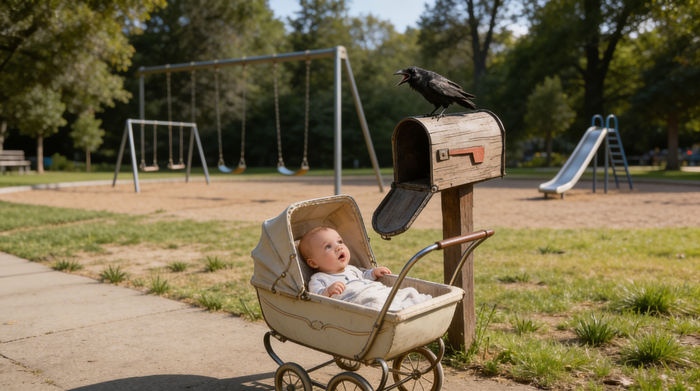
  • Open the text-to-image tool, pick a model (GPT Image 2.0, Flux 2 Pro, Seedream 5.0, Recraft V4 Pro, or Grok Imagine), type a prompt, generate. The picture lands on a free-flowing visual Canvas where you can keep iterating.
  • Range matters. Need a photoreal product shot, run Seedream or GPT Image. Need crisp typography on a poster, run Recraft. Need a painterly look, run Grok Imagine. One workspace, no extra subscriptions.
  • Pictures stay live on the Canvas. Reframe with Flux 2 Pro, restyle with the Art style transfer workflow, upscale with Topaz and Crystal, or feed the picture into a video workflow without re-uploading or re-prompting from zero.
  • Try a short prompt like "Editorial portrait, soft window light, film grain" and iterate from the first result rather than starting a fresh session for every variation.
#2

Midjourney

The aesthetic flagship for AI pictures, known for cinematic lighting and painterly composition out of the box.

Midjourney started on Discord and now runs on a polished web app. The v7 model emphasizes painterly composition, dramatic lighting, and consistent character likeness across a session. Style reference and character reference parameters give artists and concept designers tight control over a look across a series of pictures. There is no free tier, every plan starts paid, and output skews toward illustration and editorial moods rather than literal product photography.

Best for: Cinematic AI art and concept work
Pros
  • Leads on cinematic aesthetic and lighting
  • Strong character and style consistency across a series
Cons
  • No free tier, every plan starts paid
  • Discord-rooted UX still feels different from mainstream apps
#3

ChatGPT (GPT Image 2.0)

Mainstream AI picture generator built into ChatGPT, with the strongest prompt fidelity on long, detailed prompts.

GPT Image is OpenAI's native picture model inside ChatGPT and the API. Its standout trait is prompt fidelity: long, specific prompts with placement instructions ("the logo top left, the tagline below the product") translate to picture more faithfully than most rivals. The model also handles text inside an image cleanly. Also available on Morphic, alongside Flux 2 Pro and Seedream 5.0, so you can compare side by side without juggling two subscriptions.

Best for: Long, instruction-heavy prompts
Pros
  • Follows complex prompts and layout instructions accurately
  • Handles in-image text more cleanly than most
Cons
  • Free tier rate-limits picture generation more aggressively than chat
  • Style range narrower than diffusion specialists
#4

Google Imagen + Nano Banana (Gemini)

Google's picture lineup inside Gemini: Imagen for photoreal output, Nano Banana Pro for conversational editing and character consistency.

Google ships two image models inside the Gemini app. Imagen leans toward photographic realism and accurate in-image text, a fit for editorial illustrations and slides where a stray misspelling would derail the asset. Nano Banana (the consumer name for Gemini 2.5 Flash Image) and Nano Banana Pro handle conversational edits, multi-turn refinement, and tight character consistency across a series. Free with a Google account, heavier use gated behind Gemini Advanced. Nano Banana, Nano Banana 2, and Nano Banana Pro are also available on Morphic for image editing.

Best for: Photoreal pictures and conversational edits
Pros
  • Two complementary models cover photoreal and editorial work
  • Nano Banana Pro leads on multi-turn character consistency
Cons
  • Strict safety filters refuse more prompts than rivals
  • Heaviest use sits behind Gemini Advanced
#5

Adobe Firefly

Adobe's commercial-safe picture generator, trained on licensed and public-domain content, native to Creative Cloud.

Firefly is Adobe's answer for designers who need a picture they can ship to a client without a copyright headache. The model is trained on Adobe Stock, openly licensed work, and public-domain content, with an indemnification offer on enterprise plans. Lives inside Photoshop and Illustrator as Generative Fill and Generative Recolor, which is the real argument for Creative Cloud subscribers. Output skews safe and brand-friendly rather than wildly artistic.

Best for: Commercial-safe brand work
Pros
  • Training data positioned for commercial use
  • Inline with Photoshop and Illustrator workflows
Cons
  • Aesthetic ceiling lower than Midjourney for editorial work
  • Heaviest features land first inside Creative Cloud apps
#6

Ideogram

Specialist picture generator known for sharp typography rendering inside the image.

Ideogram leads on typography. Posters, logos, signage, packaging mockups, and any picture that has to carry a word or a phrase come out of Ideogram with crisp letterforms more often than out of a general-purpose model. The Magic Prompt feature expands a short idea into a full descriptive prompt. Free tier covers a generous slice of generations before paid tiers unlock higher resolution and faster queues.

Best for: Posters, logos, and pictures with text
Pros
  • Best-in-class for typography inside a picture
  • Free tier covers casual use without a card
Cons
  • Photoreal portraits trail dedicated photo models
  • Magic Prompt can over-embellish a short idea
#7

Flux (Black Forest Labs)

Open-weights flagship picture model from the team behind Stable Diffusion, available through Morphic, Krea, and fal.

Flux is the open-weights flagship from Black Forest Labs. The Flux 2 Pro release pushes detail and prompt fidelity into Midjourney territory while remaining accessible through partners (Morphic, Krea, fal, Replicate) and self-hosted setups for studios with their own GPUs. There is no first-party consumer app, access is always through a host, and quality varies by how the host configures the inference pipeline.

Best for: Open-weights flagship output
Pros
  • Output competitive with the strongest closed models
  • Available across multiple hosts and self-hosted setups
Cons
  • No first-party consumer app, always through a host
  • Quality varies by which host runs the model
#8

Recraft

Designer-focused picture generator with both raster and vector output, tuned for brand and product work.

Recraft sits between an AI picture generator and a design tool. The Recraft V4 Pro model handles raster and vector output in one app, which is rare in the category. Brand style controls let a team train a private style on their own assets so every generation lands on-brand. Also available on Morphic, paired with the rest of the picture lineup so a designer can move from idea to packshot to poster without leaving the workspace.

Best for: Brand and vector picture work
Pros
  • Vector output sets it apart from raster-only rivals
  • Brand style training keeps a series on-brand
Cons
  • Less aesthetic range than general-purpose models for art
  • Heaviest features gated behind paid tiers

What is an AI picture generator?

An AI picture generator turns a written prompt into a finished image. The model reads the description, plans a composition, and renders the picture pixel by pixel using patterns learned from millions of training images. The category covers everything from a casual social-media background to a magazine-grade portrait to a poster with crisp typography, and the right model depends on what you are making.

Output quality varies sharply by model. A photoreal portrait, a vector logo, and a typographic poster all live in the same category, but a model tuned for one rarely lands the others on the first try.

How AI picture generation works

Modern picture generators run on diffusion models. The model starts from random noise and refines it step by step, guided by the prompt, until a coherent picture lands. Different models tune that process for different traits: prompt fidelity in GPT Image, photographic realism in Google Imagen, painterly composition in Midjourney, typography accuracy in Ideogram and Recraft, open-weights flexibility in Flux.

Inside Morphic, the text-to-image tool brings several of these models together in one place. Pick GPT Image 2.0, Flux 2 Pro, Seedream 5.0, Recraft V4 Pro, or Grok Imagine, type a prompt, and the picture lands on the Canvas. From there you can restyle it, reframe it, upscale it with Topaz and Crystal, or feed it into a video workflow without leaving the workspace.

FAQs

What is an AI picture generator?
An AI picture generator turns a written prompt into a finished image. The model reads the description, plans the composition, and renders the picture pixel by pixel based on patterns learned from millions of training images. The good ones follow specific layout instructions, render in-image text correctly, and keep a consistent style across a series of pictures from the same session.
Which AI picture generator is best for beginners?
Morphic is the easiest start because you can run the same prompt across GPT Image, Flux, Seedream, Recraft, and Grok Imagine and keep the result you like. Ideogram and Adobe Firefly are also beginner-friendly thanks to clean interfaces and helpful prompt-expansion features.
Which picture models does Morphic include?
Morphic's text-to-image tool gives you GPT Image 1.5 and 2.0, Flux 2 Pro, Seedream 4.5 and 5.0, Recraft V4 Pro, Grok Imagine, Z-Image Turbo, and Vidu Q2 for generation. Image editing adds Nano Banana, Nano Banana 2, Nano Banana Pro, and Qwen Edit Angles. Every model runs on the same Canvas so you can pick the right one per task without leaving the workspace.
How do I get sharp text inside an AI picture?
In-image text quality varies sharply by model. Ideogram, Google Imagen, and GPT Image 2.0 lead on typography. Keep the text short, place it in the prompt with quotes ("Headline: Open Studio"), and specify the font feel (sans-serif, condensed, hand-lettered). On Morphic you can swap to whichever of those models renders the cleanest letterforms for your prompt without leaving the Canvas.
How does Morphic's picture generation work?
Open the text-to-image tool, pick a model, type a prompt, generate. The picture lands on the Canvas where you can restyle it with Art style transfer, reframe it, generate brand mockups with Product mockup generator, or feed it into video and audio workflows. The same prompt can run on every model so you can compare side by side and keep the version you like.

More tools

chair
Bring your stories to life
No downloads, no installs. Join a growing community of creatives using Morphic to transform ideas into beautifully crafted stories.