Mark a wrong answer the instant it lands
A hard start and a hard stop put the refusal on one exact frame. It does the same job in a quiz video, a mobile game or a classroom animation.
Edit prompt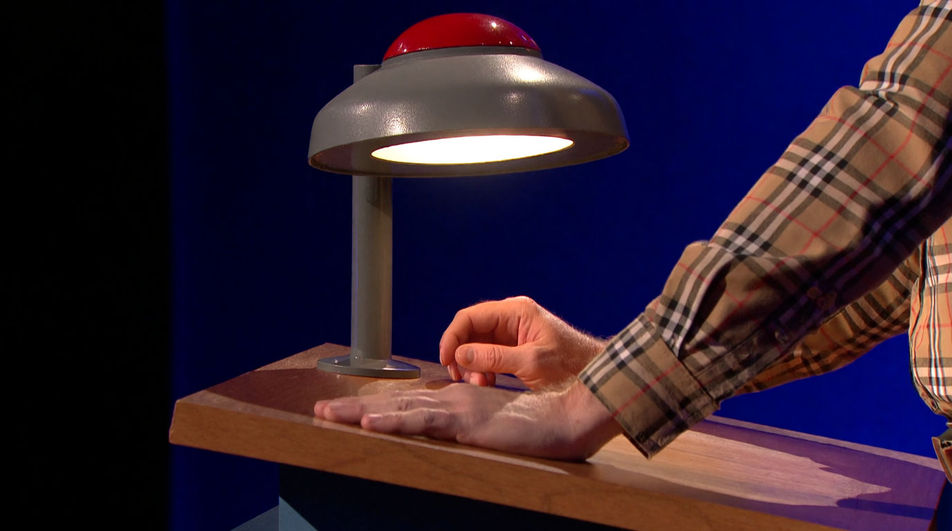
The rasping electrical buzz that means no. Generate one at the harshness, pitch and length your quiz round, game or app needs.

One flat rasping burst that starts and stops hard. This is the version most edits want, because the hard stop is what makes it read as a decision rather than a warning.

Two bursts with a brief gap between them. The repeat reads as emphatic rather than routine, which suits a final answer or a second failed attempt.

Dry mechanical chatter instead of a tone. Reach for it when the moment should feel like a physical mechanism refusing, not an electronic judgement.

The pitch drops away as the buzz runs out of energy. That downward sag carries disappointment on its own, so nothing on screen has to sell it.

A long unbroken rasp that outstays its welcome deliberately. Useful when the buzz has to cover a reaction shot or a scoreboard resetting.

Two dull descending tones with the rasp taken out entirely. This is the polite version an app or a training module can use without sounding punitive.
Pick a starting point, edit anything you like, then generate it in Morphic.
A hard start and a hard stop put the refusal on one exact frame. It does the same job in a quiz video, a mobile game or a classroom animation.
Edit promptA long held rasp covers the silence while a score resets or a player recovers, so a podcast segment or a game level does not need a music sting there.
Edit prompt
How harsh the buzz is sets how unforgiving the format feels. The grating rasp reads as a hard rule, the soft tone reads as a gentle correction.
Edit prompt
A mechanical chatter suggests a device making the call somewhere out of frame. Nothing has to be built or shown for the audience to accept it.
Edit prompt
Level up sound effects
Level up sound effects for games, apps and stream overlays, chiptune climbs, orchestral hits and quick pings, generated to fit your own reward moment.
Money sound effect
Generate money sound effects with Morphic. Set the tone, length and brightness you need for interface audio that feels considered.
Mouse click sound effect
Generate mouse click sound effects with Morphic. Set the tone, length, and brightness you need for interface audio that feels considered.
Notification sound effects
Short, clean interface cues for apps, products, and on screen moments. Morphic generates notification sounds tuned to your brand tone.
Get started for free today, with the option to upgrade or cancel anytime.
Basic
2400 monthly credits
1 user only
All models
Workflows
Standard
3625 monthly credits
1 user only
All models
Workflows
Pro
6350 shared monthly credits
1 user
All models
Workflows
Max
24650 shared monthly credits
1 user
All models
Workflows
Enterprise
For higher limits
Custom
pricing and billing terms

Free
For playing around
$0
forever free