AI pixelate effect

Pixelation generated in the shot: a face hidden behind a mosaic block, a whole frame breaking into coarse squares, blocks resolving back into detail.

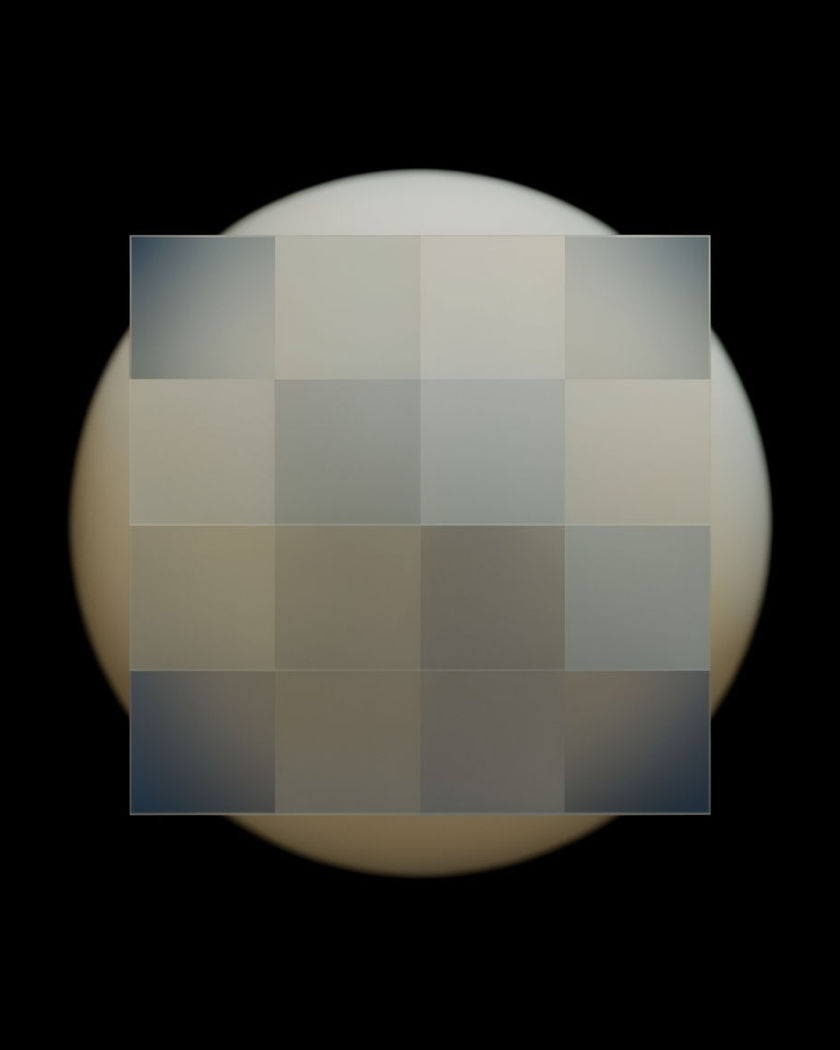
A soft pale sphere of light with a cluster of large flat square tiles covering its centre, on a black ground

Pixelate effect examples

Faces blocked in a crowd

Use this prompt

A mosaic patch sits on every head while the street stays sharp. a wide shot of a crowded crossing where every face is a coarse square mosaic block while bodies, clothing and street stay sharp, a mosaic patch sitting on each head, overcast light

City breaking into mosaic

Use this prompt

A sharp skyline coarsens until it reads only as blocks of light and dark. a wide night city in sharp detail, the entire frame gradually breaking into a grid of large flat square blocks until the skyline reads only as blocks of light and dark, one continuous shot

Blocks resolving into a portrait

Use this prompt

Huge squares subdivide step by step until a sharp portrait appears. a frame of huge flat colour squares that subdivide step by step into smaller and smaller squares until they resolve into a sharp portrait of a person by a window, the grid always aligned to the frame

Sharp to blocks to sharp

Use this prompt

A still hand coarsens into big squares, holds, and sharpens again. a hand holding an apple against a white wall, the picture sharp, then coarsening into big flat square blocks over two seconds, holding, then sharpening back to full detail, the hand never moving

Mosaic over a face

Use this prompt

The face is flat colour squares; body, clothes and park stay sharp. a person sitting on a park bench talking, the face area rendered as a coarse mosaic of large flat square blocks of averaged colour, the rest of the body, clothes and park perfectly sharp, locked camera

Pixel wipe to a night street

Use this prompt

A block front sweeps across a beach and resolves into a city street. a beach scene that breaks into large square blocks from the left edge, the block front sweeping right across the frame, the blocks then resolving on the other side into a city street at night, one continuous shot

Pixel wipe between rooms

Use this prompt

Blocks sweep diagonally across a living room and resolve into a gym. a wide living room breaking into large square blocks from the top left corner, the block front sweeping diagonally across the frame, then resolving on the far side into a wide empty gymnasium, one continuous shot

Whole frame in coarse blocks

Use this prompt

A fixed grid of about twenty squares; people move as shifting blobs. a street scene rendered entirely as a grid of large flat square blocks of averaged colour, about twenty blocks across, people and cars moving as shifting blobs of blocks, the grid staying fixed while the picture moves

Pier resolving from blocks

Use this prompt

Colour squares get finer until a wide sunset shot appears. a wide frame of huge flat colour squares that subdivide finer and finer until they become a sharp wide shot of a person standing on a pier at sunset, the grid aligned to the frame

Mosaic over a number plate

Use this prompt

Only the plate area is blocked; the car and street stay sharp. a parked unmarked car on a quiet street, only the rear plate area covered by a coarse square mosaic of flat colour blocks, the car body, road and trees sharp, the camera slowly circling

Generate your own pixelate effect

Pick a starting point, edit anything you like, then generate it in Morphic.

Generate

Simple pricing

Get started for free today, with the option to upgrade or cancel anytime.

Basic

$9/ month
billed as $0 per year

1100 monthly credits

1 user only

All models

Workflows

Standard

$24/ month
billed as $0 per year

3625 monthly credits

1 user only

All models

Workflows

Pro

$45/ month
billed as $0 per year

6350 shared monthly credits

1 user

+ up to 4 more at extra cost

All models

Workflows

Pro Max

$170/ month
billed as $0 per year

24650 shared monthly credits

1 user

+ up to 9 more at extra cost

All models

Workflows

Enterprise

For higher limits

Custom

pricing and billing terms

High-volume credits
Custom seat limits
All models
Workflows
Pricing Gradient

Free

For playing around

$0

forever free

Up to 20 credits
1 user only
Limited models
Workflows

FAQs

Where can I make pixelate effect videos with AI?
You can generate pixelated videos in your browser on Morphic. Open the Text to Video tool, describe the scene, the block size and which part of the frame is blocked, and Morphic renders the mosaic as part of the shot. It works as a retro look, a reveal or a way to hide a detail.
What is the pixelate effect?
The pixelate effect, also called a mosaic effect, replaces part or all of an image with a grid of flat square blocks, each the average colour of the area it covers. Coarse blocks hide detail, which is why it is used to censor faces and plates, and a finer grid gives a retro low-resolution look.
How do I write a prompt for a pixelate effect video?
Say how coarse the blocks are, where they sit and what stays sharp. "The face area rendered as a coarse mosaic of large flat square blocks, the rest of the body and the park sharp" gives Morphic both halves of the contrast. For a reveal, describe the squares subdividing until the picture is sharp.
Can I pixelate just one part of the frame?
Yes. Name the region, such as a face, a plate or a screen, and describe everything else as sharp. The block sits where the prompt places it in the shot, so keep the framing simple and the subject movement small for the cleanest result.
Can I use pixelation to hide a detail in a clip I already have?
Take a still from the clip and generate a new version with the mosaic region written into the prompt. Because the block is rendered as part of the picture rather than applied afterwards, review every frame before publishing to confirm the detail stays covered all the way through.
How coarse should the blocks be?
For hiding a detail, use large blocks, about ten to twenty across the region, so nothing underneath can be read. For a retro look, a finer grid of forty to eighty blocks across the frame keeps the scene recognisable. Saying the number in the prompt gives you the size you want.