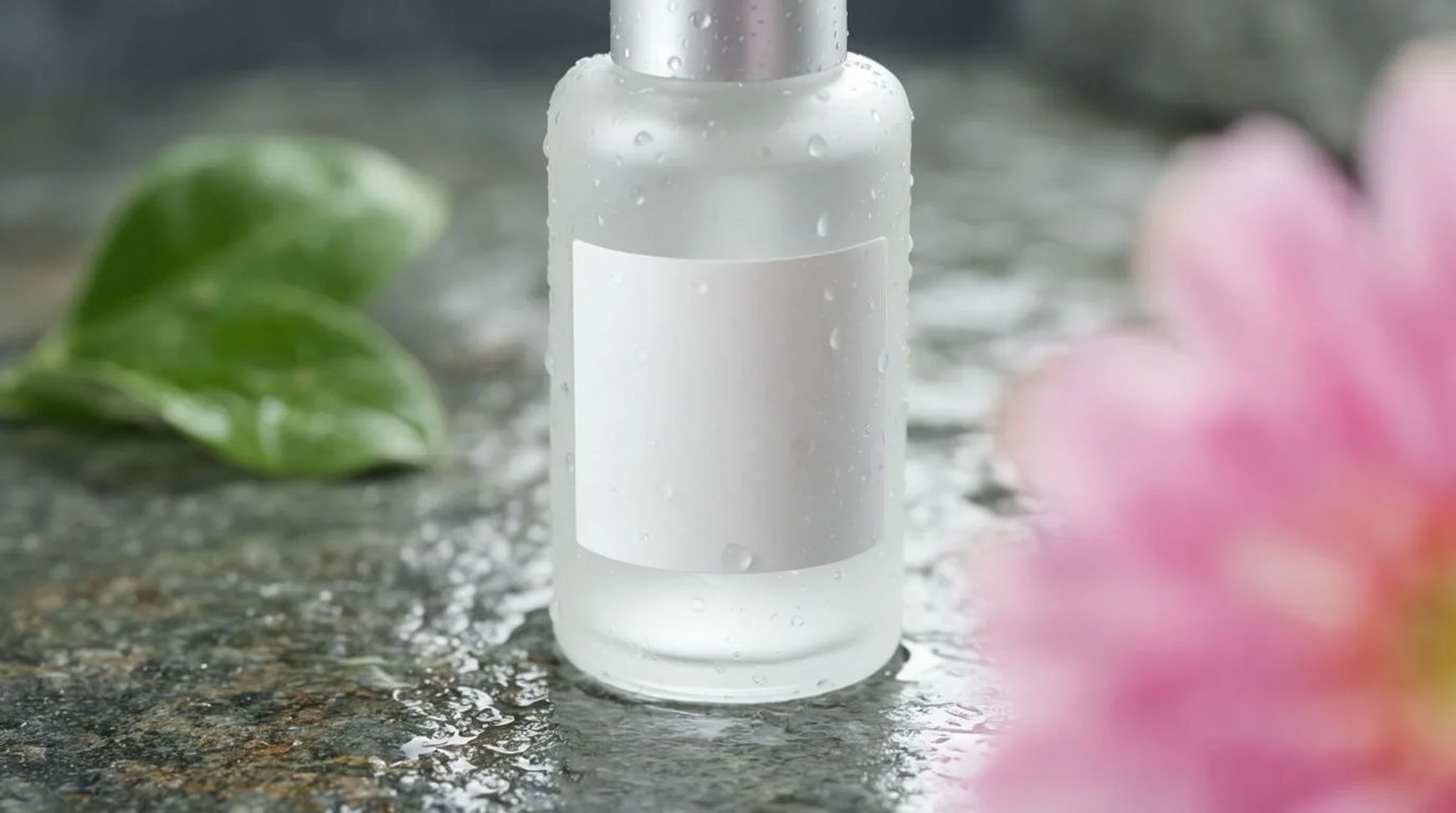
A skincare ad is usually one of a few recurring formats: a texture swatch, a routine scene, a macro detail of the bottle, an ingredient still, and a lifestyle flat lay. A small brand makes each of these from one clean product shot, generating the scene around the real bottle so the packaging and label stay exact.
| Format | What it shows | Where it runs | How to make it |
|---|---|---|---|
| Texture swatch | The cream or serum on skin or a surface | Feed, reels | Generate a swatch scene beside the real bottle |
| Routine scene | The product in a morning or evening setting | Feed, stories | Place the saved product in a styled bathroom scene |
| Macro detail | The pump, dropper or label up close | Feed, product page | Generate a macro scene around the real product |
| Ingredient still | The product with its key ingredient | Feed, ads | Compose the bottle with generated botanicals |
| Lifestyle flat lay | The product among everyday objects | Feed, email | Build a flat-lay scene around the saved product |
Formats that work in skincare
Texture swatch
What it shows: The product's texture, a swatch of cream or a drop of serum, beside the bottle. Why it converts: Texture signals feel and finish, which a flat bottle shot cannot. The example pairs a generated swatch surface with the real, unaltered bottle.
Routine scene
What it shows: The product in a morning or evening routine, on a clean bathroom surface in soft light. Why it converts: It places the product in the buyer's day. The example keeps the fictional brand's bottle exact and generates only the setting around it.
Macro detail
What it shows: The pump, dropper or label up close. Why it converts: A macro shot reads as quality and lets the label be legible. The example generates the scene and lighting while the real packaging stays sharp.
Ingredient still
What it shows: The product with its key ingredient, a sprig, a seed, a drop of oil. Why it converts: It tells the product's story without a claim. The example composes the real bottle with generated botanicals; it does not state a result.
Lifestyle flat lay
What it shows: The product among everyday objects on a styled surface. Why it converts: A flat lay suits the feed and an email header. The example arranges a generated scene around the saved product.
Make each format with AI
Every format starts the same way: lift the real bottle off its background, save it as a reference, then generate the scene around it.
- Upload the product photo and lift the bottle off its background on the Canvas
- Save it as a reference so the label and packaging stay exact
- Describe the format's scene (swatch, routine, macro, ingredient, flat lay) and generate variations
Tool: AI ad generator. To batch several at once, see how to make ad variants from one product photo.
Skincare-specific rules
Skincare is a regulated category, so the creative has limits the image generation does not remove:
- Keep the product exact. The bottle, pump, dropper and label stay as shipped; only the scene is generated.
- No efficacy or results claims in the image or the caption unless you have tested them and can substantiate them. A generated before-and-after of skin is a results claim; a before-and-after of the scene is not.
- No invented endorsements or reviews. Do not add a quote, a rating or a testimonial you cannot source.
- Check local advertising rules for your market before running regulated claims.
Static vs video versions
Each static format has a motion version. A texture swatch becomes a short pour or spread clip; a routine scene becomes a slow push-in; a macro becomes a gentle rotation. Animate the still with image-to-video, keep the motion subtle, and export a 9:16 for reels and a 1:1 for the feed. For the full video method, see how to make a skincare product video from photos.
For where skincare ads fit in a week of store content, see how to use AI for your Shopify store. For another category, see jewelry ad examples.