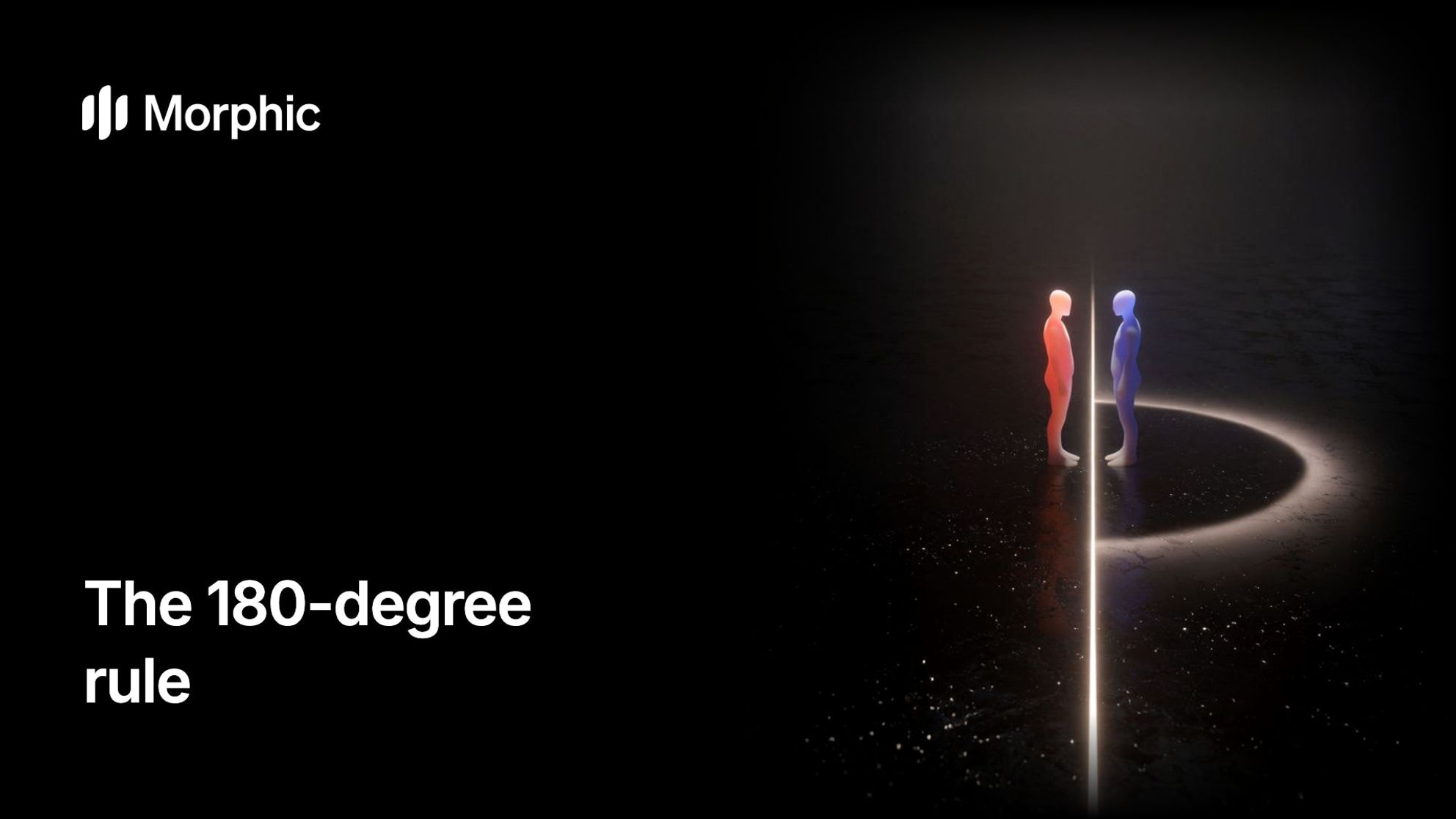
The 180-degree rule keeps the camera on one side of an imaginary line between two characters, or along a subject's direction of travel. Stay on that side and screen direction holds from the wide to the close-up; cross it unseen and the two seem to swap places.
What is the 180-degree rule?
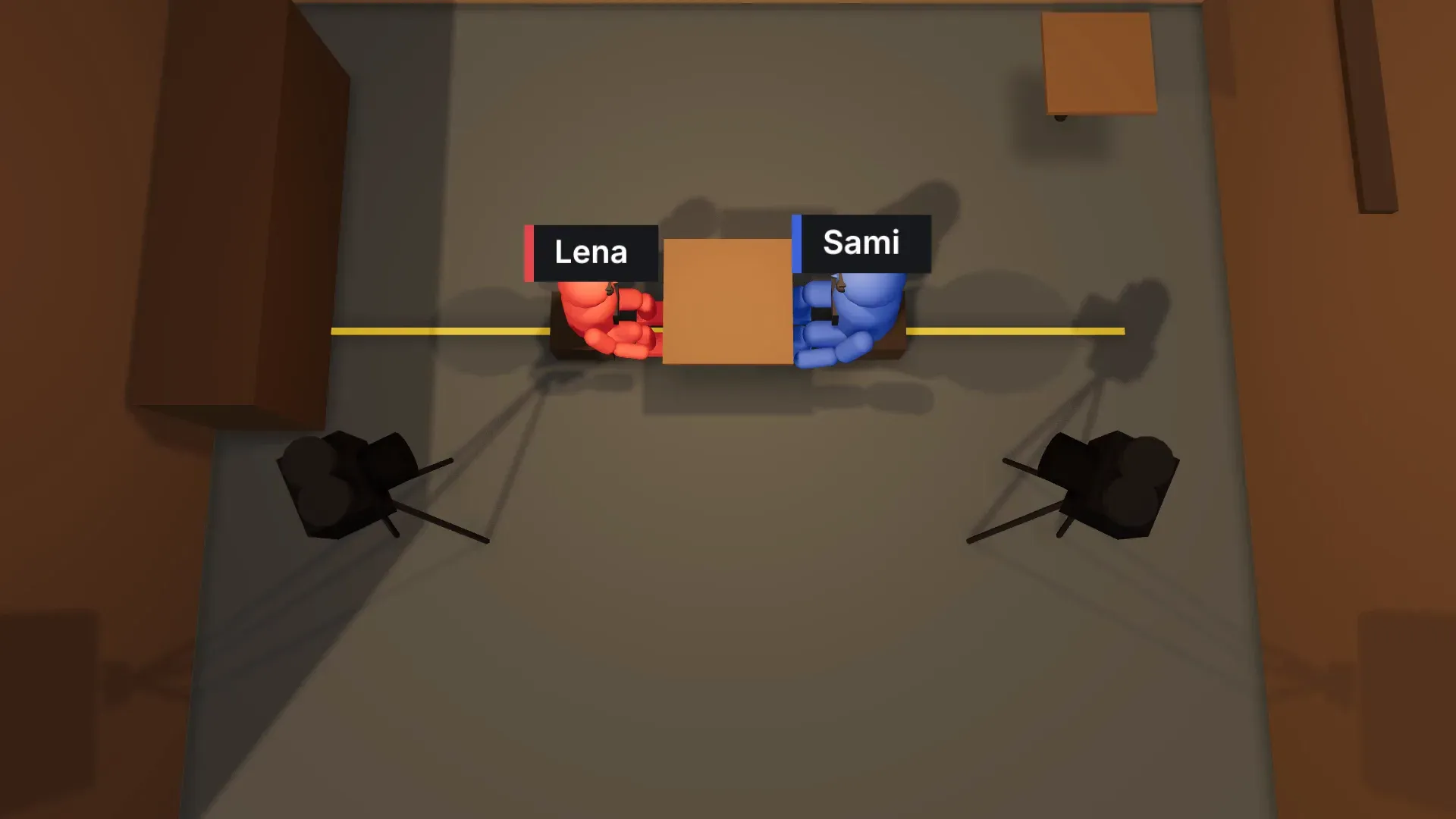
Draw a line through the two people in a conversation: the line of action, also called the axis of action or simply the line. Cameras can go anywhere in the half circle on one side of it, hence the 180 degrees.
Why screen direction matters
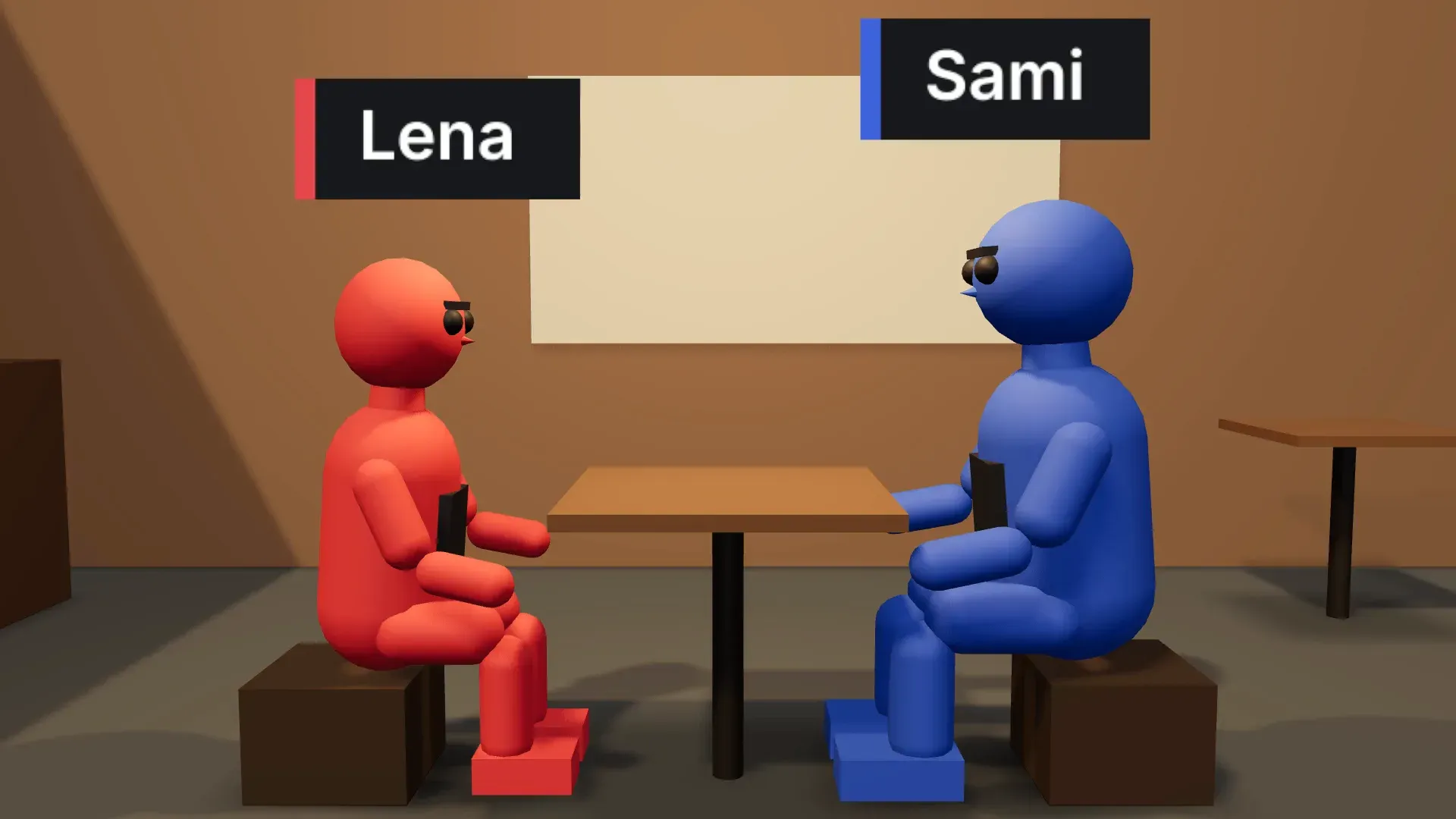
Screen direction is how the audience maps the room. If she looks right in her close-up, viewers expect him off screen right, looking left. When every shot agrees the cut is invisible, the logic behind a reverse shot and an eyeline match.
How to keep the 180-degree rule in a dialogue scene
Dialogue coverage usually means three kinds of shot, all from the same side of the line. Cut between the two over-the-shoulder shots below and the eyelines meet; put the second camera across the line and both would look screen right.
| Shot | What it does |
|---|---|
| Two-shot | Both people in frame; sets who sits where. |
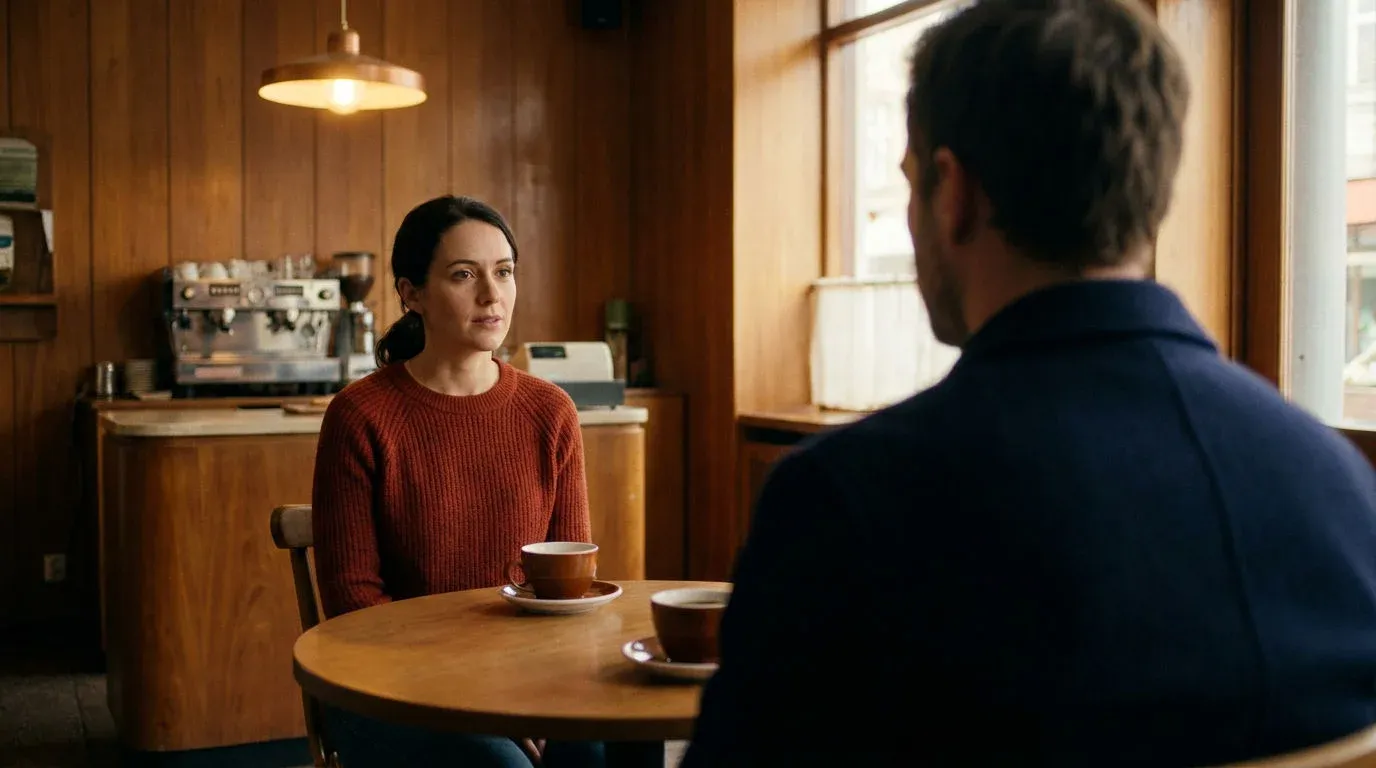
| Over-the-shoulder shot | Over one shoulder onto the other person. The foreground shoulder stays on the side of frame that person held in the two-shot. |
| The reverse | The matching shot from the other side of the table, still on the camera side of the line. |

When breaking the 180-degree rule works
Crossing the line works when the confusion is the point, or when the audience sees it happen.
To unsettle
A deliberate jump across the line in an argument or an interrogation makes the room feel unstable.
To mark a shift
When the power in a conversation turns, the other side resets the scene around the new balance.
With the move on screen
A dolly or a stabilised handheld shot that travels across the line carries the audience with it.
Through a neutral shot
A shot straight down the line has no left or right, so the next cut can come from either side.
Why AI video often breaks the 180-degree rule
Each generated shot is made on its own, so a prompt like "over the shoulder onto the woman" leaves the shoulder and the side open. Writing "screen left" and "screen right" into every prompt helps; blocking the scene in 3D helps more.
Check the 180-degree line in 3D Scene before you generate
In Morphic's 3D Scene, characters and cameras share one space, and the timeline flags a camera that crosses the line or a performer moving at odd speeds. Fix it, render the blocking video, and attach it with each figure named by colour.
The camera blocking tool covers that workflow, eyeline match explains the cut that depends on it, and continuity covers the wider idea.